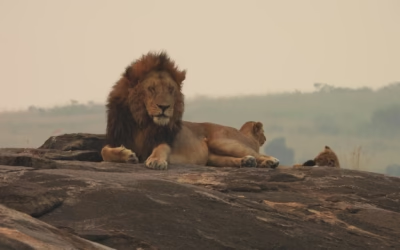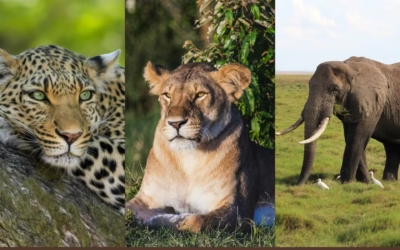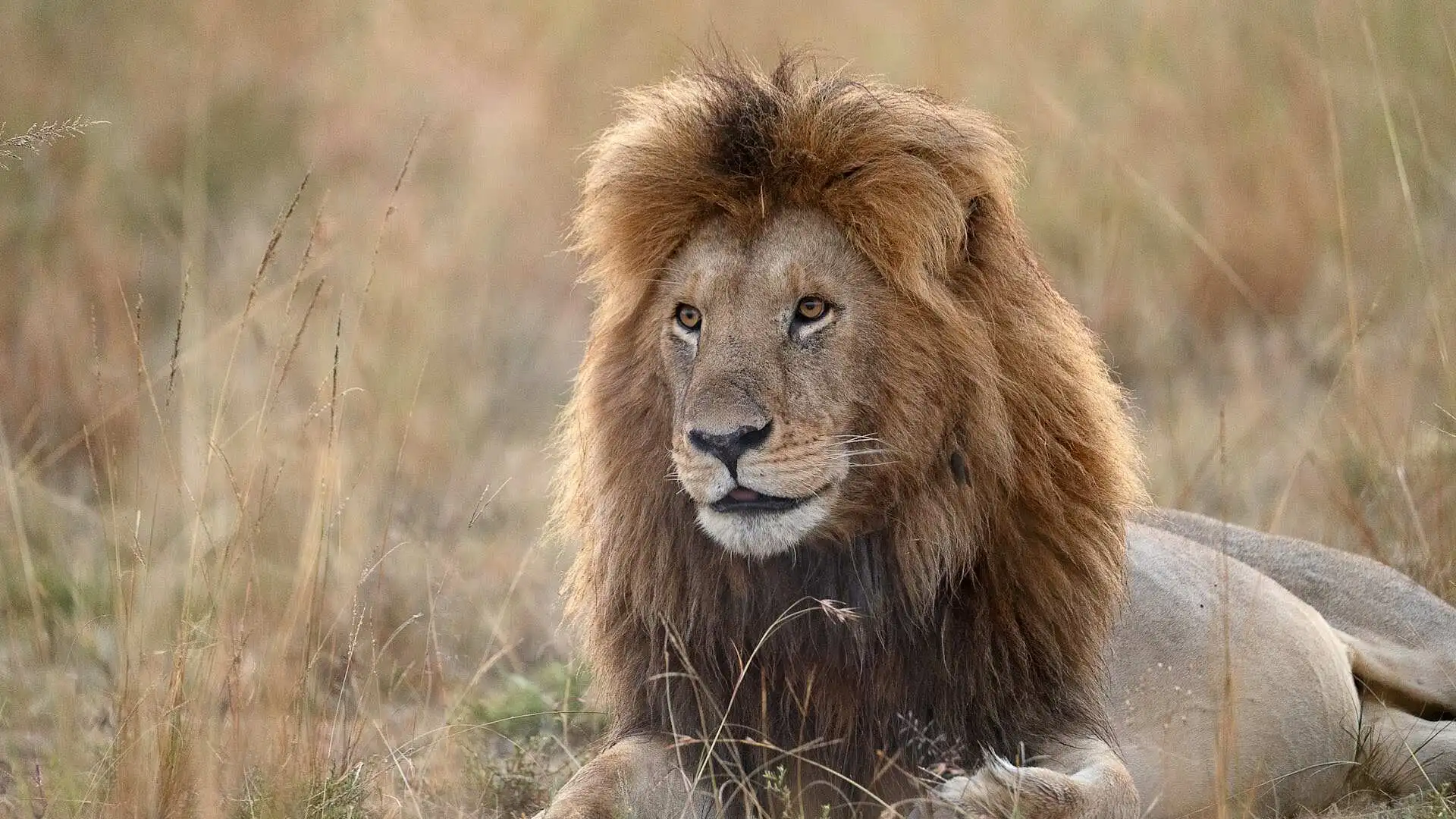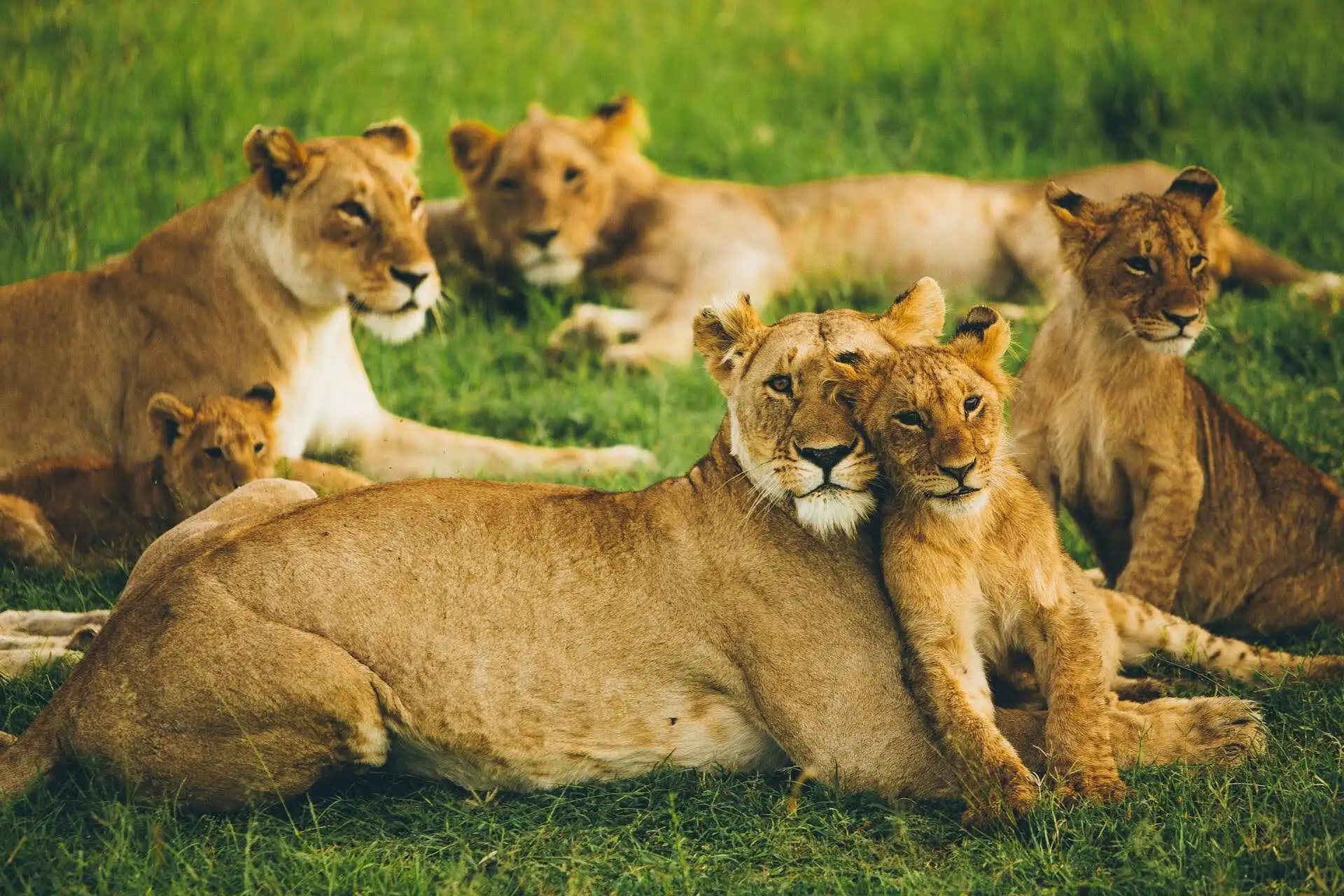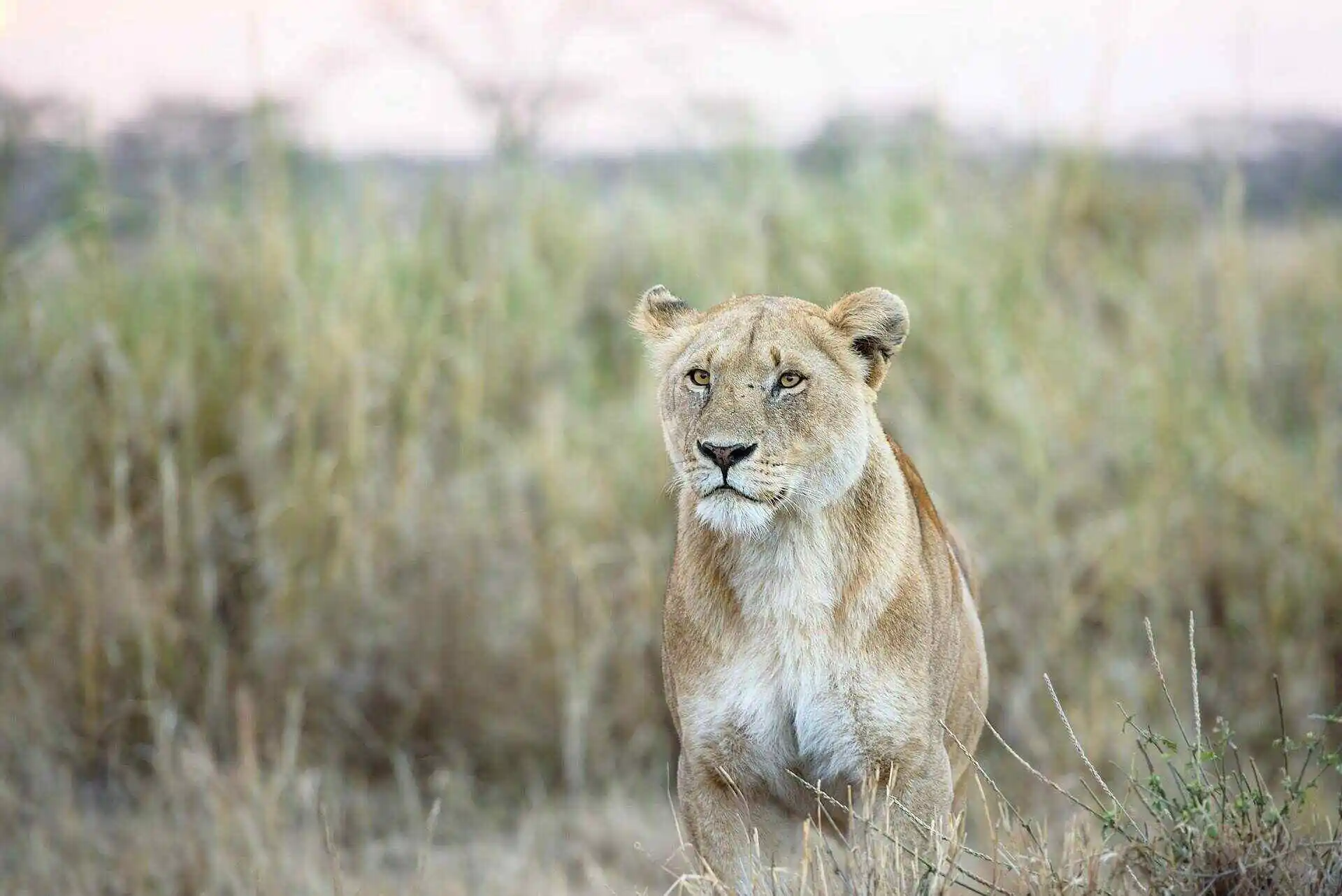
You’re sitting in an open-sided jeep. A lioness walks past, close enough that you could count her whiskers. She glances at the vehicle, then looks away. No aggression. No interest. Just a big cat going about her morning.
First-time safari visitors almost always ask the same thing: why didn’t she attack?
It’s a fair question. And the answer isn’t magic. It’s biology, behavioral science, and decades of careful wildlife management working together.
Animals Don’t See You – They See the Jeep
This is the most important thing to understand.
When you’re inside a safari vehicle, you stop being a human in the animal’s eyes. The jeep, the engine, the smell of fuel, the shape of the vehicle, all of it reads as one single object to the animal.
Wild animals assess threats using a combination of scent, sound, shape, and movement. When those signals come from a large, slow-moving machine that doesn’t smell like a predator and doesn’t behave like one, the animal’s brain files it under “not a threat.”
The moment you stand up, lean out, or make a sharp noise, that changes. You break the outline of the vehicle. Suddenly the animal sees something it recognizes, a human, and its threat response activates.
This is why guides are strict about staying seated and keeping quiet. It’s not just a rule. It’s the reason the whole thing works.
Habituation: The Science Behind the Calm
The animals in established safari parks aren’t naturally relaxed around vehicles. They’ve been habituated, a specific behavioral process where repeated, non-threatening exposure to something causes an animal to stop reacting to it.
Here’s how it works in practice:
- Rangers and guides drive the same routes, at the same slow speeds, day after day
- Animals learn over time that these vehicles never chase, never attack, and never steal food
- After enough exposure, the vehicle becomes background noise, irrelevant to survival
- Cubs and calves grow up around vehicles, so the behavior passes to the next generation
This process takes years in a well-managed reserve. It’s one of the key differences between a quality safari operation and a poorly managed one.
Important: This only applies inside managed parks and reserves. The same lion that ignores your jeep in the Masai Mara would behave very differently if encountered in an unmanaged area where vehicles are rare. Habituation is location-specific.
The Rules That Make This Work
The animal’s calm is conditional. It depends entirely on the vehicle and its occupants behaving in a predictable, non-threatening way. Break that pattern, and the dynamic shifts fast.
Every responsible safari operation enforces the following:
- Stay seated at all times. Standing changes your silhouette and breaks the “one object” illusion
- No sudden movements. Quick gestures read as aggression or panic to most wildlife
- No loud noises. Shouting, screaming, or even excited squealing can trigger a stress response
- Keep arms and legs inside the vehicle. A dangling limb is an invitation
- No flash photography. Sudden bright light startles animals, especially at close range
- Follow the guide’s instructions immediately. They read body language in real time. When they say move, you move
These aren’t suggestions. They are the difference between a safe sighting and a serious incident.
Does This Work With Every Animal?
No. And any guide who tells you otherwise is overselling it.
Different species have different temperaments, different threat thresholds, and different circumstances that change their behavior. Here’s what you actually need to know:
| Animal | Typical Behavior Near Vehicles | Key Risk Factor |
|---|---|---|
| Lions | Largely indifferent | Protecting a kill or cubs |
| Leopards | Cautious but usually calm | Feeling cornered or followed |
| Cheetahs | Curious, sometimes approach vehicles | Minimal risk, highly skittish |
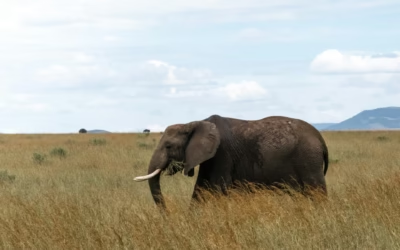
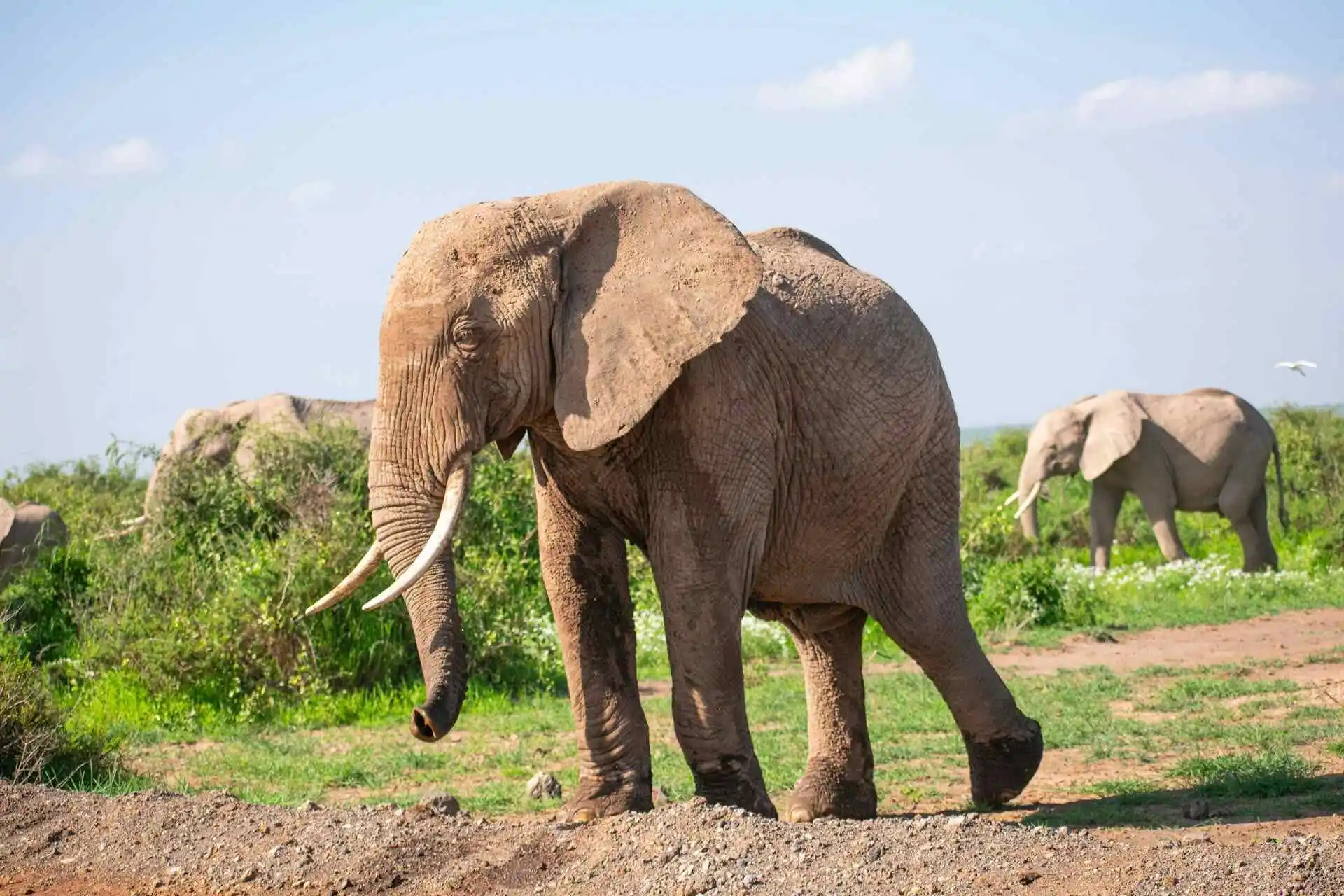
| Elephants | Calm in most situations | Cows with calves, mock charges |
| Buffaloes | Unpredictable | Old solitary males ("dagga boys") |
| Hippos | Highly aggressive near water | Being between them and water |
| Rhinos | Poor eyesight, can charge if startled | Sudden movement or engine noise |
Your Guide Is the Real Safety System
Most visitors focus on the animals. The smarter thing to watch is your guide.
A good safari guide is reading the scene constantly:
- Ear position on elephants. Forward means curious, flat back means threat
- Tail flicking on big cats. Rapid flicking signals irritation or focus
- Yawning in lions. Often a stress signal, not tiredness
- Broadside stance in buffaloes. A dominance display that can precede a charge
Guides also manage the vehicle’s position carefully. They never park directly in front of an animal’s path. They leave exit routes open. They watch how many vehicles are at a sighting, because too many causes stress, which increases unpredictable behavior.
At Big Cats Safari, guides complete rigorous field training before they ever take guests out. That experience is what keeps sightings safe, calm, and as close as they are.
What Breaks the Habituation
Habituation is not indestructible. Every experienced guide knows the conditions that erode it. Most incidents involving vehicles and wildlife in managed reserves trace back to one of a small number of consistent causes.
| What Breaks Habituation | Why It Matters |
|---|---|
| Standing above the vehicle roofline | The human silhouette separates from the vehicle profile. The animal no longer reads one unit — it reads a human. |
| Hanging limbs outside the vehicle | Same effect as standing. A hand or leg outside the body line of the vehicle registers as separate from it. |
| Getting out of the vehicle on foot | On foot, a human is prey-sized, prey-shaped, and moves like prey. The animal's response resets entirely. |
| Loud or sudden noise | Startled animals react before they think. A shout, a dropped camera, a slammed door can trigger flight or charge. |
| Sustained direct eye contact | Predators and dominant herbivores read direct eye contact as a challenge. Brief glances are neutral. A stare is not. |
| Fast approach or cutting off escape route | Speed signals aggression or panic. Positioning the vehicle between an animal and its exit point reads as a threat. |
| Approaching a mother with newborn young | Maternal defence overrides habituation in almost every species. Distance rules double around new calves. |
What Happens When an Animal Does React?
It’s rare. But it happens.
Mock charges are the most common incident. An animal, usually an elephant or buffalo, runs toward the vehicle to test whether it’s a threat. In most cases, it stops well short. Guides recognize the signs before the charge begins and reposition the vehicle.
Real charges are uncommon in well-managed parks where animals are properly habituated and guide protocols are followed. When they do happen, guides are trained to respond without panicking passengers.
Statistically, serious incidents on legitimate safari operations are extremely low. The greater risk on most safaris is sunburn, dehydration, or a bumpy road, not a lion attack.
What This Tells You About the Ecosystem
When animals ignore a vehicle completely, that’s actually a sign of a healthy, well-managed reserve.
It means:
- Animals aren’t stressed by human presence
- The park’s vehicle protocols are being followed
- Wildlife is living naturally, not performing for tourists
The indifference of a lion to your jeep isn’t just reassuring. It’s evidence that the environment around you is functioning the way it should.
What Big Cats Safari Wants You to Understand
The vehicle is not a magic shield. No amount of steel and canvas makes you invisible or untouchable to a wild animal in full command of its senses and its speed.
What the vehicle provides is a context. A learned, reserve-specific, behaviour-dependent context in which the animal has filed you as neutral. That context holds as long as you behave consistently with everything the animal has ever experienced from a vehicle. The moment you deviate stand up, lean out, make sudden noise, get out on foot the context breaks. The animal responds to what it now perceives, not to what it has learned to expect.
Guides who have spent decades in the bush carry a respect for this line that first-time guests sometimes mistake for excessive caution. It is not caution. It is an accurate read of how fragile the arrangement actually is.
The lioness who walked past the vehicle at two metres did so because everything in her experience told her the vehicle was not worth her attention. That experience was built over years, maintained by thousands of neutral encounters, and held in place by the behaviour of everyone inside every vehicle she had ever passed.