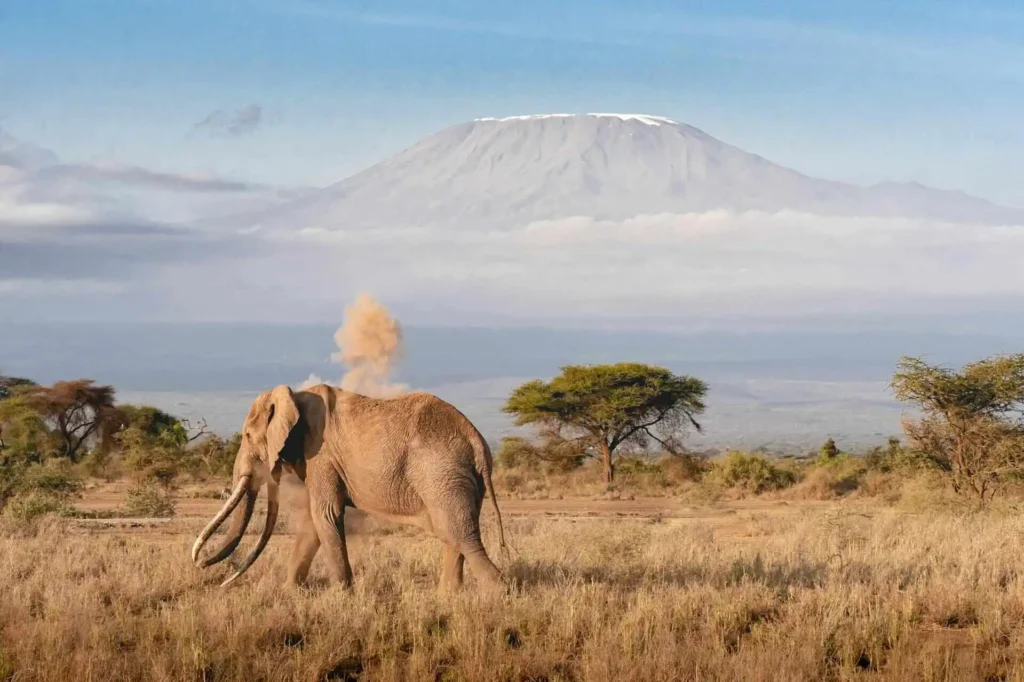
The Kikuyu, or Gikuyu, are a Bantu-speaking people and the largest ethnic group in Kenya. Their population stands at about 8 to 9 million people. They are native to the rich central highlands around Mount Kenya, which they call Kirinyaga, or the Mountain of Brightness. Their history, faith, and social life remain closely tied to this land.
Origins
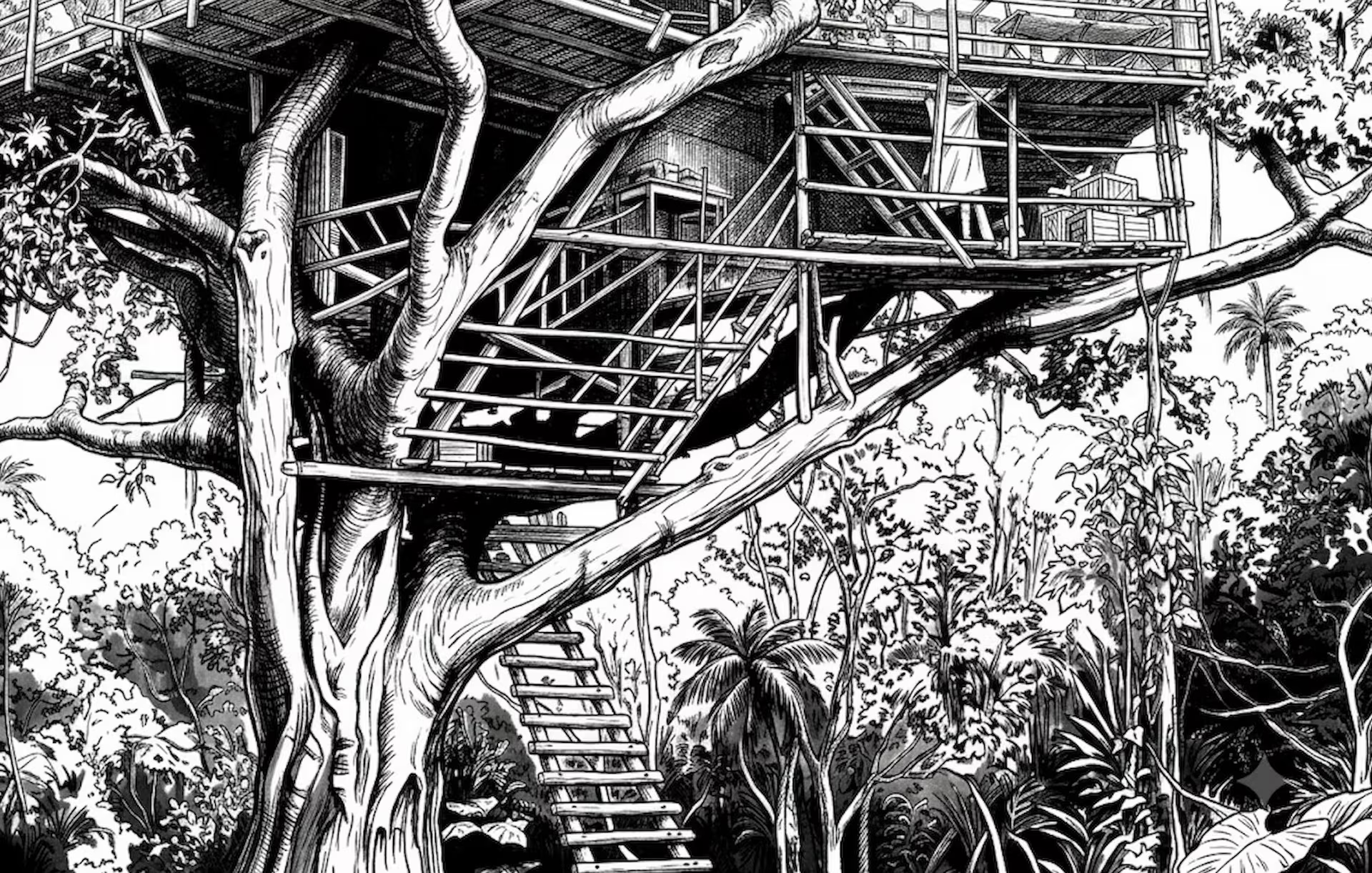
Kikuyu oral tradition traces their beginnings to the first ancestors, Gikuyu and his wife Mumbi. Ngai, their supreme god, placed them near a sacred fig tree at the foot of Mount Kenya. They had nine daughters: Wanjiru, Wambui, Njeri, Wangui, Muthoni, Wanjiku, Waceera, Mwithaga, and Wairimu. The Kikuyu clans, known as mihiriga, trace their descent from these daughters. Some traditions add a tenth clan, creating the sacred idea of “nine plus one,” which the Kikuyu regard as a complete number.
Historical accounts place Kikuyu migration into the central highlands during the 16th and 17th centuries. They expanded outward from Murang’a, once known as Fort Hall. Their homeland, Gikuyuland, stretches across the fertile ridges between the Aberdare Mountains and Mount Kenya.
Social Organization
Kikuyu society rests on three connected systems.
Clans (Mihiriga):
The nine founding clans carry names linked to Mumbi’s daughters. The names preserve an early matrilineal memory, yet the society later became largely patrilineal. Clan membership shapes inheritance and marriage. A person cannot marry within their own clan.
Age-grades (Riika):
Young men circumcised during the same period enter the same riika. This bond lasts for life. Age-grades share duties, responsibilities, and leadership roles. Leadership passes from one generation to the next through a ceremony called ituĩka. This system gave the community regular political renewal and a strong sense of collective duty.
The Family Unit (Nyumba/Mucii):
The homestead formed the foundation of daily life. Traditionally, it consisted of a circular compound of huts built around a central cattle enclosure. Each wife had her own house, or nyumba. A man’s standing often reflected the size, wealth, and order of his homestead.
Religion and Spirituality
The Kikuyu follow a traditional monotheistic faith centered on one supreme deity, Ngai. He is also called Mwene-Nyaga, meaning the Possessor of Brightness. Ngai is believed to dwell on Mount Kenya. Unlike many deities in African traditions, Ngai has no human shape, no birth story, and no divine family. He simply is.
Prayer was directed toward Kirinyaga, and worshippers faced the mountain during prayer. The sacred mugumo fig tree served as the meeting point between the human world and the divine. During drought, disease, or war, people offered sheep and goats at these trees.
Ancestral spirits, called ngoma, held an equally important place. The dead could intercede with Ngai, yet they could also bring misfortune if ignored. Ritual impurity, known as thahu, arose from acts such as murder, incest, or miscarriage. Such acts required cleansing rituals. A ritual specialist, called mundu mugo, performed these rites as healer, diviner, and seer.
Rites of Passage
Kikuyu life follows formal stages marked by ritual transitions.
Birth:
A child usually receives the name of a grandparent. The first children often receive names from the paternal line, and later children receive names from the maternal side. This practice keeps family memory alive across generations. Marriage is formalized through ruracio, the bride wealth paid by the husband’s family, which confirms the union and the rights attached to family lineage.
Initiation (Irua):
This stands at the heart of Kikuyu culture. Boys and girls traditionally underwent circumcision in age-group cohorts. The rite marked the passage from childhood into full adulthood. It included months of teaching on ethics, cultural values, discipline, and social responsibility. An uncircumcised adult did not hold full standing within the community. During colonial rule, this practice became a major source of conflict. British missionaries tried to ban female circumcision, and the dispute strengthened Kikuyu political and cultural identity. Jomo Kenyatta became one of the most visible voices in that struggle.
Death and burial:
Traditionally, the Kikuyu often left the dead in the bush, where hyenas consumed the body and returned it to nature. Elders and prominent figures sometimes received burial. Burial in the ground was not the common custom for ordinary people. Colonial rule and Christian influence later changed this practice.
Economy and Land
Land stands at the center of Kikuyu identity. It was never just property. It formed the basis of family, ancestry, memory, and spiritual belonging.
The traditional land system centered on githaka, or clan land. The family lineage held this land collectively. Individuals cultivated their own plots, yet they could not remove the land permanently from the clan. This system kept land within the family across generations.
British seizure of Kikuyu land in the early 20th century, especially in the area called the White Highlands, struck directly at the core of Kikuyu life. This loss became the main cause of political resistance.
The Kikuyu were skilled farmers. They cultivated millet, sorghum, yams, sweet potatoes, and later maize and beans. They also built strong trade links with neighboring groups, especially the Maasai. These ties included trade, intermarriage, and at times conflict.
The Colonial Period and Resistance
No account of the Kikuyu can stand complete without their place in Kenya’s independence struggle. British settlers began taking Kikuyu land from the early 1900s. This created a growing class of landless laborers known as ahoi. Anger spread across the community.
Jomo Kenyatta, a Kikuyu leader, emerged as the leading voice of Kenyan nationalism. His 1938 book Facing Mount Kenya defended Kikuyu culture and challenged colonial rule.
The Mau Mau uprising lasted from 1952 to 1960 and drew its main support from the Kikuyu. Fighters swore oaths and fought from the forests of the Aberdare Mountains and Mount Kenya.
British forces responded with detention camps, torture, forced villages, and collective punishment.
Kenya gained independence in 1963. Kenyatta became the nation’s first president. The memory of land loss, detention, and resistance left a deep mark on Kikuyu political identity that remains visible in Kenya’s public life.
Language, Arts and Material Culture
Language:
Gĩkũyũ is a Bantu language with tonal features and a rich oral tradition. Proverbs hold great value in daily speech and teaching. Most Kikuyu people speak Gĩkũyũ alongside Swahili and English.
Music and dance:
Ceremonial songs accompany every major rite of passage. Traditional instruments include the gĩcandĩ gourd rattle and the one-stringed gĩthĩtĩ lyre. Sung poetry contests remain a respected art.
Dress and adornment:
Traditional clothing used animal skins. Beadwork in red, white, and blue carried social and ceremonial meaning. Elder men often wore ndururu skin cloaks. Women adorned themselves with coiled wire and brass ear ornaments.
Food and cuisine:
Irio, a mash of peas, potatoes, and corn, remains the best-known Kikuyu dish. Mukimo, a green maize mash, and fermented ugi porridge are daily staples. Roast goat remains a central dish at celebrations.
Architecture:
Traditional homesteads used circular thatched huts with wattle-and-daub walls. A separate granary, called ikumbi, stored millet and sorghum.
Governance:
Councils of elders, known as kiama, settled disputes and managed land. The Kikuyu had no hereditary kings. Authority rested on age, reputation, and collective decision-making.
The Kikuyu Today
The Kikuyu remain Kenya’s most populous ethnic group, making up roughly 17 to 22 percent of the national population. They are concentrated in Nairobi and the Central Province, including Nyeri, Murang’a, Kiambu, and Kirinyaga. They are among the most urbanized and educated communities in the country, with strong roles in business, politics, academia, and the arts.
Christianity, both Protestant and Catholic, is now nearly universal among the Kikuyu. Traditional beliefs continue in blended forms. Public debates around circumcision, land rights, and cultural identity remain active.
Notable Kikuyu figures include Jomo Kenyatta, Uhuru Kenyatta, Ngũgĩ wa Thiong'o, the globally respected novelist who writes in Gĩkũyũ, and Wangari Maathai, the Nobel Peace Prize laureate and environmental activist.
The story of the Kikuyu remains inseparable from the story of modern Kenya. Their bond with land, family, and political power has shaped the nation’s history. Their culture continues to change, yet it remains rooted in the shadow of Kirinyaga.