The sun was setting over Sabi Sand when the screams began. Not the usual sounds of the African bush, but something far more terrifying. Five massive male lions were tearing through a pride, killing every cub they could find. This wasn’t a random attack. This was strategy. This was conquest. This was the Mapogo coalition.
Between 2006 and 2012, six male lions did something no one had ever seen before. They took over an area seven times the size of Manhattan. They killed over 100 lions in a single year. Rangers who had spent decades in the bush stood frozen, watching events that would rewrite everything we thought we knew about lion behavior.
This is their story. A story of brotherhood, violence, power, and the brutal reality of survival in one of Africa’s most famous reserves.
Who Were the Mapogo Lions?
The Mapogo coalition consisted of six male lions born in Sabi Sand Game Reserve around 2002. Five were brothers from the Sparta pride, with a sixth member, Makulu, joining later. In the Tsonga language, “Mapogo” means “a group that works together“, a fitting name for the most powerful lion coalition ever documented.
The Six Brothers
| Name | Distinctive Feature | Role |
|---|---|---|
| Makulu | Darkest, most impressive mane | Eldest, initial leader |
| Mr. T | Mohawk-style mane | Most aggressive, later leader |
| Kinky Tail | Distinctive bent tail | Mr. T's loyal partner |
| Pretty Boy | Perfect features, golden mane | Western territory controller |
| Rasta | Matted, dreadlock-like mane | Western territory controller |
| Scar | Distinctive shoulder mark | Often solitary patrol |
The Sparta Pride and the Birth of Five Brothers
Sabi Sand Game Reserve sits right next to Kruger National Park in South Africa. At over 153,000 acres, it’s a paradise for wildlife. Buffalo herds thousands strong move across the plains. Elephants gather at waterholes. And lions, lots of lions, compete for territory in one of the most prey-rich areas in Africa.
In 2002, the Sparta pride controlled the heart of Sabi Sand. Ten cubs tumbled around their mothers that year. Five of them were males. Nobody gave them names at first. They were just cubs, playing and learning like any others.
But even then, two of them stood out.
One was bold, always pushing boundaries, testing limits. The other followed close behind, loyal and fearless. Rangers noticed them early. These two brothers had something different. A fire. An intensity.
They would later be known as Mr. T and Kinky Tail.
The other three males, Rasta, Pretty Boy, and Scar, grew alongside them. All five were protected by a powerful coalition called the West Street Males. These were their fathers, experienced lions who controlled multiple prides and kept their cubs safe.
But lion families don’t stay together forever. And the story was about to add a sixth member in the strangest way possible.
The Mysterious Arrival of Makulu
In 2003, a strange thing happened. A young male lion, about four years old, wandered into Sparta territory. Normally, this means death. Resident males kill intruders.
But the West Street Males didn’t kill him. After some tension, they accepted him.
Why? Field experts believe Makulu was likely their son from another pride, a half-brother to the five cubs. His scent and lineage saved his life.
Makulu quickly became the big brother to Mr. T, Kinky Tail, Rasta, Pretty Boy, and Scar. Older, bigger, with a thick dark mane that screamed dominance. He would later become the coalition’s first leader.
Driven Out: The Beginning of the Alliance
Young male lions face a harsh reality. Around age two to three, their fathers drive them out. It’s biology, not cruelty. Young males become competitors for mating rights.
So in 2004, all six brothers were expelled. They became nomads-the most dangerous period in a male lion’s life. More males die during these wandering years than any other time.They have no territory. No pride. No females. And every established male wants them dead.
But these six had each other.
“That was their advantage,” explained a lion researcher. “Six males together is almost unheard of. Most coalitions are two, maybe three brothers. Six? That was unprecedented.”
Why “Mapogo”?
The name comes from the Tsonga language meaning “coalition” or “working together.” Some sources say they were named after Mapogo A Mathamaga, a notorious South African security company known for brutal tactics.
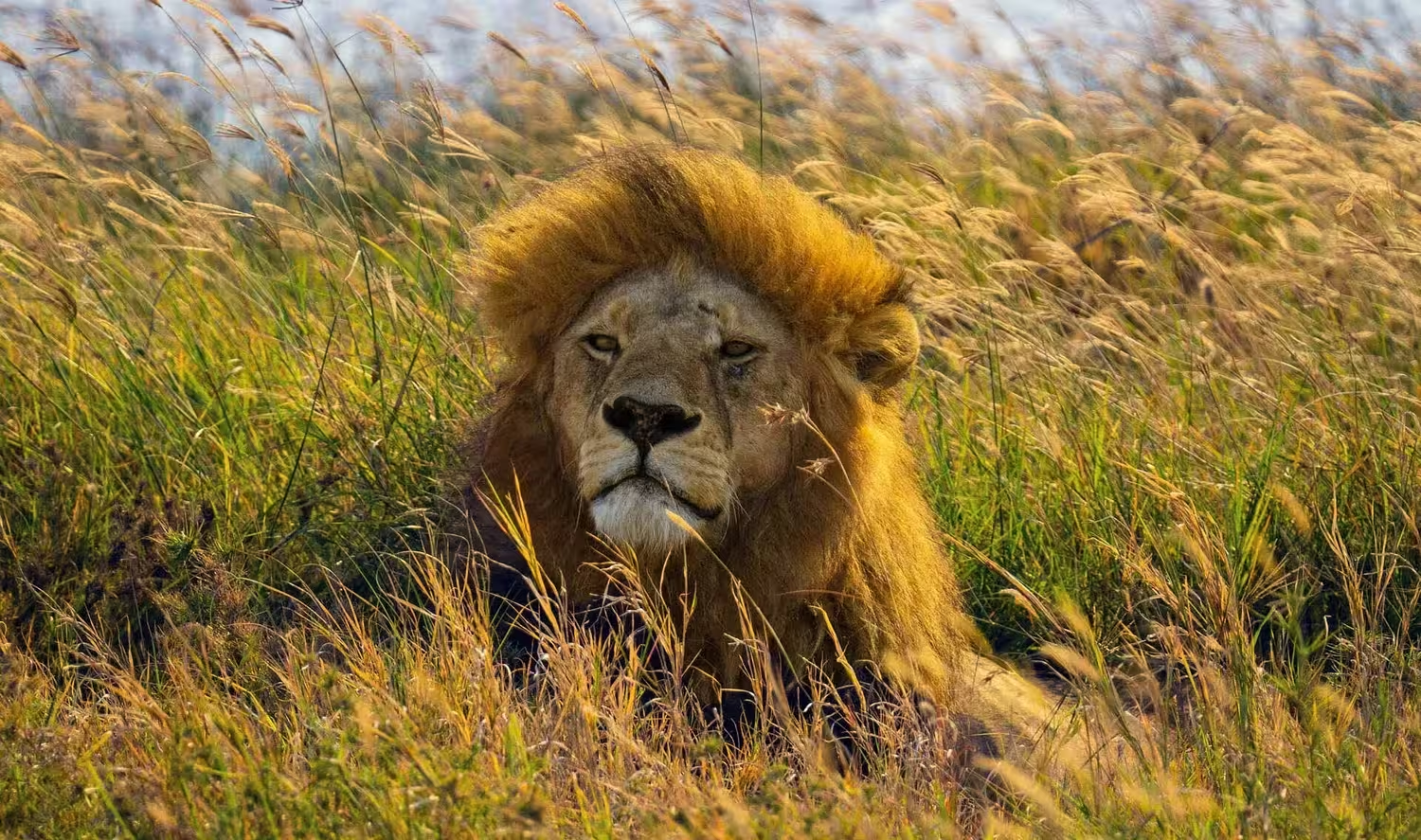
Makulu, the oldest, often took the lead. His dark mane was filling in, making him look more imposing. Mr. T and Kinky Tail were the enforcers, always in the thick of the action, always ready to fight.
By the time their manes fully grew, you could tell them apart.
- Makulu had the darkest, most impressive mane. A true mark of dominance.
- Pretty Boy was stunning to look at, with perfect features and a thick, golden mane.
- Scar had a distinctive mark running from his left shoulder down his back.
- Rasta’s mane had something stuck in it that made it look matted and wild, like dreadlocks.
- Mr. T’s mane grew in a mohawk style, standing up along the center of his head.
- Kinky Tail’s bent tail made him instantly recognizable.
Six distinct personalities. Six brothers. One goal: survive long enough to take their own territory.
Learning to Kill: 2004-2006
Young males struggle to hunt without their pride’s females. The Mapogo brothers failed repeatedly at first. They scavenged. They stole kills. They learned the hard way.
Their breakthrough? Buffalo.
Successfully hunting Cape buffalo became their specialty. These 1,800-pound animals with curved horns can kill lions with one swing. But the Mapogos figured it out, with Kinky Tail and Mr. T often leading the charge.
They also took down:
- Hippos
- Young rhinos
- Adult giraffes
- On one occasion, a fully grown elephant
By 2006, they were ready. Six massive males in their prime, filled with confidence and testosterone.
2006: The Takeover Begins
March 2006 – The Mapogos entered northern Sabi Sand. Four males ruled there. Most lions sneak into new territory cautiously.
Not the Mapogos.
They roared. They announced themselves. They wanted everyone to know they’d arrived.
The northern males tried to defend their land and their prides. But the Mapogos were younger, stronger, and they fought with a brutality that shocked everyone watching.
They killed one of the four males in the initial attack. The other three ran for their lives. They knew they couldn’t win. The age of the Mapogos had begun.
First conquest: Complete.
But taking territory is just step one. What came next shocked everyone.
The Slaughter of the Innocents
Normal lion behavior: New males kill cubs to bring females into heat faster. It’s evolutionary strategy.
Mapogo behavior: Kill everything.
Within three months, every cub in their territories was dead. Dozens of them.
The Ottawa Pride had three females and eleven cubs. The Mapogos found them all. Killed them all. Mr. T was even witnessed eating some of the cubs-cannibalistic behavior rarely seen in lions.
But it didn’t stop with cubs.
The Mapogos killed:
- Rival males
- Females who defended cubs too aggressively
- Females they were mating with (unprecedented behavior)
One guide watched Mr. T bite down on a female’s back during a mating dispute with his brothers. Other males joined in. The female died. Then Mr. T ate her.
“I’ve never seen anything like that in nature,” a biologist said. “They killed the females they were supposed to breed with.”
Over the next year, estimates suggest the Mapogos killed over 100 lions. Sabi Sand’s lion population dropped significantly.
Peak Power: 2007-2008
Territory Statistics
| Measurement | Mapogo Coalition | Typical Coalition |
|---|---|---|
| Territory size | 170,000 acres | 20,000-40,000 acres |
| Prides controlled | 8 | 1-2 |
| Coalition size | 6 males | 2-3 males |
| Estimated kills | 100+ lions/year | 5-10 lions/year |
Their empire stretched across most of Sabi Sand. What had been five separate territories was now one massive domain.
Makulu, with his legendary roar, patrolled alone for days, marking boundaries and warning off intruders. Most lions roar for about a minute. Makulu would roar for 10-15 minutes straight, his voice echoing for miles.
Mr. T and Kinky Tail controlled the eastern sections, constantly fighting off challengers from Kruger National Park.
Pretty Boy, Rasta, and Scar worked alongside Makulu in the west, helping maintain their massive territory.
For a while, they seemed invincible.
Brothers Divided: The Split of 2008
Power always breeds conflict.
Mr. T wanted to lead. But Makulu was the boss older, bigger, darker mane (higher testosterone). At feeding times, Makulu ate first. Mr. T was second.
He hated it.
The tension exploded in 2008. Mr. T challenged Makulu in a brutal fight. Makulu bit through Mr. T’s paw and won decisively.
The result? Unprecedented.
Mr. T and Kinky Tail left, taking the eastern and northern territories. Makulu, Pretty Boy, Rasta, and Scar kept the west.
For the first time ever recorded, a six-male coalition split into two separate groups controlling adjacent territories.
They’d see each other occasionally at boundaries. Sometimes peacefully. Sometimes not.
But the united force was broken.
June 8, 2010: The Majingilane Strike
Timeline of Kinky Tail’s Death
| Time | Event |
|---|---|
| Morning | Majingilane male wanders into Mapogo territory |
| 10:00 AM | Mr. T and Kinky Tail attack, nearly kill young male |
| Evening | Four Majingilane males return for revenge |
| Night | Kinky Tail caught and killed, Mr. T escapes |
Five young Majingilane males, around four years old, entered from the south. For the first time since 2006, the Mapogos were outnumbered.
The first battle went to Mr. T and Kinky Tail. They isolated one young Majingilane and brutally attacked him. Mr. T grabbed the throat. Kinky Tail tore at the groin, screaming while biting a sound rangers had never heard.
They left him dying.
But that evening, the other four Majingilane returned.
They found Kinky Tail. Four against one.
The attack was savage. One lion bit his neck. Another his back. A third tore off his genitals. They snapped his spine with a sound like a gunshot.
Mr. T arrived and tried to save his brother. He fought two males at once, but he was outnumbered. He ran.
Kinky Tail lay paralyzed, bleeding, dying. The Majingilane ate parts of him while he was still alive. It took 20 minutes before his last breath.
The next morning, hyenas and vultures picked at what remained. A ranger found Kinky Tail’s distinctive mane scattered in the grass.
Mr. T had lost his brother, his best friend, his partner in everything.
He was alone.
The Return and Betrayal of Mr. T
Mr. T couldn’t hold eastern territory alone against five males. He headed west, back to his brothers.
Makulu wasn’t happy. But the coalition accepted him back without bloodshed.
Then Mr. T did something shocking.
He killed his brothers’ cubs. His own nephews and nieces. Systematically hunted them down, killed them, ate them.
Why? He wanted to mate with the females and father his own cubs, not raise his brothers’ offspring.
Makulu and the others did nothing to stop him.
Within weeks, Mr. T was the new dominant male of the western territories.
The Final Losses
Losses: 2010-2012
- June 2010: Kinky Tail killed by Majingilane
- Late 2010: Pretty Boy disappears (likely killed)
- November 2010: Rasta shot by locals after leaving reserve
- Only three remained: Makulu (14 years old), Scar (12), Mr. T (10)
Male lions rarely live past twelve in the wild. The Mapogos were old, tired, and surrounded by younger coalitions.
March 16, 2012: Mr. T’s Last Stand
The Selati coalition four young males arrived from the south.
They found Mr. T. Alone.
The attack was strategic. They’d distract him from the front, then one would circle behind and bite his spine. They paralyzed his hind legs.
Then they’d attack for 20 seconds, back off, wait, and attack again. Over and over.
A ranger watched Mr. T look at him. The lion who had ruled Sabi Sand, who had killed over a hundred lions, who had been unstoppable… was dying.
“Even with a broken back, he tried to fight,” the ranger said. “It tells you about the strength of his character.”
The Selatis left him crippled by the road. Hours later, Mr. T took his last breath.
The age of the Mapogos was over.
The Last Two: Makulu and Scar
After Mr. T’s death, Makulu and Scar couldn’t hold Sabi Sand. They fled into Kruger National Park.
Rangers spotted them together in late 2012, feeding on a buffalo.
November 2012: Scar died from tuberculosis. Makulu stayed with him to the end.
January 2013: Makulu seen for the last time at Mala Mala, near his old territory. He was almost 15 years old, well beyond average life expectancy.
No body was ever found. He likely died around March 2013.
The last of the Mapogos was gone.
What the Mapogo Lions Left Behind
Their descendants survive. The Ottawa Pride has three adult females believed to be Makulu’s daughters, along with their cubs.
They changed how we understand lions. The Mapogos revealed behaviors scientists hadn’t documented: killing mating partners, extreme infanticide, coalition splits, and territorial control at unprecedented scales.
The debate continues: Should rangers have intervened?
Many say no. This was nature, however brutal. Interfering disrupts natural selection. The survivors become the next generation, just as survivors of past coalitions did.
Others argue that killing 100+ lions in a year threatened Sabi Sand’s entire ecosystem and warranted intervention.
The truth? Lion coalitions are part of nature’s design. Only the strongest, most ruthless males pass on genes. The Mapogos were extraordinarily successful from an evolutionary standpoint.
From a human perspective? They were terrifying.
Visit Sabi Sand Today
Want to see where the Mapogos ruled?
Sabi Sand Game Reserve sits right next to Kruger National Park. No fences separate them, so wildlife moves freely.
What You’ll See:
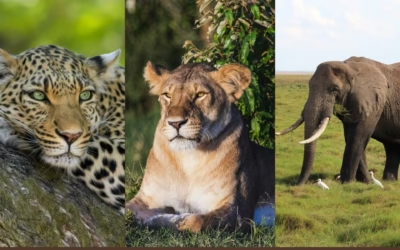
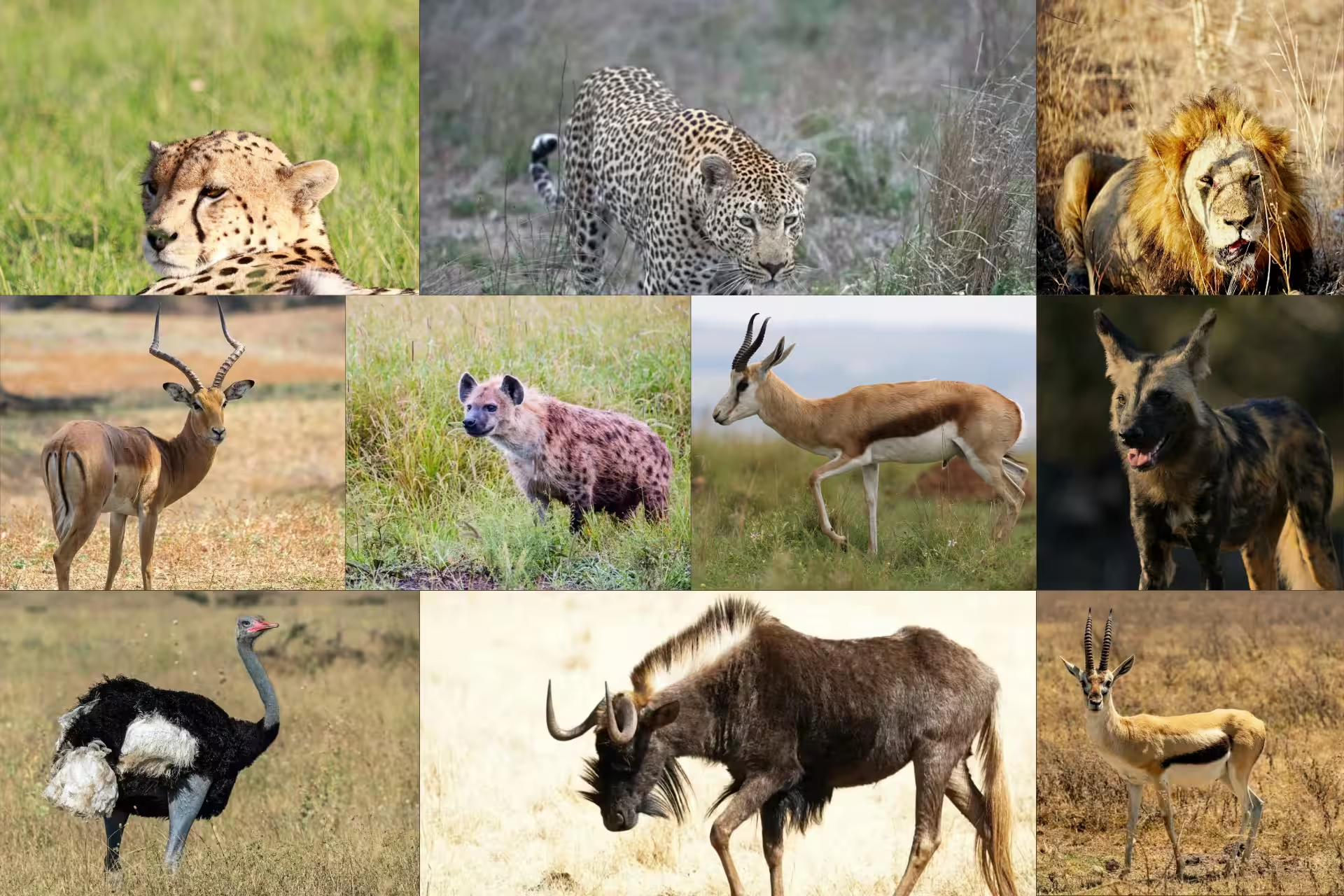
- Lions (new prides and coalitions)
- Leopards (Sabi Sand is famous for them)
- Big Five: elephants, buffalo, rhinos
- Incredible bird life
- African wild dogs
Best Time: May to September (dry season, best game viewing)
Getting There: Fly into Kruger Mpumalanga International Airport or Skukuza
Cost: Premium destination, $500-2000+ per person/night including meals and drives
Rangers still tell Mapogo stories on game drives, pointing out where Mr. T made his last stand and the waterhole where all six brothers once drank in a line.
The lions are gone. The legend lives forever.
Final Thoughts
The Mapogo coalition’s story is a reminder that nature operates by different rules than human society. What seems cruel to us is simply survival to a lion. What appears as murder is actually evolution in action.
These six brothers did what every male lion tries to do: survive, dominate, and pass on their genes. They just did it bigger, longer, and more violently than anyone had seen before.
Their story was documented in detail because they lived in Sabi Sand, a reserve filled with rangers, guides, and cameras. Countless other lion coalitions have risen and fallen in Africa without anyone watching or recording.
But we watched the Mapogos. We saw everything. And what we saw changed how we understand lions forever.
They showed us that lions aren’t just the majestic animals on nature documentaries. They’re complex, violent, strategic, and sometimes shocking creatures fighting for survival in one of Earth’s most competitive ecosystems.
The Mapogo lions lived hard. They fought hard. They died hard.
And they left behind a legacy that will be told around campfires in Sabi Sand for generations to come.