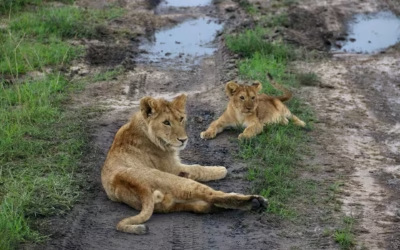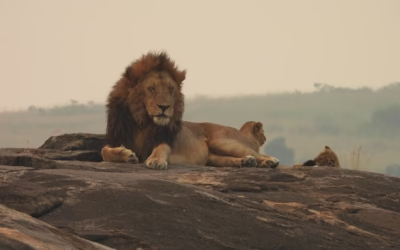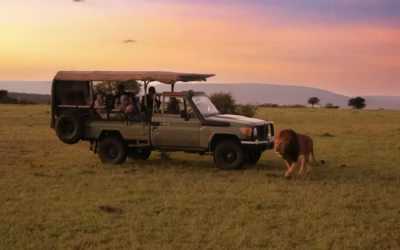
Big cats capture our imagination with their power, grace, and beauty. Tigers, lions, jaguars, and leopards are four of the most iconic big cats in the world, each with its unique characteristics and habitats. While they may seem similar at first glance, these magnificent animals have distinct differences that make them truly one-of-a-kind. This article will dive deep into what sets them apart, from their appearance and hunting styles to their social behaviors and conservation needs. Whether you’re a wildlife enthusiast or just curious about these incredible creatures, understanding these differences can make your next safari even more rewarding.
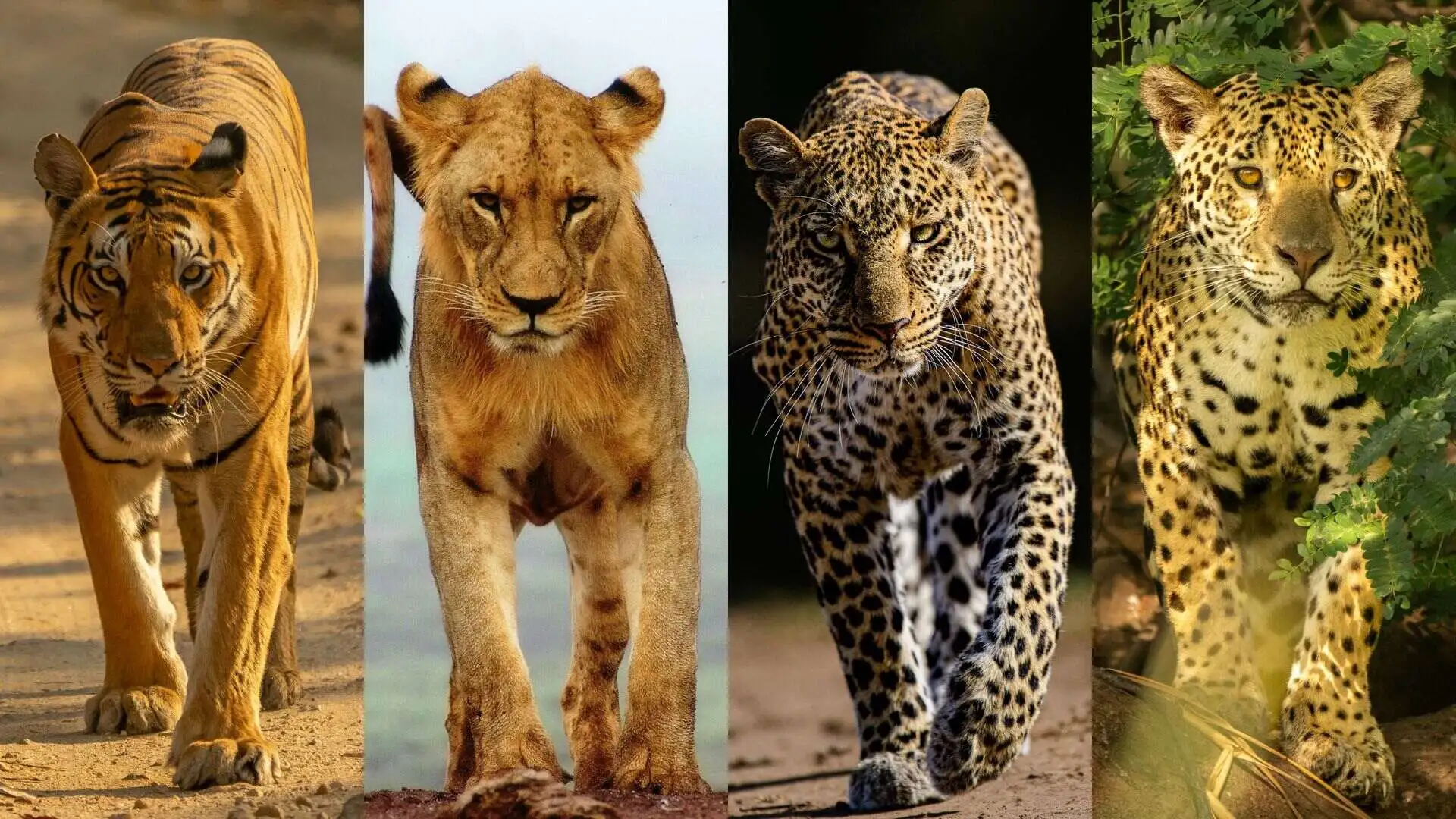
Tiger
The largest of all big cats. Solitary, powerful, and an excellent swimmer.
Lion
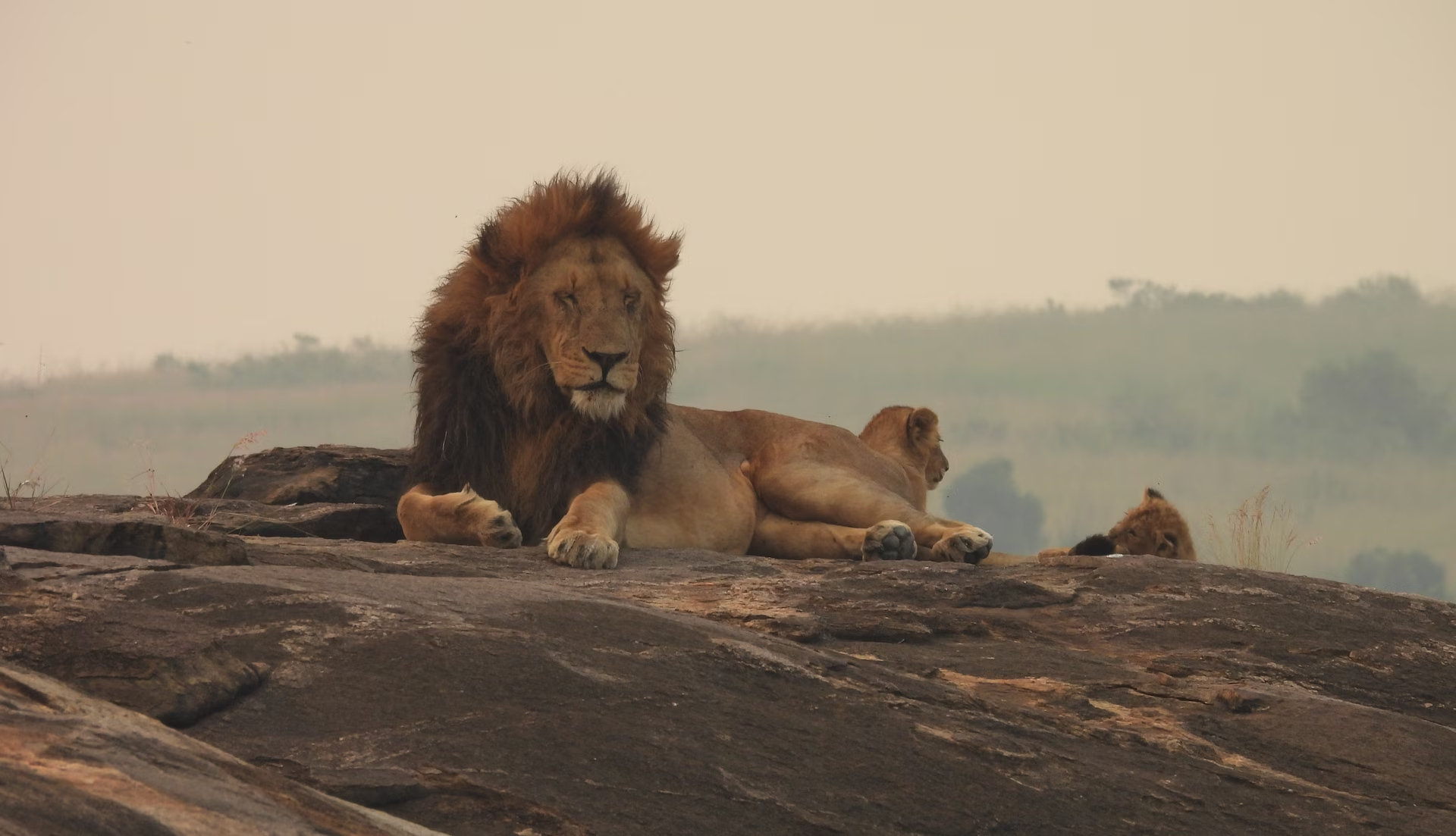
The only social big cat. Males have iconic manes and live in structured prides.
Leopard
Agile and elusive. Expert climber that often drags prey into trees.
Jaguar
Compact and powerful. Known for the strongest bite among all big cats.
Physical Appearance of Big Cats
Each of these big cats has unique features that help tell them apart, even from a distance.
Tiger
Tigers have a bright orange coat with bold black stripes running vertically along their bodies. The pattern is unique to each tiger, like a fingerprint. Some Bengal tigers are born with a rare white coat and blue eyes. Their heads are broad, with long whiskers and piercing yellow or green eyes.
Lion
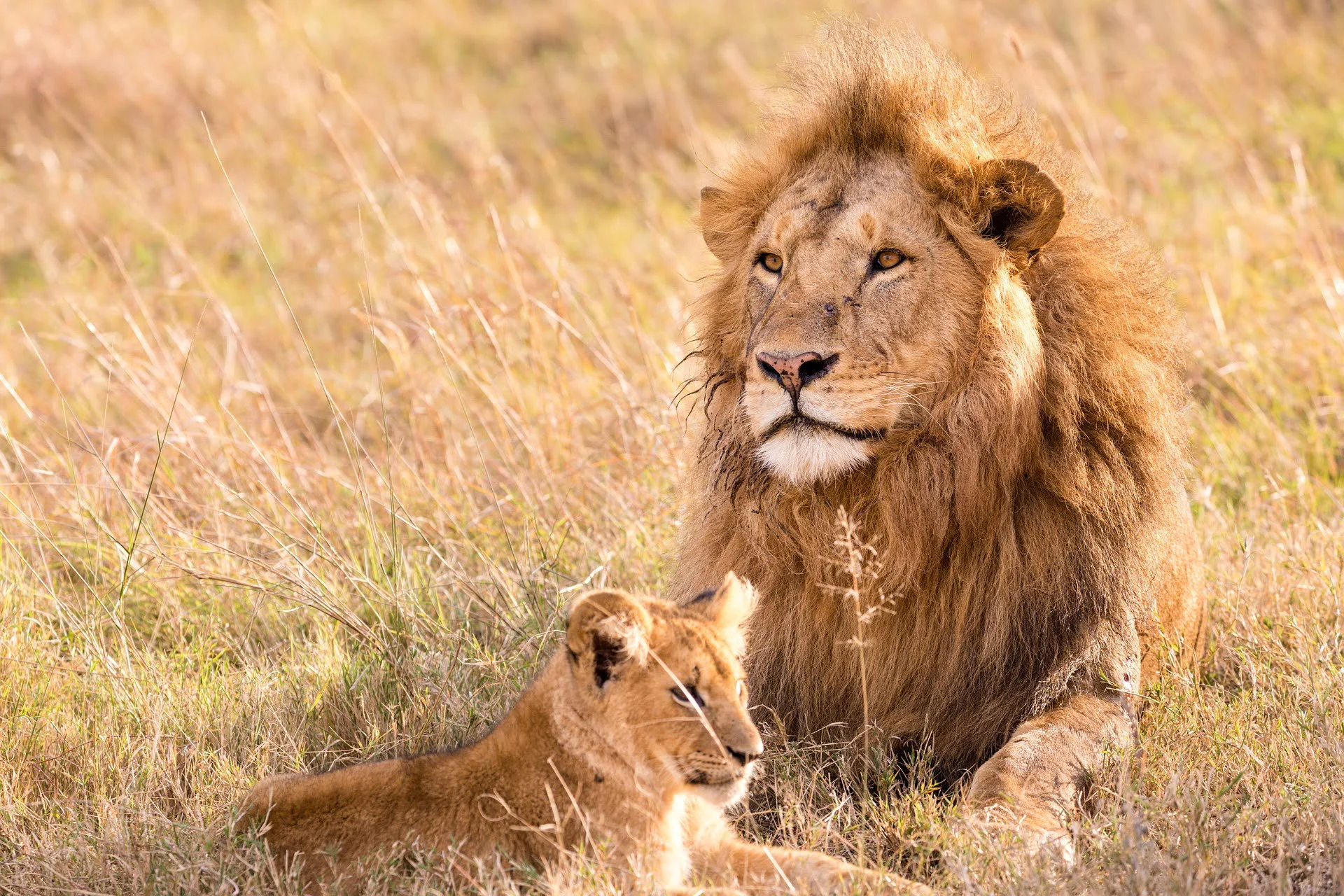
Lions are the only big cats where males and females look noticeably different. Males have a thick mane that frames their face and extends to the shoulders, while females are sleeker with no mane. Their fur is a uniform golden-tan color, and cubs are sometimes born with faint spots that fade with age.
Jaguar
Jaguars are golden yellow with black rosettes, each with a central black dot inside, a key way to tell them apart from leopards. Their faces are broad, and their jaws are wide and powerful. Their coat is dense and glossy, built for wet forest environments.
Leopard
Leopards have smaller, solid rosettes without central dots. Their coats are yellow to light gold, depending on the region, and their bodies are lean and well-balanced. Their tails are long and thick, helping them stay stable while climbing.
Black Panther (Black Leopard or Jaguar)
The term “black panther” refers to leopards or jaguars with a rare condition called melanism, which causes excess black pigment. In good light, you can still see their rosette patterns beneath the dark coat. These cats are not a separate species just a color variation.
Read more about Black Leopards in Africa
Size Differences Between Tigers, Lions, Jaguars, and Leopards
These big cats differ not just in appearance, but also in size and build. Some are built for brute strength, others for agility and stealth.
Tiger
Tigers are the largest big cats. Their bodies are long and heavy, with massive shoulders and thick necks.
Weight: 400-600 pounds (180-270 kg)
Length: Up to 10-12 feet (3-3.6 meters) including the tail
Lion
Lions are slightly smaller than tigers but still very large. Males tend to be heavier and more muscular, while females are slimmer and more agile.
Weight:
- Males: 330-500 lbs (150-225 kg)
- Females: 270-400 lbs (120-180 kg)
Length: Up to 9-10 feet (2.7-3 meters) including the tail
Jaguar
Jaguars are shorter and more compact. Their stocky build gives them explosive strength, especially in the bite.
Weight: 100-250 lbs (45-115 kg)
Length: 5.5-6.5 feet (1.7-2 meters) including the tail
Leopard
Leopards are the smallest of the four but surprisingly strong for their size. Their slim bodies help them climb trees with ease.
Weight: 66-176 lbs (30-80 kg)
Length: 5-6.2 feet (1.5-1.9 meters) including the tail
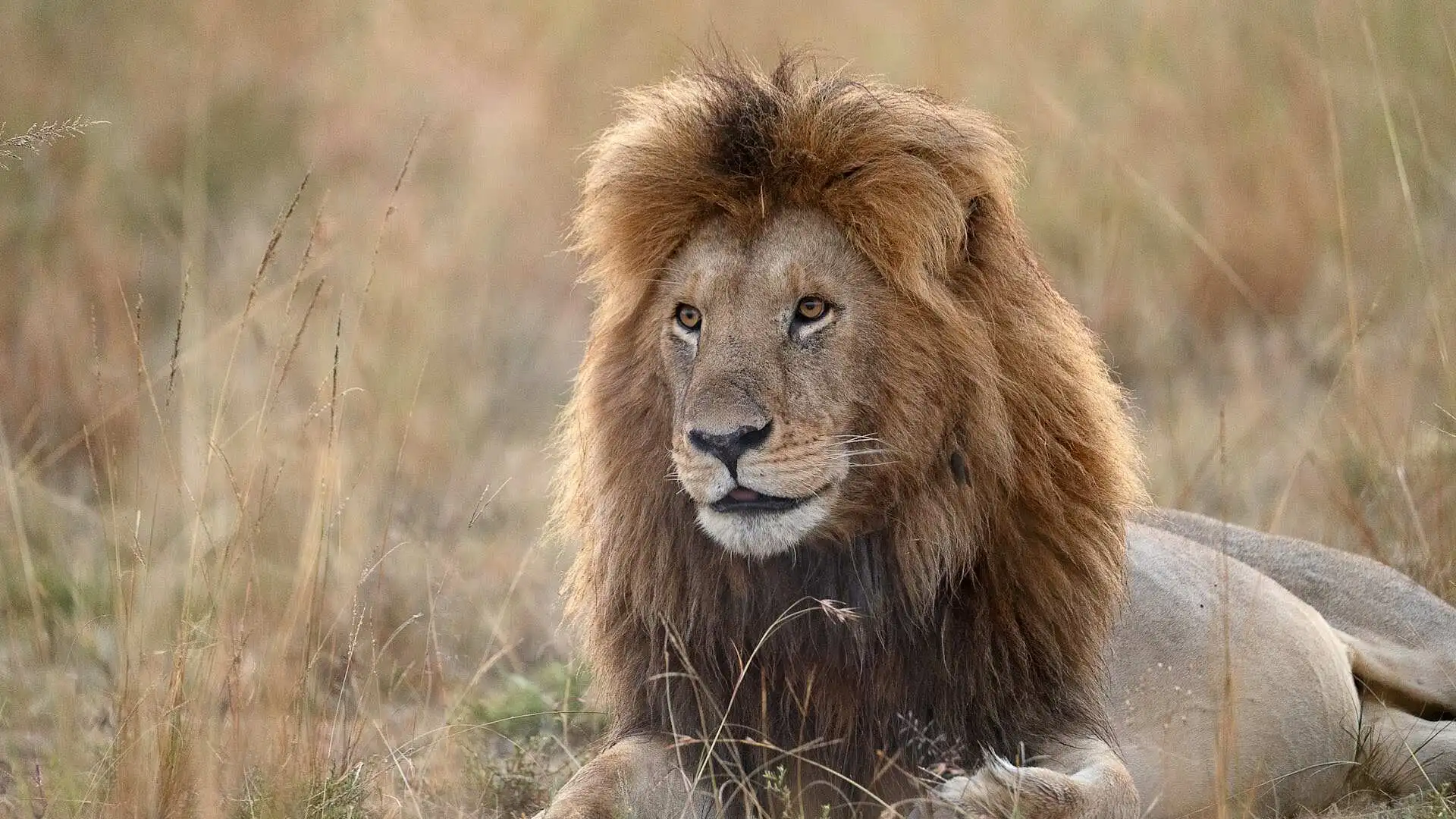
Lion in Masai Mara
Habitat and Distribution
The habitats of these big cats vary widely, adapted to different parts of the world.
Tiger
Tigers prefer dense forests and grasslands, with a large range that includes India, Southeast Asia, and parts of Siberia. India is home to the Bengal tiger, which thrives in various terrains from grasslands to mangrove swamps.
Lion
Primarily found in the African savannas, lions also inhabit some desert regions and scrublands. A small population of Asiatic lions resides in the Gir Forest of India, a unique habitat where they are protected.
Jaguar
Jaguars are native to the rainforests and wetlands of South America, especially the Amazon Basin. They are highly dependent on water sources and are excellent swimmers.
Leopard
Leopards are the most versatile of the big cats, found across sub-Saharan Africa, parts of Asia, and even into the Middle East. They are highly adaptable, thriving in forests, mountains, grasslands, and urban areas.
Hunting Techniques and Diet
Each big cat has a unique approach to hunting, influenced by its environment and physical abilities.
Tiger
Tigers are solitary hunters and rely on stealth and power. They usually ambush their prey, getting as close as possible before pouncing. Their diet includes deer, wild boar, and even buffalo.
Lion
Lions hunt in prides, using teamwork to take down large prey like zebras, wildebeest, and sometimes even buffalo. They often work together to corner and exhaust their prey before making the kill.
Jaguar
Known for having the strongest bite of any big cat, jaguars crush the skulls of their prey. They are ambush hunters, preying on animals like deer, capybaras, and even caimans. Jaguars are also exceptional swimmers, often hunting along riverbanks.
Leopard
Leopards are versatile, opportunistic hunters. They often drag their kills up into trees to avoid competition from scavengers. Their diet is varied, including everything from antelope to birds and reptiles.
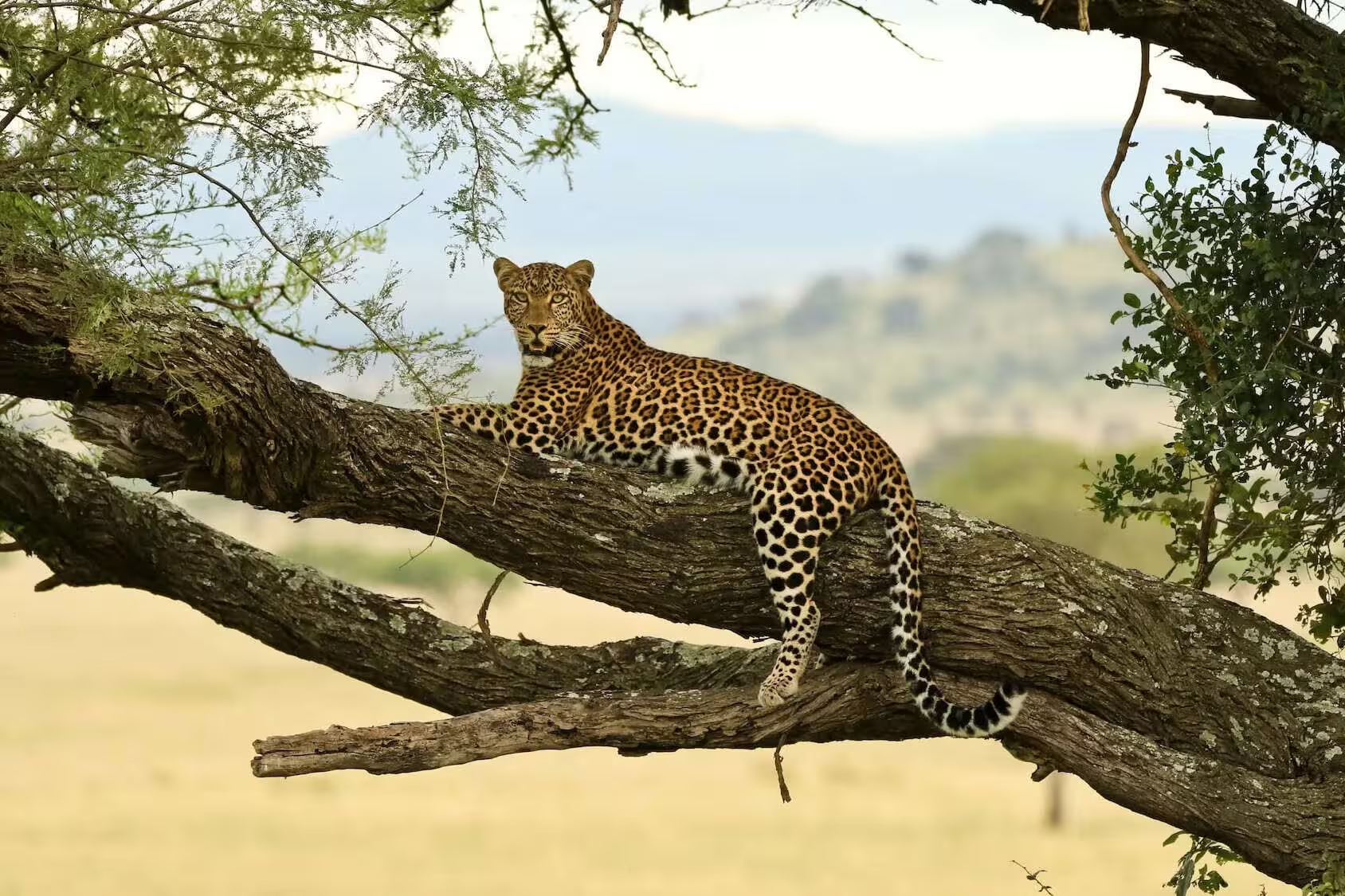
Leopard in Africa resting on tree
Social Structure and Behavior
Social behaviors vary significantly among these cats, influencing how they interact with each other and their environment.
Tiger
Tigers are solitary and highly territorial. They usually avoid each other except during mating or when a mother is raising her cubs. They mark their territories with scent marks and vocalizations.
Lion
Lions are the only truly social big cats, living in prides with a distinct hierarchy. Prides are often family groups, led by females and guarded by one or more males. This social structure helps them protect territories and care for young.
Jaguar
Jaguars are solitary and territorial, roaming large distances alone except during mating or when a mother raises cubs. They rarely tolerate other jaguars within their territory.
Leopard
Leopards are solitary, shy, and elusive. They are highly adaptable to different habitats, often living near human populations without being noticed.
Genetic Differences and Evolution
Though tigers, lions, jaguars, and leopards all belong to the genus Panthera, they evolved in different parts of the world, adapting to their unique environments over millions of years. Their common ancestor likely originated in Asia around 2 to 3 million years ago. From there, species spread and evolved in isolation, leading to today’s distinct big cats.
Jaguars took a different evolutionary path when they migrated into the Americas via the Bering land bridge. That’s why they’re found only in Central and South America, while the others are native to Africa and Asia. Genetically, jaguars are more closely related to leopards than tigers or lions, but their shorter, stockier build and incredibly strong jaws reflect adaptations to dense forests and tough prey. These evolutionary paths explain not only their physical differences but also their behaviors, habitats, and hunting styles.
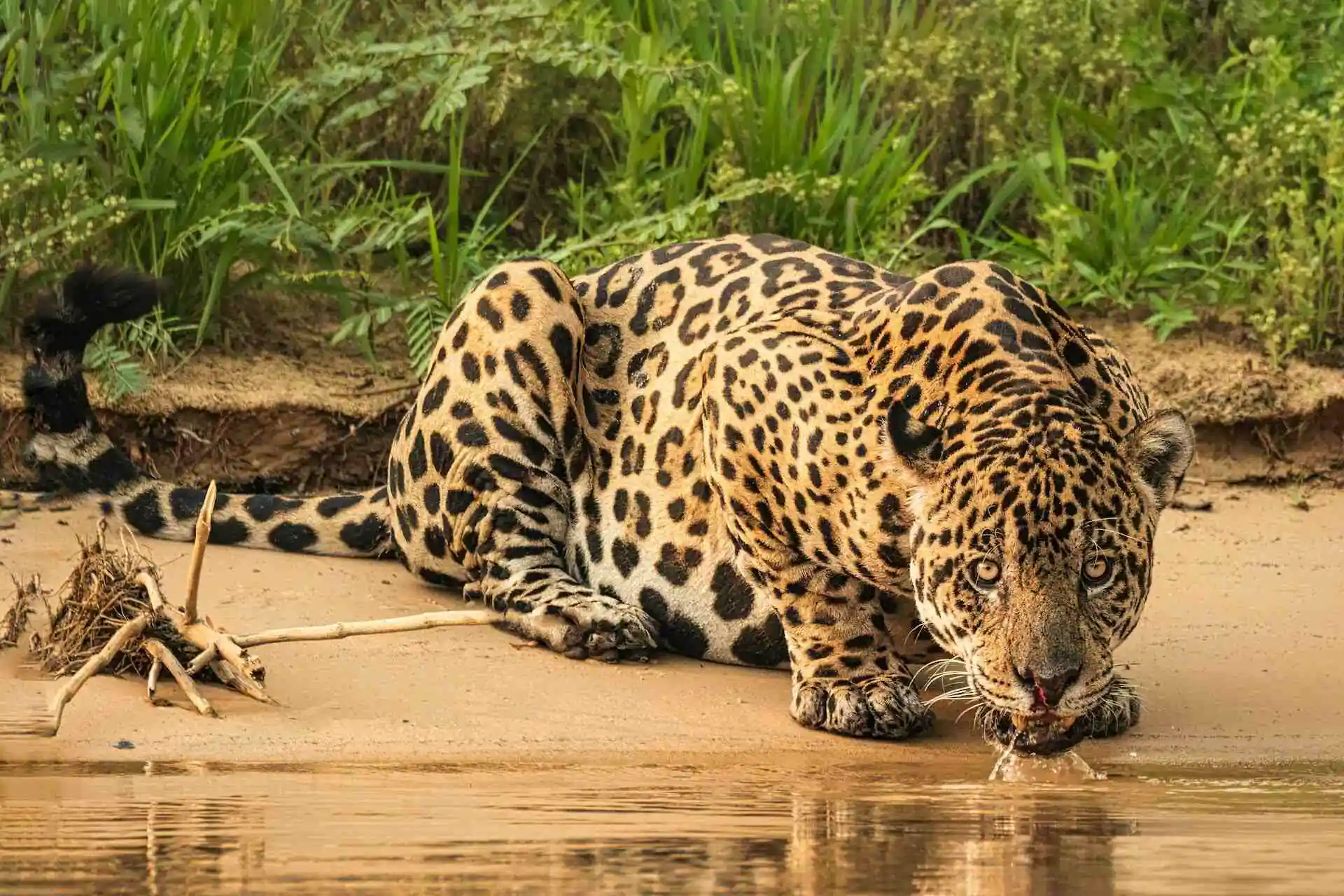
Jaguar drinking water in Pantanal
Strength and Abilities
These big cats are powerful in different ways, adapted to excel in their habitats.
Tiger
Tigers are known for their raw power and ability to take down prey larger than themselves. They are also strong swimmers, often cooling off in lakes and rivers.
Lion
While not as powerful as tigers, lions have immense stamina, enabling them to chase down prey. The pride structure also makes them formidable in cooperative hunts.
Jaguar
Jaguars have the strongest bite force relative to their size, able to crush bones and even turtle shells. They are strong swimmers, which is crucial for hunting along riverbanks.
Leopard
Leopards are incredibly agile and strong for their size. They are unmatched climbers, often dragging their prey into trees for safety.
Big Cat Showdown: Who Tops the List?
Each of these big cats has its own strengths, but who leads in what? Here’s a quick breakdown of who comes out on top in different categories:
| Category | Winner | Why? |
|---|---|---|
| Strongest Bite | Jaguar | Their bite can crush skulls and even turtle shells. Jaguar's bite force is approx. 1,500 psi (pounds per square inch) |
| Best Climber | Leopard | Agile and stealthy, they often carry prey into trees. |
| Largest Size | Tiger | The tiger is the biggest of all big cats. The Siberian tiger, in particular, is the largest subspecies in both weight and length |
| Best Swimmer | Tiger & Jaguar | Both love water and are excellent swimmers. |
| Fastes Runner | Leopard | While the cheetah is the fastest land animal, among the Panthera genus, the leopard is the swiftest, reaching speeds up to 58 km/h (36 mph) |
| Best Jumper | Tiger | Can leap over 10 meters (32 feet) in a single bound. |
| Strongest Overall | Tiger | Largest in size and capable of taking down massive prey alone. |
Conservation Status and Threats
These big cats face various threats that make conservation efforts essential.
Tiger
Listed as Endangered on the IUCN Red List, tigers face threats from poaching, habitat loss, and human conflict. Conservation efforts in India, like Project Tiger, focus on habitat protection and anti-poaching measures.
Lion
African lions are listed as Vulnerable, with Asiatic lions listed as Endangered. Major threats include habitat loss, trophy hunting, and human-wildlife conflicts. Conservation in Africa and India aims to protect remaining populations and their habitats.
Jaguar
Jaguars are considered Near Threatened due to deforestation, illegal hunting, and habitat loss. Conservationists are working on preserving South American rainforests and securing protected areas for jaguars.
Leopard
Leopards are listed as Vulnerable, with threats from habitat loss, poaching, and human conflict. They are more resilient than other big cats due to their adaptability, but habitat protection remains crucial.
Comparison table for Tigers, Lions, Jaguars, and Leopards
| Feature | Tiger | Lion | Jaguar | Leopard |
|---|---|---|---|---|
| Size | Largest; 400-600 lbs; up to 10+ feet long | Second largest; 330-500 lbs; males have manes | Compact; 100-250 lbs | Smallest; 66-176 lbs |
| Coat Pattern | Orange with black stripes | Tan with a mane in males | Rosettes with a central dot | Rosettes without central dot |
| Habitat | Forests and grasslands in Asia | African savannas; small population in India | South American rainforests | Diverse; found in Africa, Asia, and the Middle East |
| Hunting Style | Solitary; ambush hunter | Group hunting in prides | Solitary; powerful ambush hunter | Solitary; agile, often drags prey into trees |
| Preferred Diet | Deer, wild boar, buffalo | Zebras, wildebeest, buffalo | Deer, capybara, caiman | Antelope, birds, reptiles |
| Social Behavior | Solitary, territorial | Social; lives in prides | Solitary, territorial | Solitary and elusive |
| Unique Abilities | Powerful, great swimmer | Stamina, cooperative hunters | Strongest bite force; excellent swimmer | Agile climber; adaptable |
| Conservation Status | Endangered | Vulnerable (African); Endangered (Asiatic) | Near Threatened | Vulnerable |
| Main Threats | Poaching, habitat loss, human conflict | Habitat loss, hunting, human conflict | Deforestation, habitat loss | Habitat loss, poaching, human conflict |
Each of these big cats is remarkable in its own way, from the solitary strength of the tiger to the social structure of the lion, the powerful bite of the jaguar, and the agility of the leopard. Understanding their differences not only deepens our appreciation for these animals but also highlights the importance of conserving them in their natural habitats. For a closer look at these majestic creatures, consider experiencing them firsthand on a safari, where you can witness their unique behaviors and habitats up close with responsible wildlife tourism.