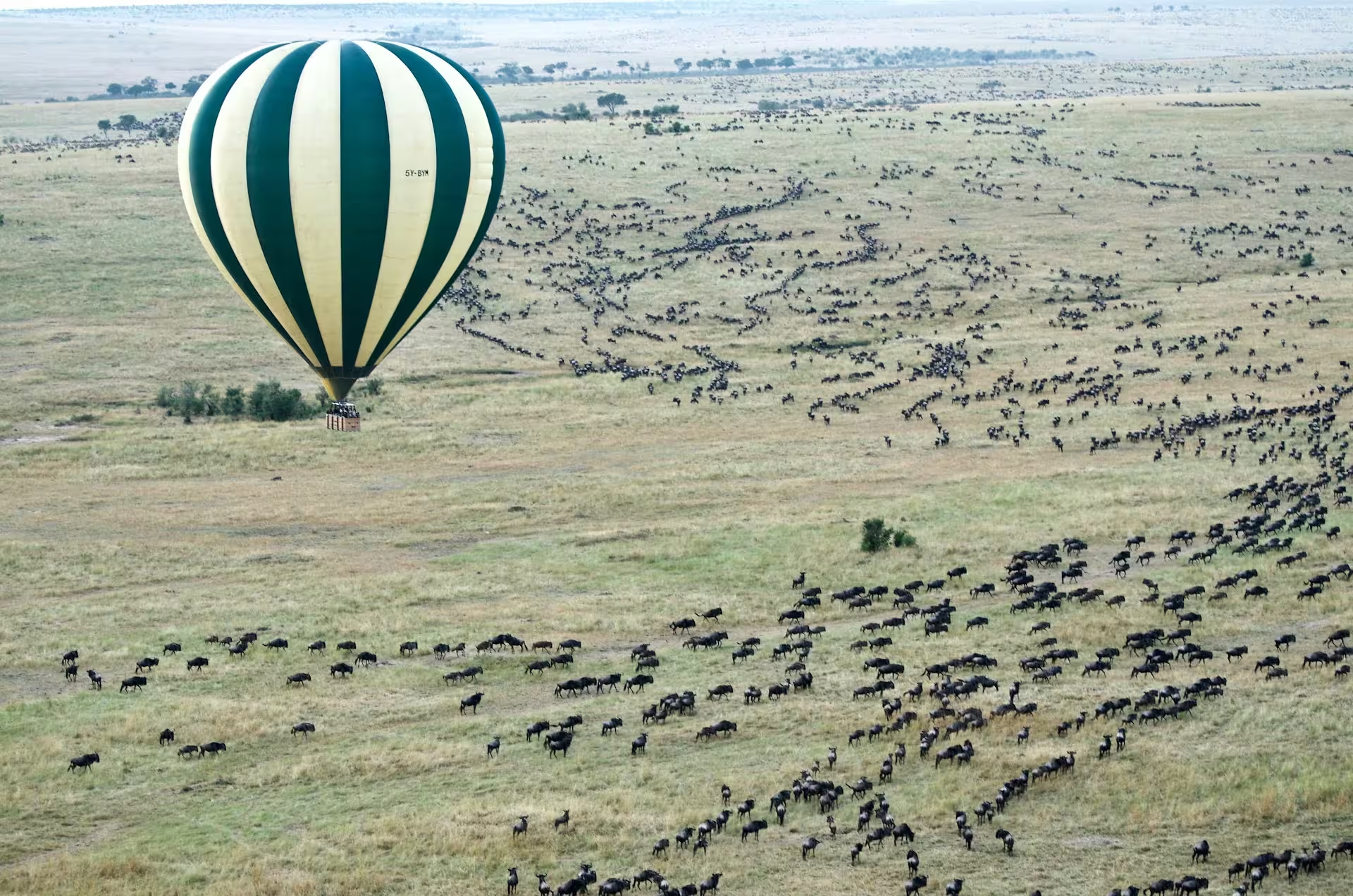
Every year, two million animals move across East Africa in a loop that never fully stops. Most travellers know the broad outline. A vast herd. A river crossing. Crocodiles. Dust.
What most travellers do not know fills a longer list. The crossing is unpredictable. The name is wrong. The calving season is more dramatic than the river, and almost nobody goes. The return journey moves through empty country with no crowds and no fanfare.
The version sold on safari brochures is real. It is also a small fraction of what actually happens.
The migration does not pause between the moments tourists photograph it.
The Name Is Misleading
The wildebeest migration is not a wildebeest migration. The name does two things wrong at once.
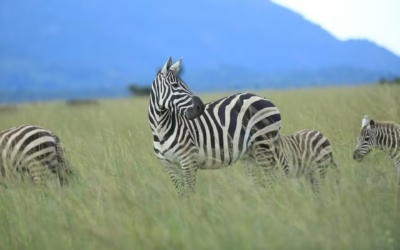
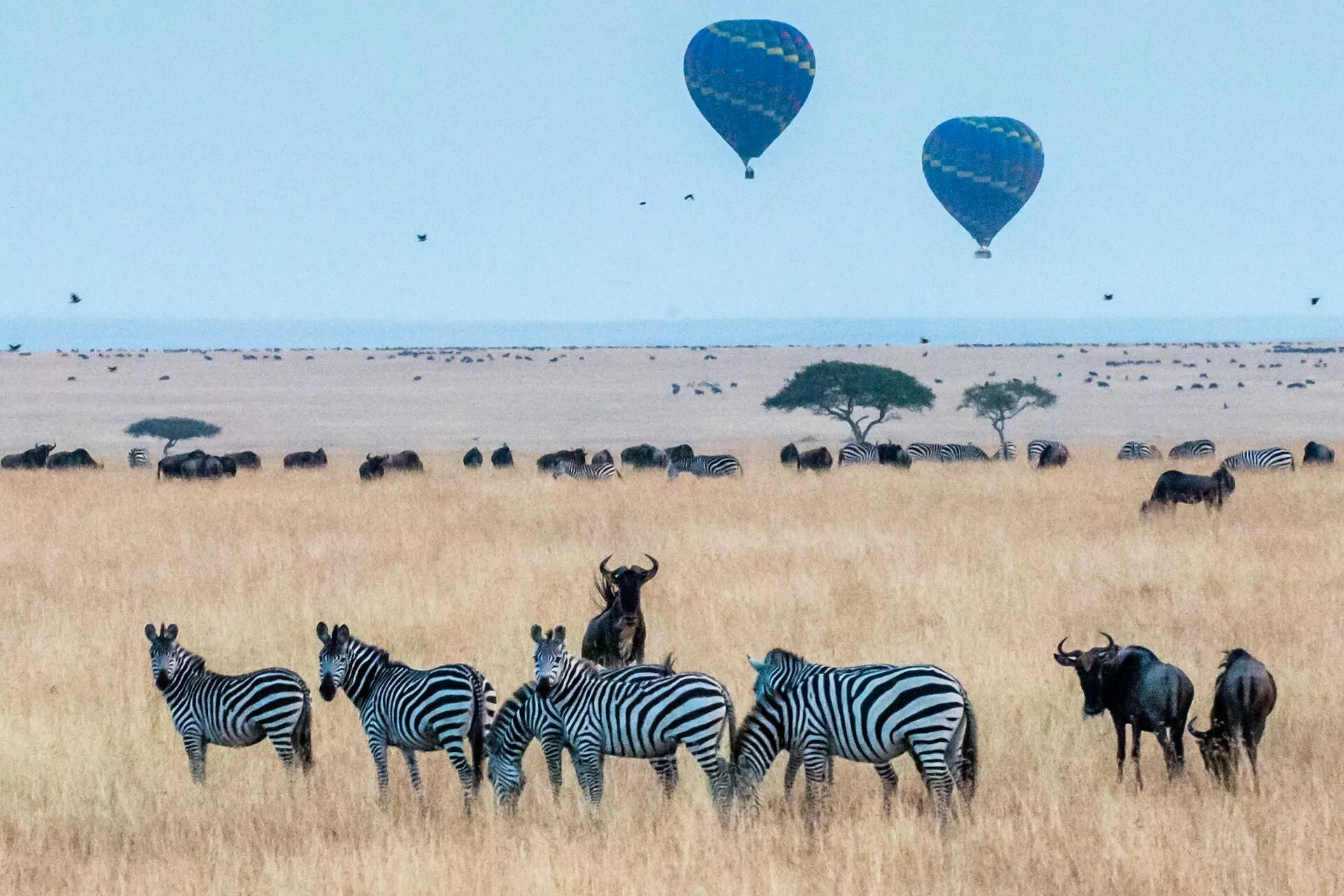
First, it names a single species when the movement carries at least three in significant numbers. Around 300,000 plains zebra travel the same loop. Half a million Thomson’s gazelle follow the same grass. Eland, topi, and other antelope move with the herds across the same corridors. Calling it the wildebeest migration erases the wider ecological event.
Second, the word migration carries a specific meaning in most people’s minds. Birds migrate, a direct flight from one location to another and back. What happens on the Serengeti-Mara ecosystem is a continuous circuit. The animals do not depart and arrive. They rotate. They follow grass, not a calendar. The movement never fully stops and has no fixed starting point.
A more accurate description would be the Great Plains Circuit, or the East African Grazing Cycle. Neither has caught on. The brochure name has too much momentum to shift now. But understanding what it actually describes changes how you read the event.
The Migration Is Not a Single Event
Most safari itineraries are built around the Mara River crossings between July and October. That is one phase of a twelve-month cycle that runs across seven distinct ecosystems.
The herds do not gather, cross, and disperse. They rotate through a landscape the size of a small country, following the rains and the green grass those rains produce. When the grass exhausts in one area, the herds move. The movement is the constant. The location shifts with the season.
A traveller who witnesses a Mara River crossing has seen one of the most dramatic moments in the cycle. They have also seen roughly three days of a three-hundred-and-sixty-five-day event. The rest of the year carries equal intensity in different forms.
The table below maps the full annual cycle, where the herds are, and what is happening in each phase.
| Month | Location | What Is Happening |
|---|---|---|
| January – March | Southern Serengeti & Ndutu | Calving season. 8,000 calves born per day at peak. Dense predator activity. |
| April – May | Central Serengeti | Herds move north. Long rains begin. Grass flush drives the movement. |
| June – July | Western Corridor, Grumeti | Grumeti River crossings. Enormous crocodiles. Far fewer tourists than Mara. |
| July – October | Northern Serengeti & Masai Mara | Mara River crossings. Peak tourist season. Herds split across Kenya and Tanzania. |
| November | Eastern Serengeti, Loliondo | The return south begins. Quiet, uncrowded. Almost no safari itineraries cover this. |
| December | Southern Serengeti | Herds re-enter calving grounds. The cycle resets. |
The Numbers Behind the Movement
The scale of the migration does not reduce to a single headline figure. It runs across species, births, deaths, and distance in ways that compound into something larger than any one number suggests.
| What Moves | Approximate Count |
|---|---|
| Wildebeest | 1.5 million |
| Plains zebra | 300,000 |
| Thomson's gazelle | 500,000 |
| Eland and other antelope | ~100,000 |
| Calves born in February alone | 400,000 – 500,000 |
| Calves born per day at peak calving | ~8,000 |
| Distance covered annually | 800 – 1,000 km |
| Wildebeest lost to drowning per season | Up to 6,000 |
| Crocodiles in the Mara River | ~3,000 |
The Calving Season Nobody Talks About
In February, the southern plains of the Serengeti hold the highest concentration of large mammal births on earth. Around 400,000 to 500,000 wildebeest calves arrive in a window of four to six weeks. At the peak, roughly 8,000 calves are born in a single day.
The timing is not accidental. The short rains of November and December trigger a flush of nutritious short grass across the Ndutu and southern Serengeti plains. The grass is rich in the minerals a lactating wildebeest needs. Births cluster here by evolutionary design.
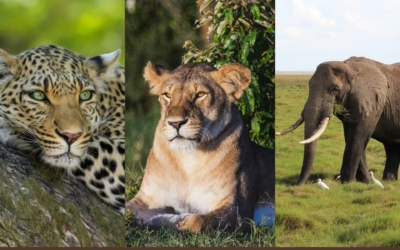
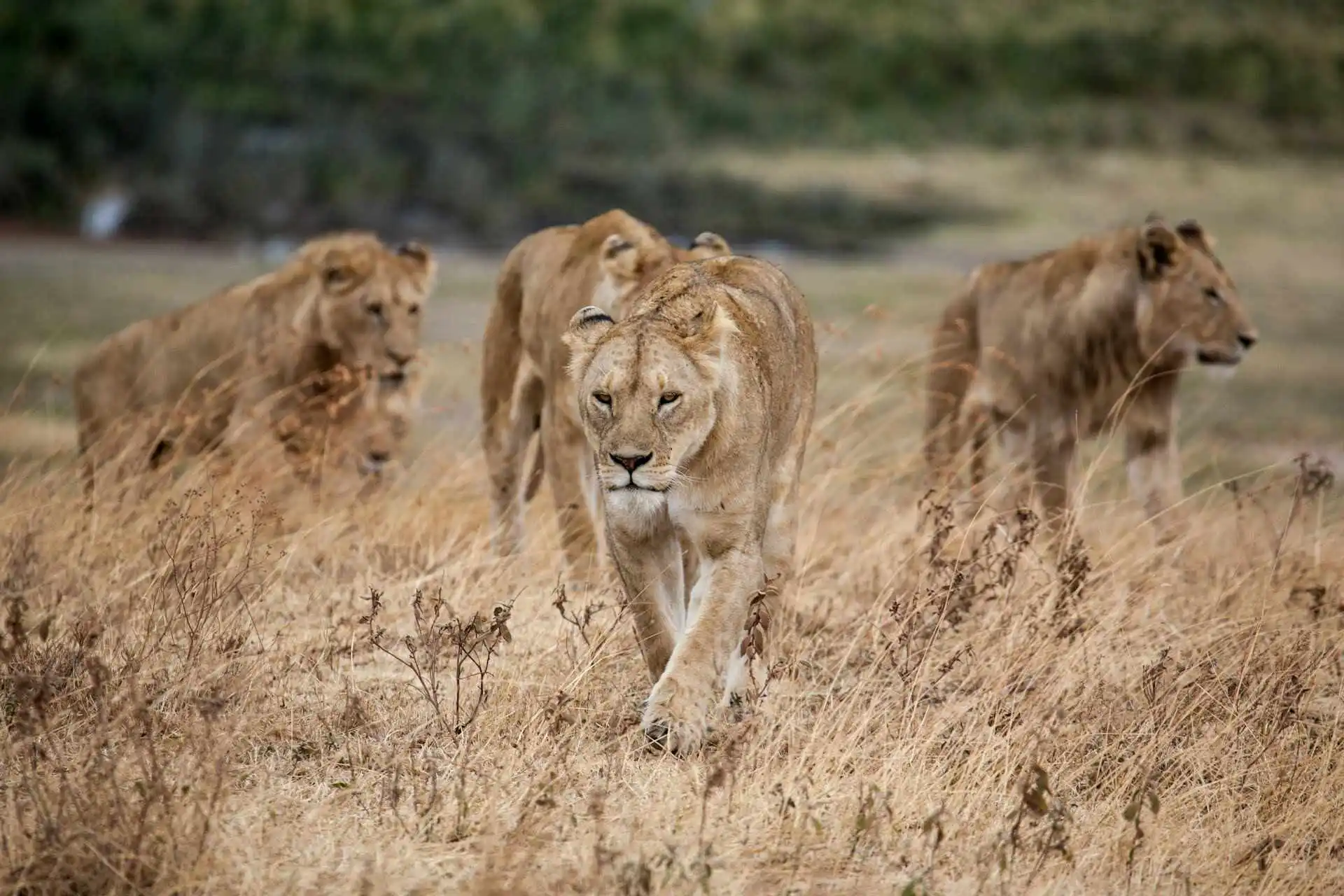
Predator density during calving season rivals anything the Mara crossings produce. Lions, cheetahs, leopards, hyenas, and wild dogs converge on the plains. A newborn wildebeest can stand and run within seven minutes of birth. It needs to.
Calving season is the most intense wildlife event in Africa. Most tourists miss it entirely.
The reason is timing. February sits outside the peak safari window that fills lodges from July to October. The southern Serengeti in February is uncrowded, accessible, and carries wildlife viewing that outpaces almost anything the famous crossings deliver. It simply does not photograph as dramatically as a river full of animals, so it does not appear in the same volume of content.
How the Herds Actually Navigate
There is no leader. No single animal sets the route. No advance scout reads the landscape and signals the direction.
The movement self-organises across more than a million animals through a mechanism researchers still do not fully understand. The working explanation involves grass quality, rainfall detection, and a form of collective behaviour where the movement of adjacent animals creates a signal that propagates through the herd. When enough animals begin walking in one direction, the rest follow.
The route is not fixed. Year to year, the path shifts. In seasons where the short rains arrive late, the calving grounds shift east. In dry years, the herds push north earlier. The movement tracks conditions, not habit. A map of the migration from one year does not reliably predict the next.
This is why no guide can guarantee a river crossing. The herd reads something the guide cannot. An approaching thunderstorm, a shift in wind, a change in the scent from the far bank – any of these can turn two hundred thousand animals in a different direction after hours of standing at the water’s edge.
The River Crossings Are Unpredictable
The Mara River crossing is the most photographed moment of the migration. It is also the least predictable.
Herds gather at the bank and wait. Sometimes for hours. Sometimes for days. The lead animals approach the water, read something in the current or the far bank, and pull back. The herd follows. This cycle can repeat many times before a crossing begins.
What triggers the crossing is a single animal committing to the water. Not the largest, not the oldest. Sometimes a young animal at the edge of the group. Once one body hits the current, the animals behind follow in a wave that can number in the tens of thousands. The decision belongs to the herd, but the trigger belongs to one.
Guides who have spent years at the Mara River still cannot reliably predict when a crossing will happen. They read indicators herd size, agitation at the bank, how long the animals have been waiting, wind direction. None of it is certain. The crossing happens when the herd decides.
What Happens Underwater at the Crossings
The Nile crocodile is the most efficient ambush predator in the river. During crossing season, crocodiles position themselves in the deep pools where the current slows and the animals must swim rather than walk. They do not chase. They wait for the crossing to deliver animals into range.
Drowning takes more wildebeest than crocodiles do. The current in the Mara River runs strong during the rainy months when the crossings peak. Animals that enter at poor crossing points face deep water, fast current, and the pressure of thousands of animals pushing from behind. Up to 6,000 wildebeest drown in a single crossing season in high-water years.
The carcasses that reach the banks feed a separate food chain. Vultures descend within minutes. Marabou storks follow. Hyenas and lions take position on the banks. A crossing does not end when the last animal climbs the far bank. The river keeps feeding for days afterward.
The Western Corridor Almost Nobody Visits
Between June and July, the herds move northwest through the Serengeti’s Western Corridor before turning north toward Kenya. They reach the Grumeti River a narrower, slower waterway than the Mara, but one that holds crocodiles of exceptional size.
The Grumeti crocodiles are larger on average than those in the Mara. The river pools are shallower. The crossings are shorter but no less brutal. Some of the largest individual crocodiles recorded in East Africa hold territory in the Grumeti.
Visitor numbers in the Western Corridor in June and July are a fraction of what the Mara carries in August and September. The camps that operate here Grumeti River Camp, Singita Sabora, Kirawira serve a small number of guests in near-private conditions. The wildlife density at this time rivals the Mara. The crowds do not.
Why the Migration Is Getting Harder to Predict
The migration has always tracked rainfall. The grass follows the rain. The herds follow the grass. For decades, the seasonal pattern held with enough regularity that safari operators could build itineraries around it with reasonable confidence.
That regularity is shifting. Rainfall in East Africa has become less predictable across the last two decades. The short rains arrive late or fail. The long rains compress or spread. Grass growth timing changes. The herds respond to what is actually on the ground, not to the historical average.
The calving season timing has shifted by several weeks in some years. Mara River crossing windows have extended in some seasons and shortened in others. A trip planned around historical peak dates now carries more uncertainty than it did fifteen years ago.
Operators with long-term presence in the ecosystem guides who have tracked the herds for twenty or thirty years, carry the most reliable read on any given season. A good guide’s seasonal assessment is worth more than any fixed itinerary date.
What Most Safari Travellers Never See
In November, the herds begin moving south. They leave the Masai Mara, cross back into Tanzania, and move east and south through Loliondo and the eastern Serengeti toward the calving grounds they left eleven months earlier.
There are no river crossings on this leg. No dramatic single moment. Just two million animals walking through open country under an enormous sky, the dust of the movement visible from kilometres away.
Almost no safari itineraries are built around the return. The camps that serve the northern Serengeti in November are lightly booked. The roads hold little traffic. The landscape has the quality of somewhere the tourist infrastructure has not yet reached, even though it sits inside one of the most visited ecosystems on earth.
The return leg is the migration without the audience. The animals move the same way they have moved for thousands of years. The grass draws them home. The cycle closes and immediately begins again.
What Big Cats Safari Wants You to Know
The Mara River crossing is worth seeing. It is one of the genuine spectacles of the natural world. It is also the one moment the whole safari industry has organised itself around, which means it carries the crowds, the prices, and the vehicle congestion that follow concentrated demand.
Every other phase of the cycle carries real wildlife. Calving season in February delivers predator density and birth drama that no crossing matches. The Western Corridor in June holds large crocodiles and small visitor numbers. The return journey in November gives you the movement without the audience.
The migration runs every day of the year. A good trip finds the phase that fits the traveller, not just the phase that fills the brochure.
Two million animals are moving somewhere in East Africa right now. The only question is where you meet them.