
Kaziranga National Park
About Kaziranga
Kaziranga National Park is one of India's best-known wildlife destinations and a UNESCO World Heritage Site. Located in Assam, the park lies across the floodplains of the Brahmaputra River and has tall grasslands, wetlands, forests and shallow pools.
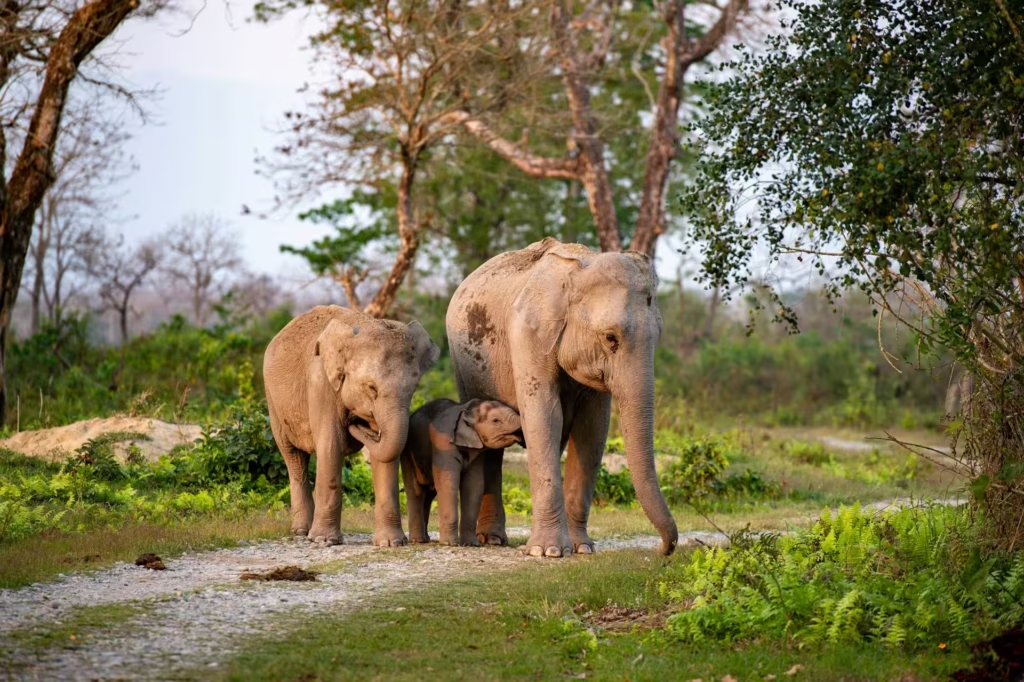
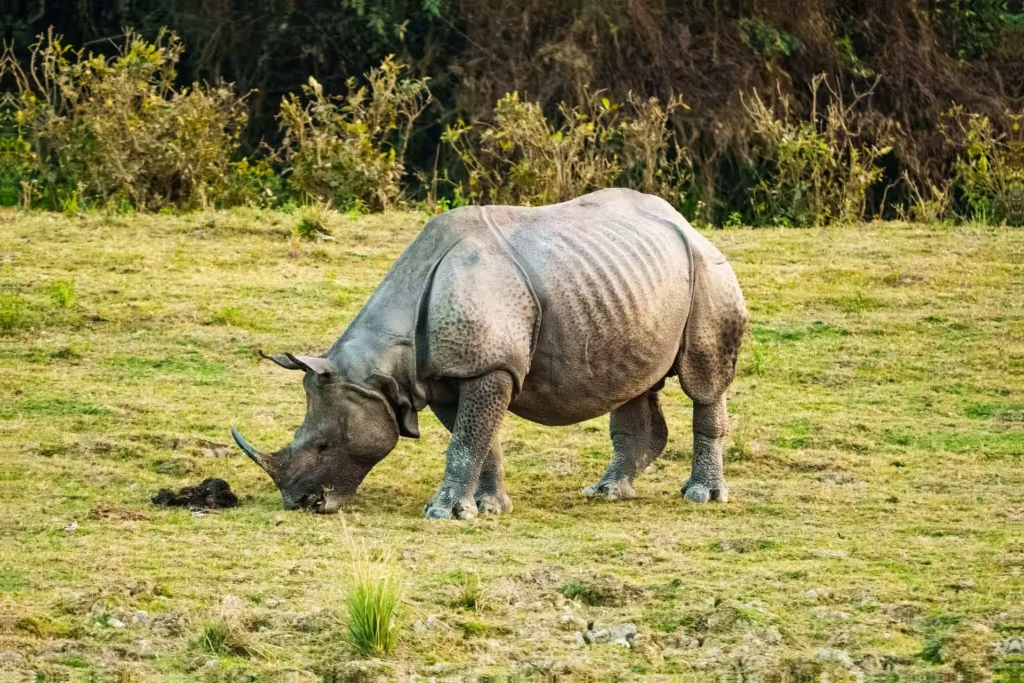
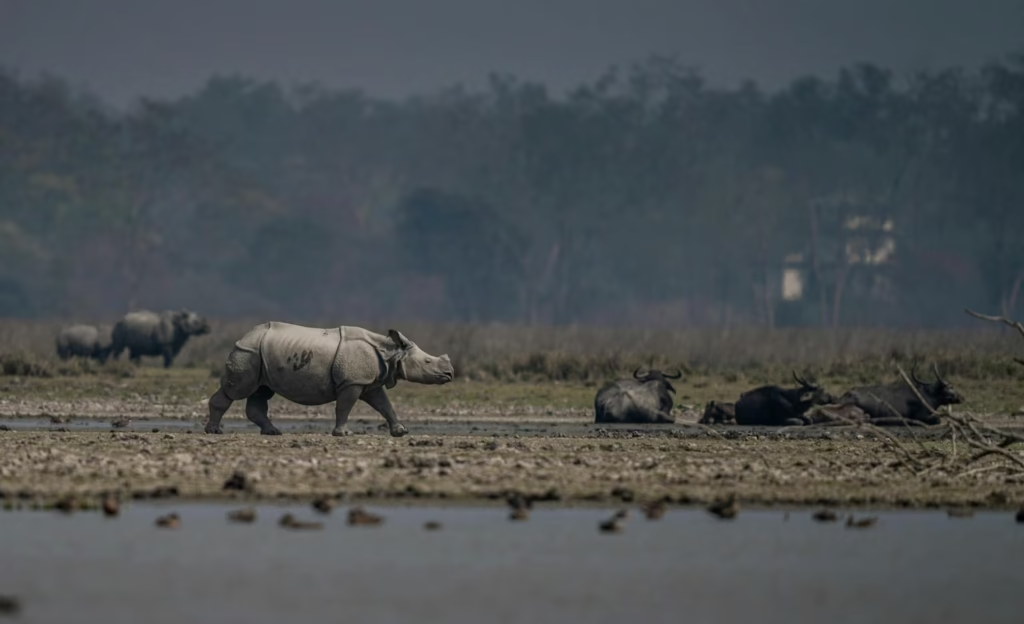
Kaziranga is famous for its Indian one-horned rhinoceros and also supports tigers, Asian elephants, wild water buffalo, swamp deer, sambar, hog deer, wild boar and many bird species. The park is also a Tiger Reserve and has one of the highest tiger densities among protected areas in India.
858.98 sq km
Total Reserve Area
2,600
One-Horned Rhinos
Kohora
Main Tourism Hub
Nov-Apr
Main Safari Season
Wildlife in Kaziranga
Kaziranga has a wide range of mammals, birds and reptiles. The Indian one-horned rhinoceros is the main attraction, while its grasslands, wetlands and forests support elephants, wild buffalo, swamp deer, tigers and many other species. The Assam Forest Department records around 480 bird species in the park.
Apex Predators & Herbivores (Mammalia)
One-horned Rhinoceros
Rhinoceros unicornis
Royal Bengal Tiger
Panthera tigris
Asian Elephant
Elephas maximus
Wild Water Buffalo
Bubalus arnee
Swamp Deer
Rucervus duvaucelii
Sambar Deer
Rusa unicolor
Hog Deer
Axis porcinus
Gaur
Bos gaurus
Avifauna & Forest Raptors (Aves)
Great Hornbill
Buceros bicornis
Bengal Florican
Houbaropsis bengalensis
Lesser Adjutant
Leptoptilos javanicus
Black-necked Stork
Ephippiorhynchus asiaticus
Asian Openbill
Anastomus oscitans
Greater Adjutant
Leptoptilos dubius
Reptiles & Amphibians (Reptilia)
King Cobra
Ophiophagus hannah
Indian Rock Python
Python molurus
Bengal Monitor Lizard
Varanus bengalensis
Indian Flapshell Turtle
Lissemys punctata
Kaziranga Safari Packages
Duration : 6 Days
Destination : Delhi › Guwahati › Manas › Kaziranga › Guwahati
Duration : 8 Days
Destination : › Guwahati › Manas › Kaziranga › Gibbon Sanctuary › Guwahati
Kaziranga Safari Zones
aziranga National Park has four main tourism ranges: Central, Western, Eastern and Burapahar. Each range covers a different part of the park and has its own landscape and wildlife habitats.
Zone 01
Rhino & Wildlife Sightings
Central Range (Kohora)
The Central Range is the main tourism area of Kaziranga and is accessed through Kohora Gate. The range has grasslands, wetlands and forest areas that support one-horned rhinos, elephants, deer, wild buffalo and many bird species.
Main Entry Gate
Kohora Gate
BEST KNOWN FOR
One-horned rhinos, elephants, wetlands and birdlife
Zone 02
Rhino & Grassland
Western Range (Bagori)
The Western Range is accessed through Bagori Gate and has open grasslands, wetlands and forest patches. It is known for sightings of one-horned rhinos, wild water buffalo, elephants and several bird species.
Main Entry Gate
Bogori Gate
BEST KNOWN FOR
Rhinos, grasslands and large herbivores
Zone 03
Wetland & Birdlife
Eastern Range (Agaratoli)
The Eastern Range is accessed through Agaratoli Gate and has extensive wetlands, grasslands and forest. Its water bodies attract many resident and migratory birds along with rhinos, elephants and other wildlife.
Main Entry Gate
Agaratoli Gate
BEST KNOWN FOR
Birdlife, wetlands and rhino sightings
Zone 04
Forest & Hills
Burapahar Range (Ghorakati)
The Burapahar Range is accessed through Ghorakati Gate and has a more varied landscape with forests, grasslands, streams and low hills. The range supports rhinos, elephants, deer, wild boar and other wildlife.
Main Entry Gate
Ghorakati Gate
BEST KNOWN FOR
Forest landscape, hills and varied wildlife
When to Book Kaziranga Rhino Safari
Safari permits in Kaziranga are limited for each range and safari round. Popular dates can fill quickly during winter holidays and the peak wildlife season.
For fixed travel dates, booking 2 to 4 months in advance gives you more choice of safari ranges and timings.
Your resort location should also match your safari range. Kohora, Bagori, Agaratoli and Burapahar are in different parts of the park.
Types of Safaris in Kaziranga
Kaziranga offers jeep safaris in its main tourism ranges. Elephant safaris are also available on selected routes and during specified periods, subject to forest department rules.
Jeep Safari
A Jeep Safari takes visitors into Kaziranga in an open 4×4 vehicle with a forest guide. The vehicle follows the permitted route within the selected tourism range.
Best for: Families, couples, photographers, small groups and wildlife enthusiasts.
Elephant Safari
Elephant Safaris take visitors through selected grassland areas with a trained mahout and forest staff. They provide a different way to explore the park and can offer close views of rhinos and other grassland wildlife.
Best for: Families, wildlife enthusiasts and visitors looking for a different safari option.
How Many Days Do You Need in Kaziranga?
The ideal stay depends on the number of safari drives you want and whether you are combining Kaziranga with other wildlife destinations.
2 Nights
Two nights work well for a short wildlife safari. You can plan two to three safari drives across the main tourism ranges.
3 Nights
Three nights allow three to four safari drives and give you more time to explore different ranges and habitats.
4 Nights
Four or more nights are better for wildlife photographers and visitors who want more safari drives across different ranges.
For most first-time visitors, 2 to 3 nights with 3 to 4 safari drives is a good option.
Typical Kaziranga Safari Itinerary
A 3-night Kaziranga trip gives you enough time for multiple safari drives without making the schedule too rushed. Most visitors stay near Kohora, Bagori or other safari areas and take morning and afternoon safaris during their stay.
Day 1: Arrive in Kaziranga, check in to your resort and take an afternoon safari if your travel schedule allows.
Day 2: Take a morning safari and return for breakfast. Spend the afternoon at leisure before an afternoon safari.
Day 3: Take another morning safari. You can spend the afternoon at leisure or take another safari before dinner.
Day 4: Take a final morning safari before checking out and continuing your journey.
Places to Combine With Kaziranga
Kaziranga is easy to combine with other wildlife destinations in Assam. Kaziranga and Manas offer different forest landscapes and wildlife habitats, while Hoollongapar Gibbon Wildlife Sanctuary adds a chance to see India's only ape species.
Kaziranga + Manas
Kaziranga and Manas make a strong Assam wildlife combination. Kaziranga is known for one-horned rhinos, while Manas supports tigers, elephants, wild buffalo, golden langurs and several bird species.
A 5 to 7-night itinerary gives enough time for several safaris in both parks.
Kaziranga + Gibbon
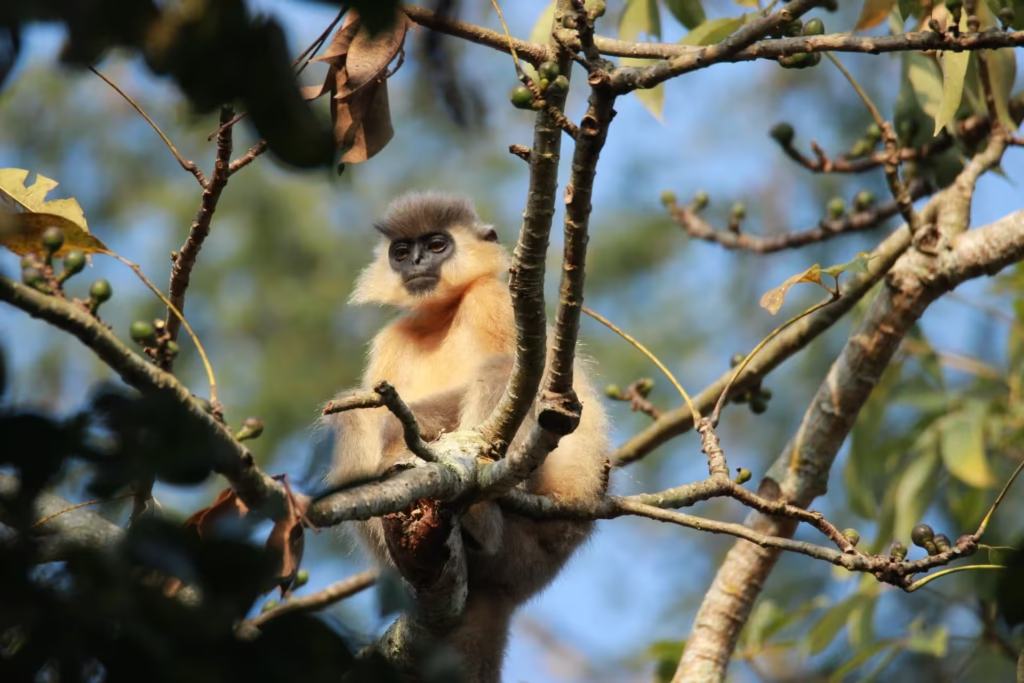
Kaziranga and Hoollongapar Gibbon Wildlife Sanctuary make a good combination for visitors interested in primates and forest wildlife. Gibbon Sanctuary is known for the hoolock gibbon, India's only ape species, along with capped langurs and other forest animals.
A 4 to 6-night itinerary gives enough time for Kaziranga safaris and a visit to Gibbon Wildlife Sanctuary.
Kaziranga + Nameri
Kaziranga and Nameri make a good Assam wildlife combination. Kaziranga is known for one-horned rhinos and large mammals, while Nameri has forests, rivers and rich birdlife along the Jia Bharali River.
A 5 to 7-night itinerary gives enough time for several safaris in Kaziranga and a visit to Nameri.
How to Reach Kaziranga National Park
Kaziranga is well connected by air, rail and road. Jorhat and Guwahati are the main airport options, while Furkating, Jorhat and other nearby railway stations provide rail access.
By Air: Jorhat & Guwahati
Jorhat Airport (JRH) is the closest airport to the main Kaziranga tourism areas, located around 95 km from Kohora. Guwahati Airport (GAU) is farther away but has better flight connections with major Indian cities.
By Rail: Furkating, Jorhat & Guwahati
Furkating is one of the closest useful railway stations for Kaziranga. Jorhat and Guwahati are other practical options for travellers arriving by train, followed by a road transfer to the park.
By Road: From Major Cities
Kaziranga is well connected by road with Guwahati, Jorhat, Golaghat, Tezpur and other cities in Assam. Private cars and taxis are convenient for reaching your resort and safari range.
Gate Distance Reference from Jorhat
Kohora Gate
~250 km
Approx. 5 hrs drive
Bagori Gate
~235 km
Approx. 4.5–5 hrs drive
Ghorakati Gate
~210 km
Approx. 4–4.5 hrs drive
Agaratoli Gate
~255 km
Approx. 5–5.5 hrs drive
Transfers to Kaziranga
We can arrange comfortable transfers to Kaziranga from Jorhat, Guwahati and other nearby destinations, including your resort and safari gate.
Transit Table from Primary Departure Hubs
Travelers can reach their safari lodge comfortably through convenient air and high-speed rail routes.
| Origin City | Transit Mode | Approx. Travel Time | Main Access | Recommended Transfer |
|---|---|---|---|---|
| New Delhi (DEL) | Flight to Jorhat | Flight + 2.5–3 hrs road | Kohora / Agaratoli | Flight + Private Transfer |
| Mumbai (BOM) | Flight to Guwahati | Flight + 4–5 hrs road | Kohora / Bagori | Flight + Private Transfer |
| Hyderabad (HYD) | Flight to Guwahati | Flight + 4–5 hrs road | Kohora / Bagori | Flight + Private Transfer |
| Guwahati | Road | ~4–5 hrs | Kohora / Bagori | Private Vehicle |
| Jorhat | Road | ~2–3 hrs | Kohora / Agaratoli | Private Vehicle |
| Furkating | Train + Road | ~1.5–2 hrs | Kohora | Private Transfer |
| Tezpur | Road | ~2.5–3 hrs | Burapahar / Kohora | Private Transfer |
| Golaghat | Road | ~1–1.5 hrs | Kohora / Agaratoli | Private Transfer |
Best Time to Visit Kaziranga
The main safari season in Kaziranga runs from November to April. The park closes during the monsoon months because of heavy rainfall and flooding, while opening dates can vary each year based on forest department decisions.
Peak Season
February – April
The weather is pleasant to warm, and wildlife viewing is strong as grasslands become easier to explore after the winter months. Late February to early April is also a good period for birdwatching.
Comfortable Season
November – January
The weather stays cooler and comfortable for safari drives. Early mornings can be cold, especially in December and January.
Monsoon Buffer Season
May - October
Heavy rainfall and annual flooding affect park operations during the monsoon. Core tourism areas usually remain closed for part of this period, with reopening dates set by the forest department.
| Monthly Temperature & Tiger Activity Matrix (°C) | ||||||||||||
|---|---|---|---|---|---|---|---|---|---|---|---|---|
| Metric | Jan | Feb | Mar | Apr | May | Jun | Jul | Aug | Sep | Oct | Nov | Dec |
| Min Temp (°C) | 10 | 12 | 16 | 20 | 22 | 25 | 25 | 26 | 25 | 23 | 17 | 10 |
| Max Temp (°C) | 25 | 25 | 29 | 29 | 30 | 33 | 32 | 34 | 32 | 30 | 28 | 24 |
| Core Gates Status | Open | Open | Open | Peak | Peak | Closed | Closed | Closed | Closed | Closed | Open | Open |
Why Visit Kaziranga
Kaziranga National Park is one of India's best-known wildlife areas and a UNESCO World Heritage Site. Its grasslands, wetlands and forests support one-horned rhinos, tigers, elephants, wild water buffalo, swamp deer and many bird species.
One-Horned Rhinoceros
Kaziranga is home to the largest population of the Indian one-horned rhinoceros. The open grasslands and wetlands provide good habitat for rhinos and make them one of the main wildlife attractions in the park.
Rich Wildlife
Kaziranga supports a wide range of mammals, reptiles and birds. Along with rhinos, visitors can look for tigers, wild water buffalo, elephants, swamp deer, sambar, hog deer and several species of birds.
Grasslands & Wetlands
The park has extensive grasslands, wetlands, forests and water bodies. These different habitats support large herbivores, predators and a rich variety of resident and migratory birds.
Birdwatching
Kaziranga has recorded more than 480 bird species. Great hornbills, storks, pelicans, egrets and other wetland birds can be seen across the park, making it a strong destination for birdwatchers.
Kaziranga Safari Tips for First-Time Visitors
- Book your safari permits early, especially for winter holidays and the peak safari season from February to April.
- Match your resort with your safari range. Kohora, Bagori, Agaratoli and Burapahar are in different parts of Kaziranga.
- Plan multiple safari drives. Three to four safaris give you more opportunities to explore different ranges and habitats.
- Carry the ID used for your booking. Keep the original ID with you for verification at the entry gate.
- Carry warm clothes for winter mornings. February to April can be warm during the day, so dress according to the season.
- Follow forest rules. Stay inside the vehicle, keep noise low and follow the permitted safari route.
Frequently Asked Questions
What is Kaziranga National Park famous for?
Kaziranga is famous for its Indian one-horned rhinoceros. The park also supports tigers, elephants, wild water buffalo, swamp deer and many bird species.
What is the best time to visit Kaziranga?
The best time to visit Kaziranga is from November to April. February to early April is a good period for wildlife and birdwatching.
How many days are enough for Kaziranga?
A 2 to 3-night stay is suitable for most visitors. Three to four safari drives allow you to visit different ranges.
Which airport is nearest to Kaziranga?
Jorhat Airport is the closest major airport to the main tourism area around Kohora. Guwahati Airport is farther away but has more flight connections.
Can I see a tiger in Kaziranga?
Yes. Kaziranga has a wild tiger population, but tiger sightings are not guaranteed. Multiple safaris across different ranges can improve your chances.
What safari options are available in Kaziranga?
Kaziranga offers jeep safaris in its main tourism ranges. Elephant safaris are also available on selected routes and under forest department rules.