Silverback gorillas are the powerful leaders of many gorilla families, but their lives involve much more than strength and size. These mature males protect their groups, guide their movements and help maintain social order. The silver hair across their backs makes them easy to identify, while their behavior reveals a quieter side. From their plant-based diet and family bonds to their chest-beating displays, these silverback gorilla facts explain how they live in the wild and where you can see them on a gorilla trekking safari.
Quick Facts About Silverback Gorillas
- Scientific classification: Great apes in the genus Gorilla
- Size: The largest living primates
- Silver hair: Develops across the back as males mature
- Diet: Mainly leaves, stems, shoots and other vegetation
- Social life: Usually live in family groups
- Lifespan: Often around 30 to 40 years in the wild
- Habitat: Tropical forests in central and eastern Africa
- Main threats: Habitat loss, disease, poaching and human conflict
Why is it called a silverback?
A silverback is a mature male gorilla with a patch of silver-grey hair across his back. This hair develops as he reaches adulthood, usually from around 12 years of age. The silver colour contrasts with the darker hair covering the rest of his body.
Silverbacks are often the largest members of their groups. Their size, maturity and social position help them lead family groups and respond to threats.
Is every male gorilla a silverback?
No. Younger males are known as blackbacks because they have not developed the silver hair associated with mature males. They may remain with their birth group for a time or leave as they mature.
A silverback often leads a family group containing females, infants and younger gorillas. Some groups have more than one adult male, though one usually holds the dominant position.
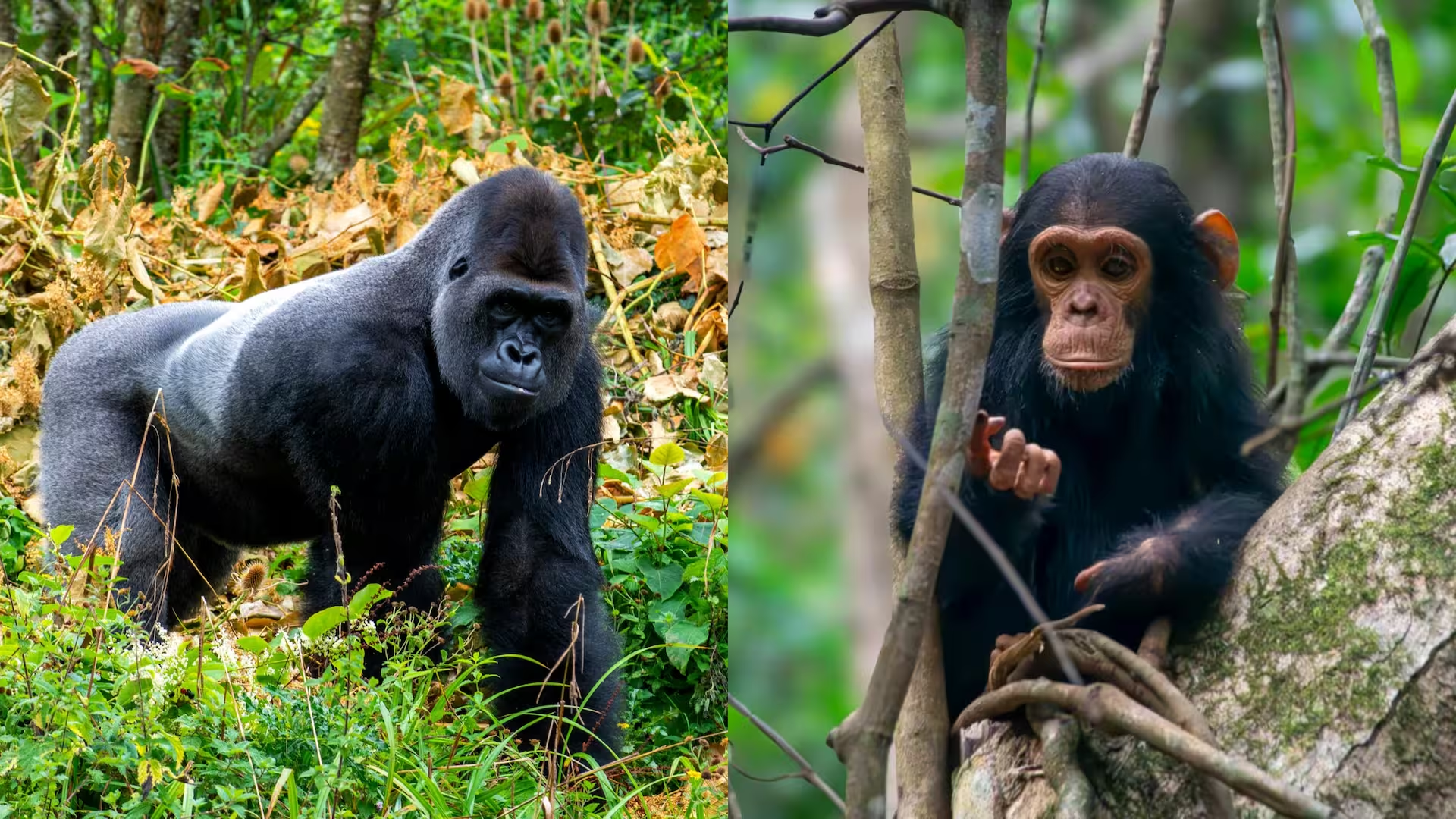
Silverbacks have several traits in common with other great apes, but their size, diet and social behavior set them apart. Read our guide to gorillas vs chimpanzees to compare their appearance, intelligence, family life and trekking experiences.
15 Amazing Facts About Silverback Gorillas
They are the largest living primates
Gorillas are the largest living primates, and adult males are much heavier than females. A mature silverback has a broad chest, thick arms and powerful shoulders. His size helps him defend his group, move through dense vegetation and compete with other males.
A silverback leads the family group
Many gorilla groups centre on one dominant silverback. He influences where the group travels, when it rests and how it responds to danger. Females and young gorillas form the rest of the group, while some families also include younger males or additional silverbacks.
Their strength is impressive
Silverbacks have powerful muscles, large jaws and strong arms. They use this strength to move vegetation, climb when needed and protect their group. Claims that a gorilla is a precise number of times stronger than a human are difficult to verify because strength depends on the task being compared.
They are not always aggressive
Silverbacks often spend long periods feeding, resting or watching their surroundings. They usually avoid conflict when left undisturbed. If they feel threatened, they may display their strength through vocal calls, chest beating, ground slapping or short charges. These displays warn others to keep their distance.
They mainly eat plants
Gorillas eat leaves, stems, shoots, herbs and other vegetation. Fruit makes up a larger share of the diet for some populations than others. They may also swallow small invertebrates while feeding. Their diet requires many hours of foraging each day, depending on the season and food available.
They build nests to sleep
Gorillas usually build a fresh nest from leaves, branches and other vegetation before nightfall. They may also make day nests for resting. Adult males often nest on the ground, while females and younger gorillas may choose spots on the ground or in trees.
Each gorilla has a distinctive nose pattern
The wrinkles and creases around a gorilla's nostrils form a distinctive pattern. Researchers can use these features, along with facial details, body size and other markings, to identify individuals in photographs and field observations. This helps researchers track particular gorillas over time.
Chest beating is a form of communication
A silverback's chest beat can carry across the forest. Gorillas may combine chest beating with vocal calls, body movements and displays. These actions can communicate information about size, confidence or social position. Chest beating does not always mean a gorilla is about to attack.
They help protect young gorillas
The silverback plays an important role in group protection. He may intervene during disputes and respond to threats near younger members. Mothers provide most direct infant care, including carrying and feeding their babies. Young gorillas also play with other group members as they grow.
They can climb despite their size
Gorillas spend much of their time on the ground, where their large bodies make travel and feeding easier. They can still climb trees, particularly when young or when the branches can support their weight. Their climbing habits depend on their age, body size, habitat and available food.
They share much of their DNA with humans
Gorillas share roughly 98% of their DNA with humans, although exact figures depend on how scientists measure genetic similarity. Their anatomy, social relationships and ability to learn also reflect their close evolutionary relationship with humans. Their behavior gives researchers valuable insight into great ape biology.
They live in close family groups
Gorillas form social groups that often include a silverback, several females and their offspring. Group sizes vary by species and family. Members feed, rest and travel together, while grooming, play and other interactions help maintain relationships within the group.
They show responses to death
Researchers and field observers have recorded gorillas staying near deceased group members, touching bodies and showing changes in behavior after a death. These observations suggest that death affects their social lives. Scientists continue to study how gorillas respond to loss without assuming their emotions are identical to human grief.
They can live for decades
Gorillas often live around 30 to 40 years in the wild, though lifespan varies by individual and conditions. Their slow reproduction means that population recovery can take time after a decline. Protecting adults, females and young gorillas is important for the future of each population.
Mountain gorilla conservation has made progress
Mountain gorilla numbers have increased through decades of conservation work, habitat protection, veterinary care and community involvement. The species was reclassified from Critically Endangered to Endangered on the IUCN Red List in 2018. Mountain gorillas still face risks from habitat pressure, disease and human activity, so continued protection remains important.
Can You See a Silverback Gorilla in the Wild?
Yes. Guided gorilla trekking gives visitors the chance to observe a habituated mountain gorilla family in its natural habitat. Uganda and Rwanda are popular choices for this experience.
Each trek begins with a briefing from park staff. Guides and trackers then lead visitors into the forest to locate a gorilla group. The walk can be short or last several hours, depending on the group's location and the terrain.
Once visitors find the family, viewing time is usually limited to one hour. This gives people time to watch the gorillas feed, rest, groom and interact while limiting disturbance.
A permit is required, and daily visitor numbers are restricted. Book ahead, especially if you have fixed travel dates. Permit fees and rules vary by country, so check the official wildlife authority before confirming your trip.
Rwanda Gorilla Safari Packages
Rwanda is a strong choice for travellers who want to see mountain gorillas and explore the country's forests and wildlife. Choose from these safari options.
Rwanda Gorilla Trekking
Duration: 4 Days
A short trip for travellers whose main goal is to see mountain gorillas in Volcanoes National Park.
Rwanda Primate Safari
Duration: 8 Days
A longer primate-focused trip for travellers who want to explore Rwanda's forest habitats and seek out different primate encounters.
Rwanda Grand Safari
Duration: 12 Days
A longer Rwanda itinerary for travellers who want more time to explore the country's wildlife and landscapes.
Frequently Asked Questions
Why do gorillas have silver backs?
Mature male gorillas develop silver-grey hair across their backs as they grow older, usually from around 12 years of age. The colour gives them the name silverback and helps distinguish mature males from younger blackbacks.
How old is a silverback gorilla?
Male gorillas often begin developing silver hair around 12 years of age. They may continue to mature physically and socially after this point. Age alone does not determine a male's position because group leadership also depends on social relationships and competition.
How strong is a silverback?
Silverbacks have powerful arms, shoulders and jaws, along with large, muscular bodies. Their strength helps them move through vegetation and protect their groups. Exact comparisons with human strength vary by task, so claims based on a single strength multiplier can be misleading.
Are silverback gorillas dangerous?
Silverbacks can be dangerous if they feel threatened, but they usually avoid conflict when left undisturbed. Visitors must follow their guide's instructions, keep the required distance and avoid sudden movements or attempts to approach the animals.
Where can you see silverback gorillas?
Mountain gorillas can be seen on guided treks in Uganda's Bwindi and Mgahinga parks, and Rwanda's Volcanoes National Park. Virunga National Park in the DRC is another known habitat, but travellers must check current security advice and park access.
How long does a gorilla trek last?
The trek can take from under an hour to several hours each way, depending on the gorilla family's location, terrain and weather. Once visitors find the habituated group, viewing time is usually limited to one hour.