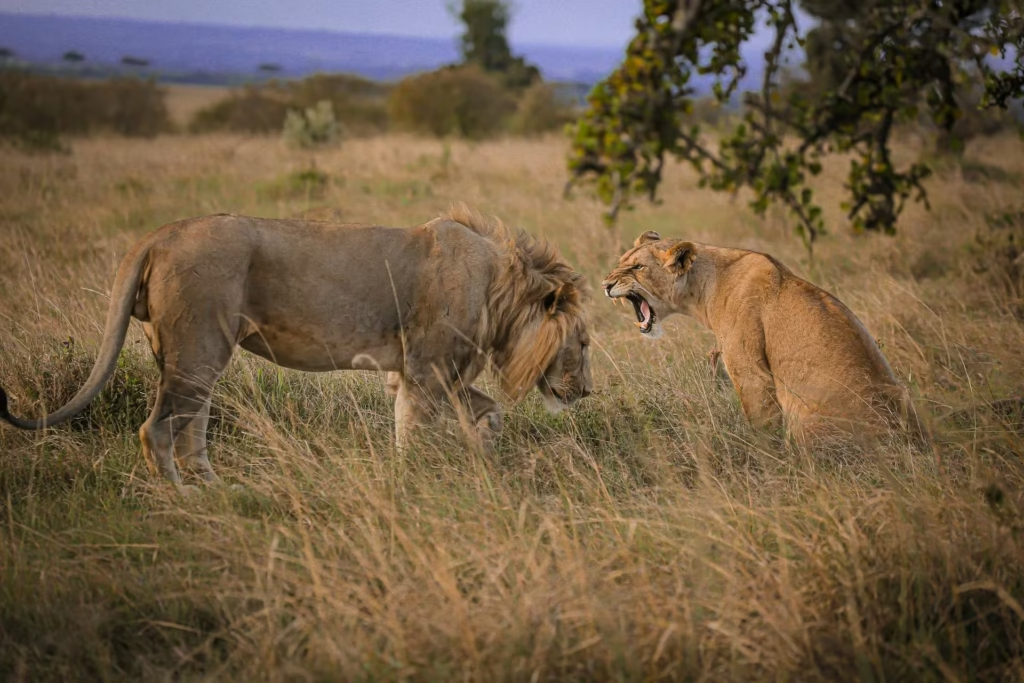
Gorillas are larger, calmer, and mostly plant-eating. Chimpanzees are smaller, faster, and far more active. Both are great apes and among our closest living relatives, yet they live very different lives.
This guide covers what the two apes share, how they differ, and where to see each one in the wild. It also compares gorilla and chimpanzee treks, so you can choose the right one for your trip.
Quick Answer
- Size: Gorillas are the largest primates. Chimpanzees are far smaller and leaner.
- Diet: Gorillas eat mainly leaves and stems. Chimpanzees eat fruit, plants, insects, and sometimes meat.
- Society: Gorillas live in stable family troops. Chimpanzees live in large, shifting communities.
- Trekking: You can track both in Uganda, Rwanda, and Tanzania, with different permits, terrain, and pace.
Meet the Two Apes
Gorillas
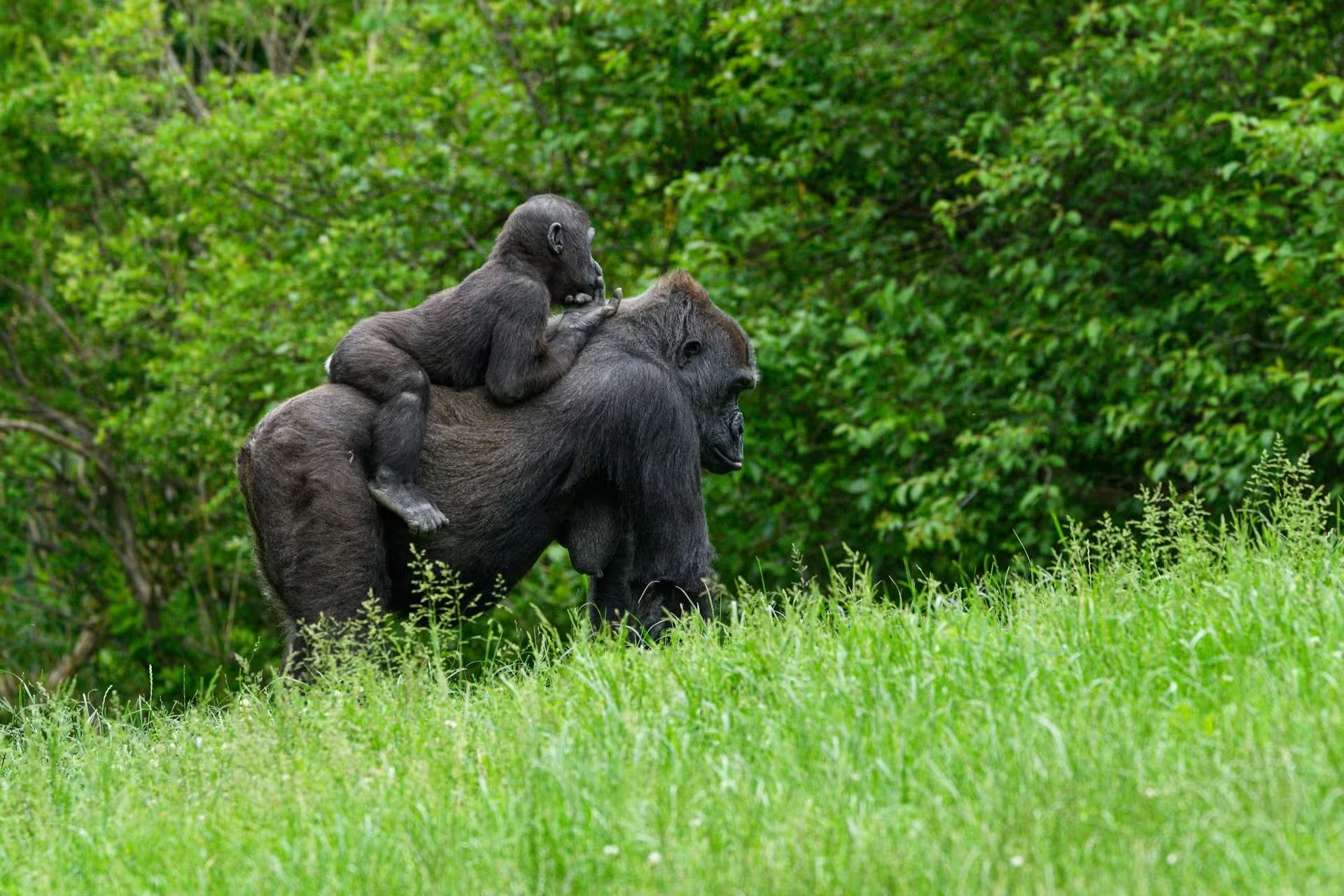
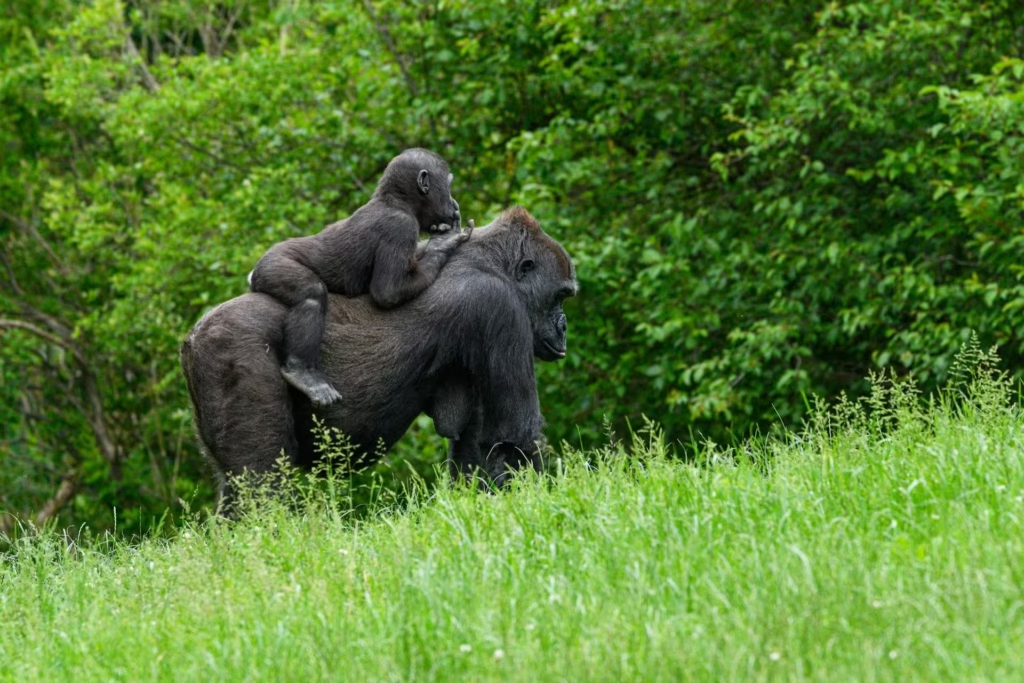
Gorillas are the largest living primates. The main types are mountain gorillas, eastern lowland gorillas and western gorillas. They live in forests across parts of central and eastern Africa. Mountain gorillas inhabit Uganda, Rwanda and the Democratic Republic of the Congo, while eastern lowland gorillas live in the DRC.
Chimpanzees
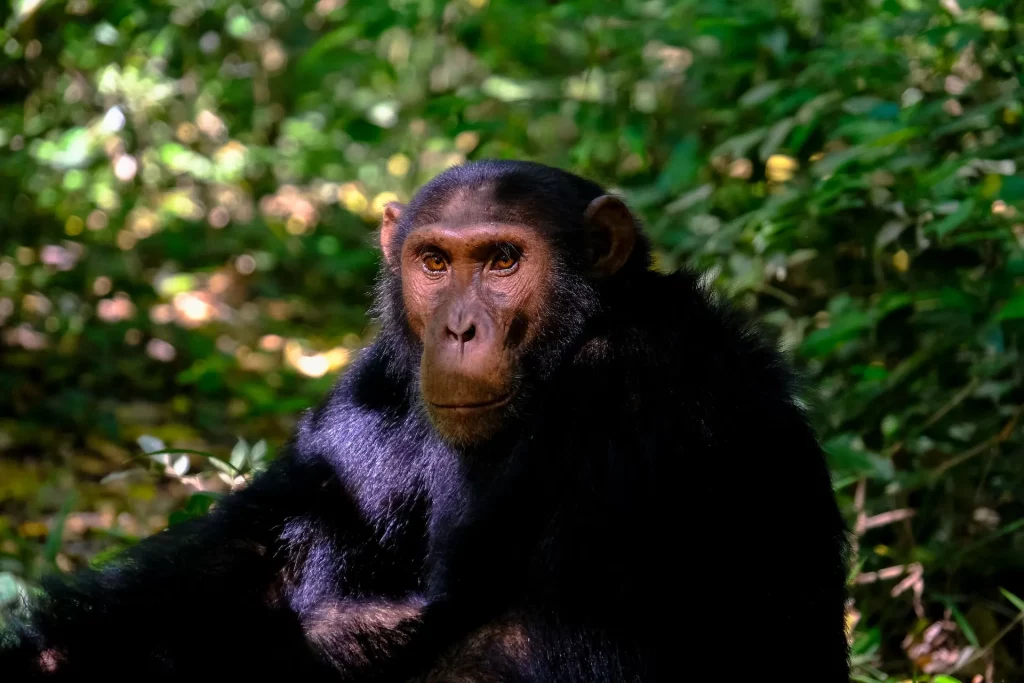
Common chimpanzees live across parts of western, central and eastern Africa. They spend much of their time in trees but also travel on the ground. Their long arms, expressive faces and active social lives make them fascinating to observe.
Bonobos are a separate species of great ape closely related to chimpanzees. They live in the Democratic Republic of the Congo and are not covered in this guide.
Both gorillas and chimpanzees face threats from habitat loss, disease and human activity. Their conservation depends on protecting forests and limiting disturbance.
What Gorillas and Chimpanzees Have in Common
- Great ape family: Both belong to the same family as humans and orangutans.
- Close to us: Chimpanzees share about 98.6% of their DNA with humans, and gorillas share about 98.3%. Exact figures vary by source.
- Intelligence: Both solve problems, remember places, and show complex emotions.
- Knuckle-walking: Both move on the ground using the backs of their fingers.
- Nests: Both build fresh sleeping nests, usually each night.
- Forest homes: Both mountain gorillas and chimpanzees live in forested areas.
- Social lives: Both live in groups with clear relationships and roles.
- Threats: Both face habitat loss and disease passed on by people.
Key Differences at a Glance
| Factor | Gorillas | Chimpanzees |
|---|---|---|
| Size and weight | Males about 136 to 227 kg (300 to 500 lb) | About 32 to 59 kg (70 to 130 lb) |
| Build | Broad chest, heavy frame | Lean body, long limbs |
| Diet | Mostly leaves, stems, shoots | Fruit, insects, some meat |
| Group structure | Stable troop led by a silverback | Large, fluid community |
| Temperament | Calm and shy | Active, noisy, quick |
| Movement | Mostly on the ground | Ground and trees |
| Tool use | Rarely seen | Common |
| Habitat | Mountain and lowland forest | Forest and woodland |
The biggest gaps are diet and social life. They explain most of what you see on a trek.
Size and Appearance
Male gorillas weigh roughly 300 to 500 pounds, with a broad chest and thick arms. Chimpanzees are much smaller, with leaner bodies and longer limbs. A mature male gorilla, called a silverback, gets its name from the gray hair on its back. A big silverback weighs around 200 kg, and females reach about half that.
Faces help you tell them apart. Gorillas have dark faces and heavy brows. Chimpanzees have large ears on the sides of their heads, much like humans. If the ape in front of you looks like a small, lean, expressive version of a gorilla, it is a chimp.
Diet
Gorillas eat mainly leaves, stems, shoots and other vegetation. Some populations also eat fruit, depending on the season and available food. Their diet often keeps them close to areas with suitable plants.
Chimpanzees eat a wider variety of foods. Fruit is a major part of their diet, supplemented by leaves, seeds, insects and occasional hunting for small mammals. They may travel longer distances when food sources change.
These diets influence their daily routines. Gorillas often spend long periods feeding and resting, while chimpanzees may cover more ground as they search for fruit and other food.
Social Structure and Behavior
Gorilla troops
A silverback leads each troop, with several adult females and their young. Gorilla groups stay small, usually no more than about 40. The days follow a calm routine of feeding, resting, and moving short distances.
Chimpanzee communities
Chimpanzees live in communities that can pass 100 individuals. The community splits into smaller parties during the day and regroups later. This arrangement is known as a fission-fusion social system. Alliances and sometimes aggressive clashes shape its social life. The pant-hoot call keeps groups in touch and signals rank.
Intelligence and Tool Use
Chimpanzees are well known for using tools in the wild. Some use sticks to extract termites from nests, while others use stones to crack nuts. Different communities can develop different techniques, and young chimpanzees learn by watching older individuals.
Gorillas also solve problems and learn from their surroundings. Researchers have recorded gorillas using objects in practical ways, including testing water depth with a branch. Tool use is less central to their daily feeding than it is for some chimpanzee populations.
Both apes show memory, learning, social awareness and strong family bonds. Their abilities vary with their environment and the task involved. It is not useful to label one species as smarter overall. They have different skills shaped by their ways of life.
Where to See Each Ape
Gorillas
- Bwindi Impenetrable and Mgahinga, Uganda: Both parks offer gorilla tracking at the same permit rates.
- Volcanoes National Park, Rwanda: Easy access from Kigali.
- Virunga, DR Congo: A third option, subject to current security guidance.
Chimpanzees
- Kibale Forest, Uganda: Kibale is a well-known place to meet chimps.
- Budongo, Uganda, and Nyungwe, Rwanda: Strong alternatives.
- Gombe and Mahale, Tanzania: Remote lake-shore forests with a long research history.
Can you see both on one trip? Uganda and Rwanda are practical choices for combining mountain gorilla trekking with chimpanzee tracking. Tanzania is a strong option for chimpanzees, but it does not offer mountain gorilla trekking.
Gorilla Trekking vs Chimpanzee Trekking
| Factor | Gorilla trek | Chimpanzee trek |
|---|---|---|
| Time with the apes | One hour | About one hour in most parks |
| Group size | Maximum of 8 visitors | Small groups, varies by park |
| Terrain and effort | Moderate to challenging | Usually easier, but fast-moving |
| Permit cost | $800 to $1,500 | About $250 in Uganda |
| Photography | Slow, close, low light | Fast action, high shutter speed |
| Best for | Calm, close encounters | Energy and sound |
Gorilla visits are limited to a maximum of one hour, and the minimum age is 15 in both Uganda and Rwanda. Each gorilla family receives only one group of up to eight visitors per day. The trek itself ranges from moderate to challenging.
The feel differs. Gorilla time is slow and quiet. Chimp time is loud and quick.
Best Time and Permits
For mountain gorilla trekking in Uganda and Rwanda, the drier periods from around June to September and December to February often bring more manageable trails. Rain can fall at any time in these forests. Uganda's chimpanzee forests and Rwanda's Nyungwe Forest are also accessible year-round, though wet trails can make tracking harder.
In Tanzania, the drier months are often preferred for chimpanzee tracking in Gombe and Mahale. Local conditions still vary.
Permits are required, numbers are limited, and popular dates can sell out well ahead. Prices depend on the country, park and visitor category, and can change. Check the relevant wildlife authority for current rates before confirming flights or accommodation.
For more East Africa travel planning, read our guide to the best time to visit Kenya for safari.
Tips for Your First Trek
- Book permits 6 to 12 months ahead for busy months.
- Wear long sleeves, sturdy boots, and gloves for trails and nettles.
- Keep your distance and follow every ranger instruction.
- Pack a rain layer in every season.
- Skip the trek if you are ill, since apes can catch human illnesses.
Rwanda Gorilla and Primate Safari Packages
Rwanda offers opportunities to track mountain gorillas, see chimpanzees and explore its forests and wildlife areas. Choose a short gorilla trekking trip or a longer safari with primate encounters.
Rwanda Gorilla Trekking
Duration: 4 Days
Rwanda Grand Safari
Duration: 12 Days
Rwanda Primate Safari
Duration: 8 Days
Ready to explore Rwanda? View our Rwanda safari packages or request a custom itinerary.
Frequently Asked Questions
Are gorillas or chimpanzees stronger?
Gorillas are much larger and have greater absolute physical strength. Chimpanzees are smaller but strong for their size. Both are wild animals, and visitors should never approach, provoke or attempt to touch either species.
Which ape is closer to humans?
Humans are more closely related to chimpanzees and bonobos than to gorillas. Humans and chimpanzees share a more recent common ancestor. Gorillas are also close relatives, but their evolutionary line separated earlier.
Can you see gorillas and chimpanzees on the same trip?
Yes. Uganda and Rwanda both offer mountain gorilla trekking and chimpanzee tracking in different parks. You need separate permits and enough time for transfers between destinations. A local operator can help coordinate the route and bookings.
Which trek is harder, gorillas or chimpanzees?
Neither is always harder. Gorilla treks may involve steep, muddy slopes, while chimpanzee tracking can require following fast-moving groups through dense forest. Difficulty depends on the location of the animals, weather, trail conditions and your fitness.
Are gorillas dangerous?
Gorillas are powerful wild animals and may react if they feel threatened. They usually avoid conflict when left undisturbed. Keep your distance, remain calm and follow the guide's instructions. Never attempt to touch, feed or move closer to a gorilla.
How far in advance should you book a permit?
Book six to twelve months ahead if you want to travel during popular periods or need specific dates. Permits can sell out, especially in high season. Confirm current availability and prices with the official authority or a licensed tour operator before booking other travel arrangements.
In Short
Gorillas are calm giants and chimpanzees are fast, social acrobats. Both deliver close encounters that few wildlife experiences match. Choose gorillas for stillness and scale, chimps for energy and sound, or combine both in one trip.