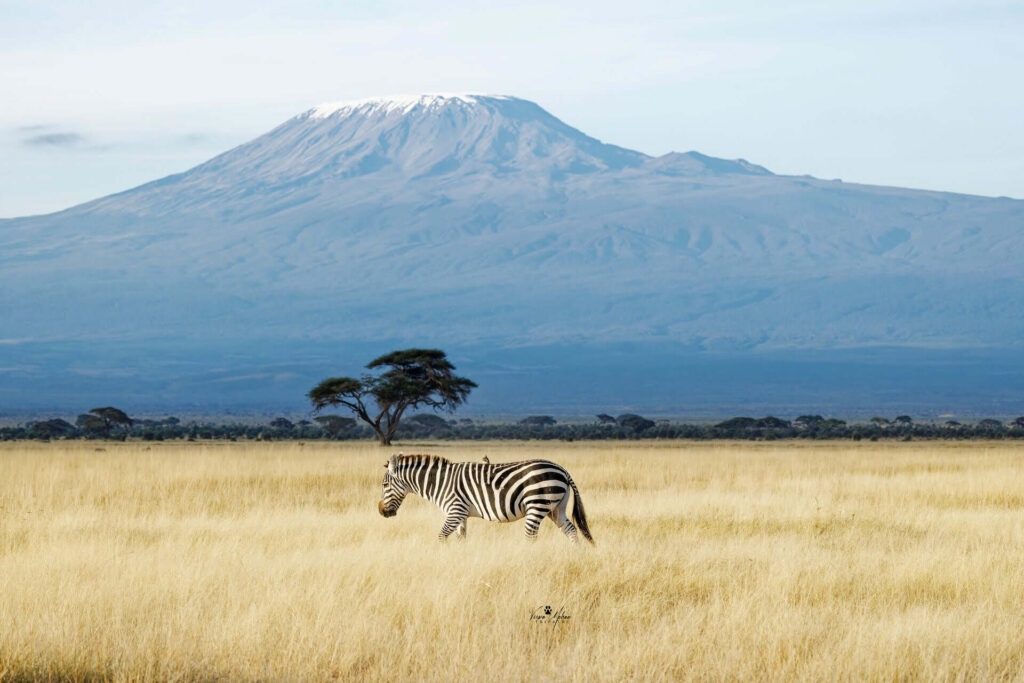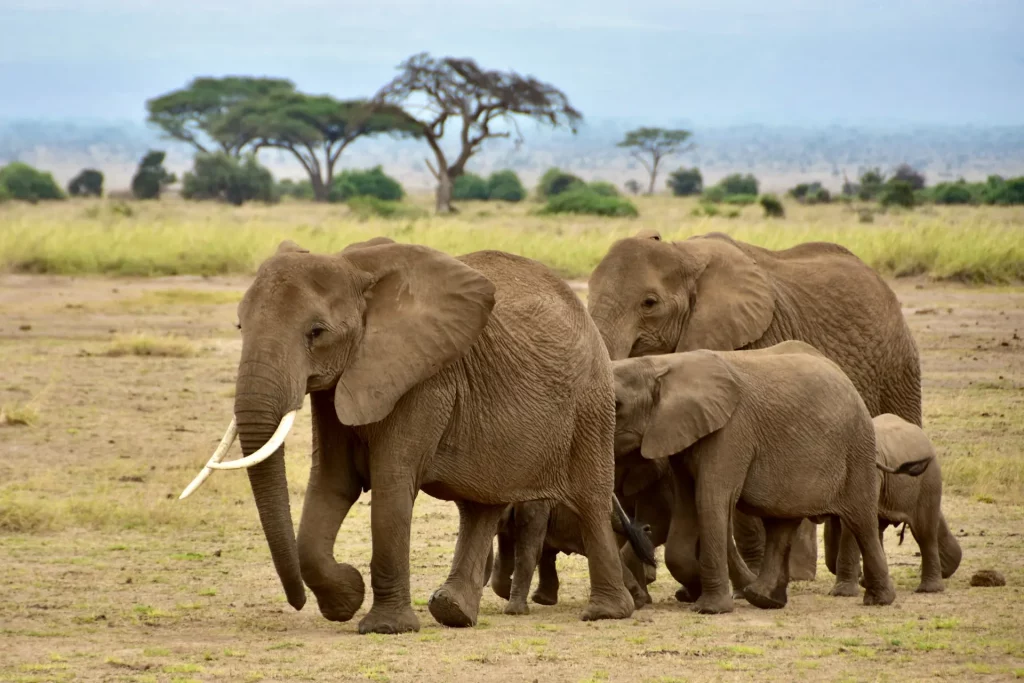
Yes, you can combine a Masai Mara and Serengeti safari in one trip. It is also one of the best ways to follow the Great Migration across two countries.
The two parks form a single ecosystem. The Mara River marks the line between Kenya’s Masai Mara and Tanzania’s Serengeti. The herds ignore that line, but visitors cannot. You need to clear a border, and that shapes how you plan the trip. This guide covers routes, timing, paperwork, costs, and three sample itineraries.
Quick Answer
- Can you combine them? Yes. Most visitors do it over 8 to 12 days.
- How do you travel between them? By light aircraft with a border stop, by road via Isebania and Sirari, or by splitting the trip into two legs.
- Best time: July to October for river crossings, or January to March for calving season in the southern Serengeti.
- Best length: 10 to 12 days gives enough time in each park without rushing.
Why the Mara and Serengeti Belong Together
The Masai Mara and Serengeti form part of the same wildlife ecosystem. The Serengeti covers about 14,763 sq km, while the Masai Mara National Reserve covers roughly 1,510 sq km.
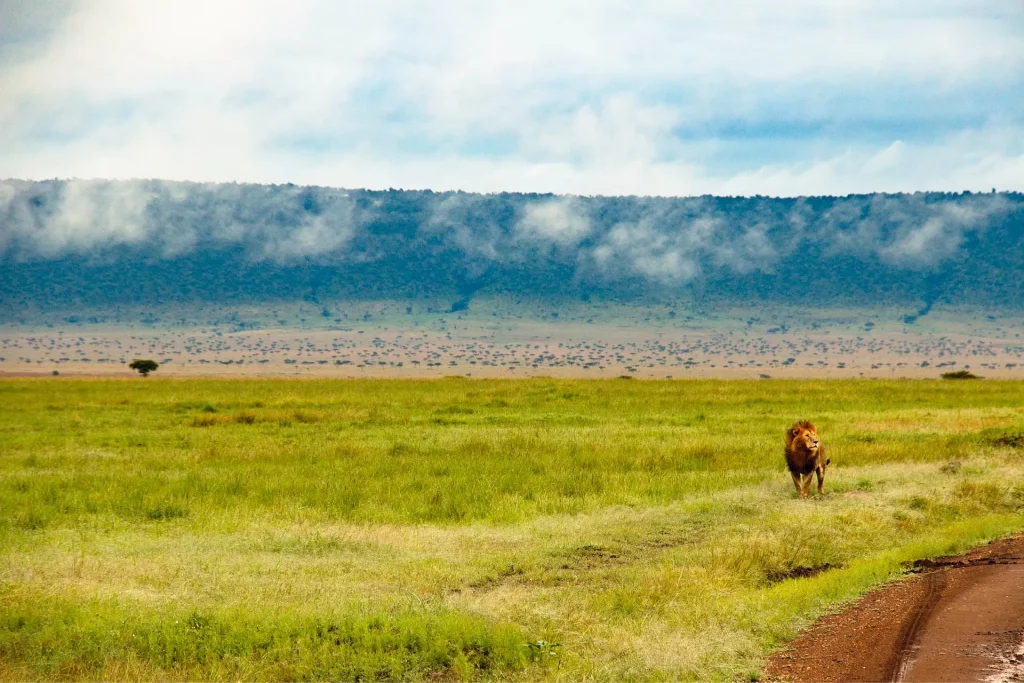
The Serengeti stretches across northern Tanzania and contains grasslands, woodland, rocky outcrops, and river valleys. The Mara sits along its northern edge in Kenya, with open plains and river systems that support large numbers of wildlife.
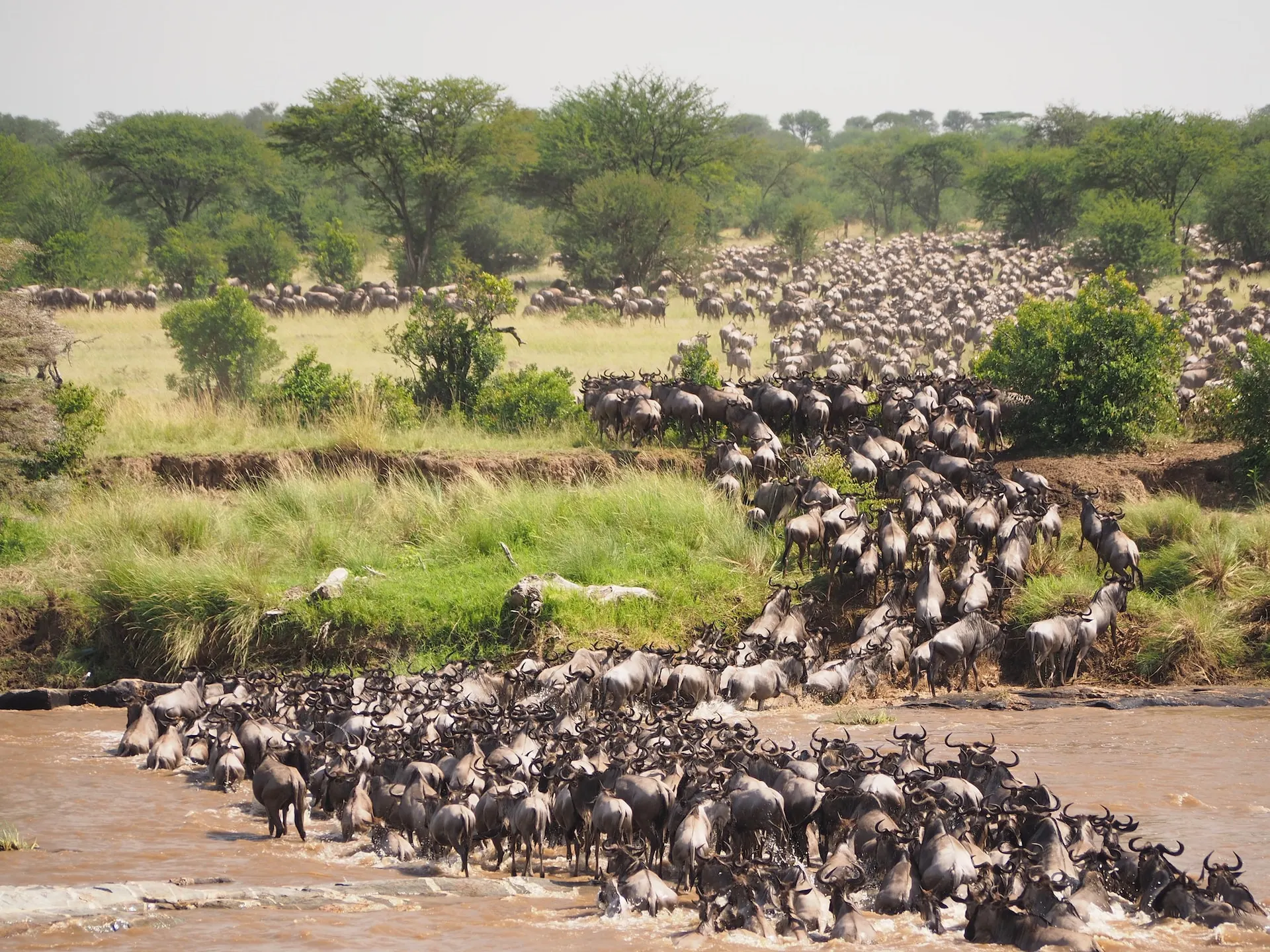
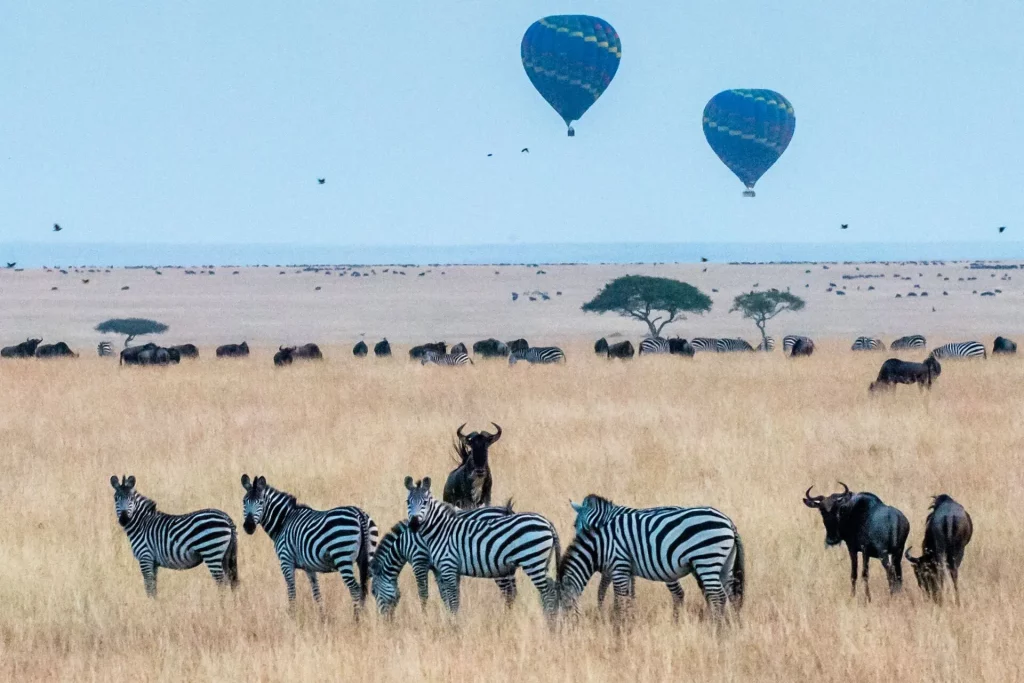
Every year, wildebeest and zebra move across this landscape in search of fresh grass and water. Their movements depend on rainfall, so the herds do not follow a fixed calendar. Many cross between Tanzania and Kenya during their annual migration.
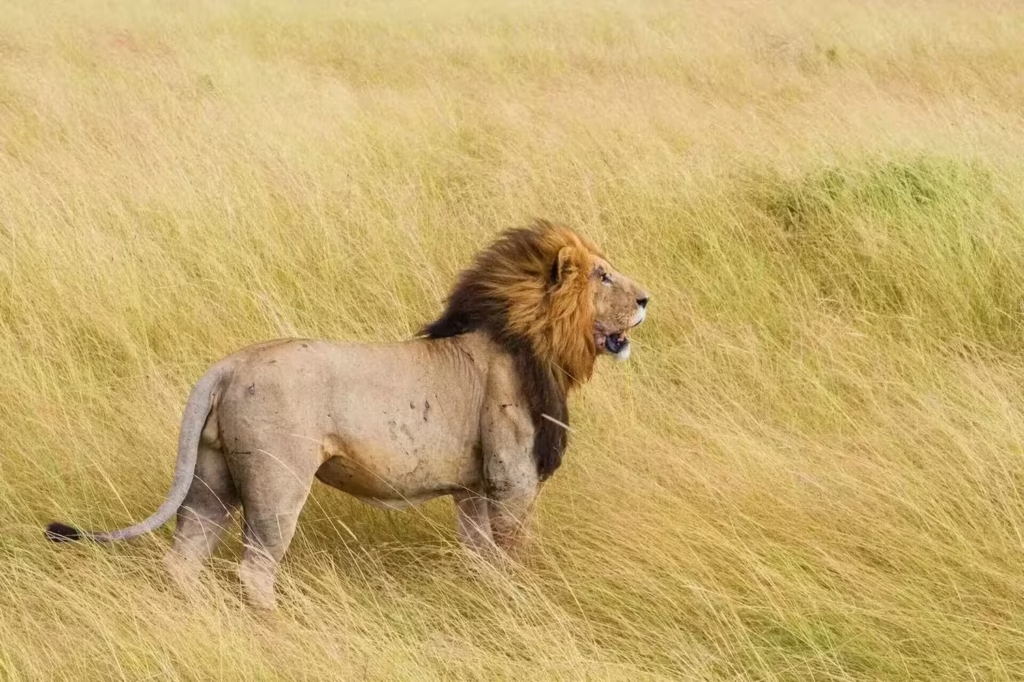
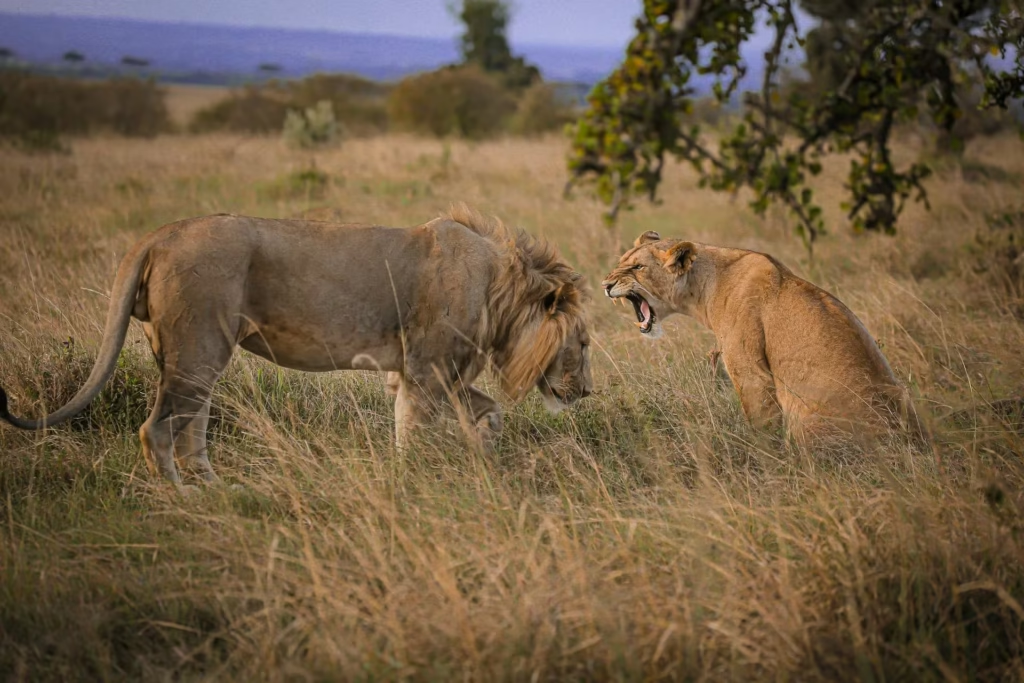
The two parks also offer strong big cat viewing. Lions hunt across the open plains, leopards use wooded areas and riverine forests, and cheetahs hunt in grasslands with good visibility.
The Mara feels compact compared with the Serengeti. Guides can often reach several wildlife areas within one game drive. The Serengeti covers a much larger area, so your camp location matters when you want to follow the herds.
Combining both parks gives you more than two destinations. It lets you follow changing wildlife movements across different landscapes and spend time in two of Africa's best-known safari areas.
Read More Which is better Masai Mara or Serengeti?
How the Two Parks Connect
Is there a direct crossing?
No. Wildlife crosses the border freely, but visitors have no park-to-park crossing point. Everyone clears immigration at a road border. Isebania and Sirari form the usual crossing between the two. Isebania sits on the Kenyan side and Sirari on the Tanzanian side. A second crossing exists at Namanga, on the east side, but it sits far from both parks.
By flight
Flying is the most common choice. In the usual version, you fly from a Mara airstrip to Migori in Kenya. A road transfer of about 30 minutes takes you to Isebania for passport control. You then continue to Tarime airstrip in Tanzania for the flight into the Serengeti.
A longer alternative runs from the Mara to Nairobi Wilson, then to Kilimanjaro, and on to Seronera in the Serengeti. This adds connections and waiting time.
By road
Driving works, but it takes most of a day. The drive from the Mara to Isebania takes about 3.5 to 4 hours and covers roughly 150 km (93 miles). After the border, you continue into the Serengeti. The full transfer commonly takes 8 to 10 hours or more. A Kenyan guide often hands you over at Isebania, and a Tanzanian guide continues from Sirari.
Two separate legs
You can also treat each park as its own trip. Fly into Nairobi, visit the Mara, and fly home. Then fly into Tanzania for the Serengeti. This is the simplest method, but it adds flight costs and time.
Comparison
| Option | Time | Cost level | Comfort | Best for |
|---|---|---|---|---|
| Fly via the border | 3 to 5 hours | Higher | High | Most travelers |
| Drive via Isebania | 8 to 10+ hours | Lower | Low to moderate | Budget trips, long itineraries |
| Two separate legs | Varies | Highest | High | Travelers who want flexibility |
For a full breakdown, read our guide on flying or driving between the Masai Mara and Serengeti.
Best Time to Combine Both Parks
The best month depends on what you want to see. No single month is perfect, and river crossings are never guaranteed, because the herds follow rain and grazing, not fixed dates.
- July to October: The Mara River crossings usually happen between July and October. Crossings peak in August and taper off by late September or mid-October. This is the most popular window for a combined trip, so book early.
- January to March: Calving season peaks in February in the Ndutu area of the southern Serengeti. The Mara stays strong for resident predators, and crowds are lighter.
- April to May: The long rains bring lower rates and fewer vehicles. Some camps close.
- November to December: Short rains arrive, and the herds move south.
| Month | Migration location | Crowds | Price level |
|---|---|---|---|
| January to March | Southern Serengeti (calving) | Moderate | Moderate to high |
| April to May | Central and western Serengeti | Low | Low |
| June | Western Serengeti | Moderate | Moderate |
| July to October | Northern Serengeti and Mara | High | High |
| November to December | Moving south | Low to moderate | Low to moderate |
One note for first-timers. Only some of the herds enter the Mara between July and October. Many stay in the northern Serengeti. A combined trip lets you cover both sides of the river, which improves your odds.
Expect crowds in the peak months. The Mara can get very busy during the crossings. A good operator will position you at quieter viewing points and plan early starts.
Visas, Permits and Entry Rules
Entry rules depend on your passport, so check your own nationality before you book.
- Kenya: Most travelers need an eTA before arrival.
- Tanzania: Most travelers can apply for an e-visa online.
- East Africa Tourist Visa: This covers Kenya, Uganda, and Rwanda. It does not cover Tanzania.
- Yellow fever certificate: Rules depend on the countries you travel from. Check before you fly.
- Passport: Keep at least six months of validity and blank pages for stamps.
- Other items: Carry onward tickets and travel insurance that covers medical evacuation.
If you drive across, a vehicle permit is required at the border. Your operator should handle this. Always confirm entry rules on the official Kenya and Tanzania immigration sites close to your departure date.
Sample Itineraries
These two tours show how the combination works in practice. One is a fast week for travelers short on time. The other is a longer loop that adds two more parks.
7 Days: Masai Mara and Serengeti Safari
- Day 1: Arrive and settle in at Lake Nakuru.
- Day 2: Travel to the Masai Mara and start your wildlife drives.
- Days 3 and 4: Two full days of game drives in the Masai Mara.
- Day 5: Cross the border and transfer to the Serengeti.
- Day 6: Full day of wildlife viewing in the Serengeti.
- Day 7: Travel to Arusha for your departure.
Best for: Travelers who want both parks in one week. Three nights in the Mara and a full day in the Serengeti cover the core of the combination. The Mara to Serengeti transfer happens on Day 5, so plan for a travel day.
View the 7-day Masai Mara and Serengeti safari
11 Days: Best of Kenya and Tanzania Safari
- Day 1: Arrive in Nairobi and transfer to your hotel.
- Day 2: Drive to Amboseli and take an afternoon game drive.
- Day 3: Morning and evening game drives in Amboseli.
- Day 4: Cross the border into Tanzania and transfer to the Ngorongoro region.
- Day 5: Full day in Ngorongoro Crater, plus a Maasai village visit.
- Day 6: Drive to the Serengeti for an afternoon game drive.
- Day 7: Full day of game viewing in the Serengeti.
- Day 8: Cross back into Kenya and transfer to the Masai Mara for an evening game drive.
- Day 9: Full day in the Masai Mara, plus a cultural visit.
- Day 10: Morning game drive and a relaxed afternoon in the Mara.
- Day 11: Return to Nairobi and depart.
Best for: Travelers who want four of East Africa’s best parks in one trip. This loop crosses the border twice and adds Amboseli and Ngorongoro to the Mara and Serengeti pairing. The longer schedule also gives you a gentler pace.
View the 11-day Best of Kenya and Tanzania safari
Costs and What Affects Them
Prices vary widely, so use these as cost drivers instead of fixed numbers.
- Park fees: Both countries charge daily fees, and the rates change by season and park.
- Accommodation: Lodges, tented camps, and mobile camps sit at very different price levels. Camps near river crossings charge more in peak season.
- Flights: One booking platform lists Nairobi to Mara flights from USD 185 to 240 per person, and Mara to Serengeti flights from USD 530 per person. Treat these as a starting point, since fares change.
- Vehicle: A private vehicle costs more than a shared one but gives you control over timing.
- Extras: Balloon safaris, guide upgrades, and tips add to the total.
All prices in this guide use US dollars, which most operators quote in. Ask for a full written quote that lists park fees, flights, and the border transfer.
Pros and Cons of Combining Both Parks
Pros
- You cover a longer stretch of the migration route.
- You see two distinct landscapes and wildlife communities.
- You improve your chance of catching a river crossing.
- You get more value from one long-haul flight.
Cons
- Logistics are more complex because of the border.
- Total cost runs higher than a single-park trip.
- You spend more days in transit.
- Light aircraft carry tight baggage limits.
Tips for First-Time Visitors
- Book early. Peak season camps fill up fast. For calving season, book camps by October for the following February.
- Choose camp locations carefully. Camps near the Mara River give you a head start on crossings.
- Allow three full days in each park. Shorter stays rarely pay off.
- Pack smart. Bring neutral colors, layers for cold dawn drives, and a long lens.
- Use soft bags. Light aircraft do not take hard suitcases.
- Add a buffer day. Weather and delays happen.
- Use one operator for both countries. It keeps the border handover smooth.
Frequently Asked Questions
Can you do the Masai Mara and Serengeti in one trip?
Yes. Most travelers combine them over 8 to 12 days. You clear a border at Isebania and Sirari, either by road or as part of a flight route.
How many days do you need for both?
Plan at least 8 days. Ten to twelve days gives you a more relaxed pace and time for a third stop such as Ngorongoro.
Can you drive from the Mara to the Serengeti?
Yes, via the Isebania and Sirari border. The full transfer commonly takes 8 to 10 hours or more, and you need a vehicle permit.
Is it better to visit the Mara or the Serengeti?
Each has strengths. The Mara is compact with dense predator sightings. The Serengeti is vast and varied. Visiting both gives you the best of each.
When can you see river crossings in both parks?
Crossings usually happen from July to October, with a peak in August. Timing follows rain and grazing, so no date is guaranteed.
Do you need two visas?
Yes. Kenya and Tanzania each have their own entry rules, and the East Africa Tourist Visa does not cover Tanzania.
Is combining both parks more expensive?
Usually yes. You pay for a border transfer and often a cross-border flight. The extra cost buys more variety and a better chance at the migration.
Can Big Cats book this as a single package?
Yes. Our team plans the flights or road transfer, the border handover, and the camps on both sides.
Combine Two Parks in One Safari
A combined Masai Mara and Serengeti safari takes more planning than a single park, but it pays off. You get two landscapes, a longer stretch of the migration, and more chances at big cat sightings. Choose your month first, then your transfer, then your camps.
Ready to plan your trip? View our Africa safari tours or request a custom itinerary.