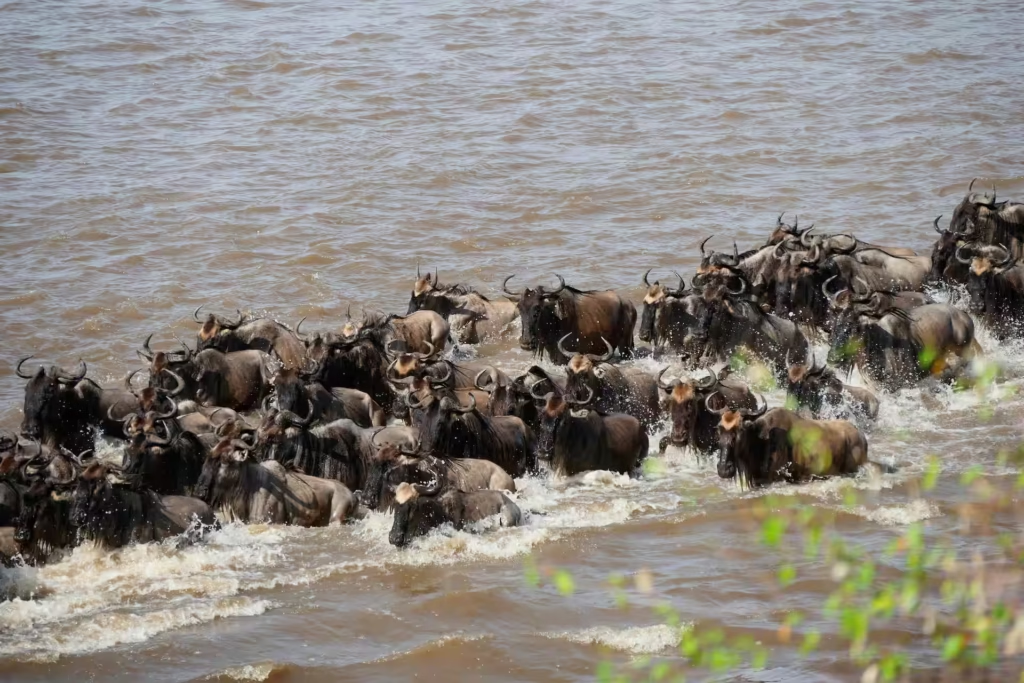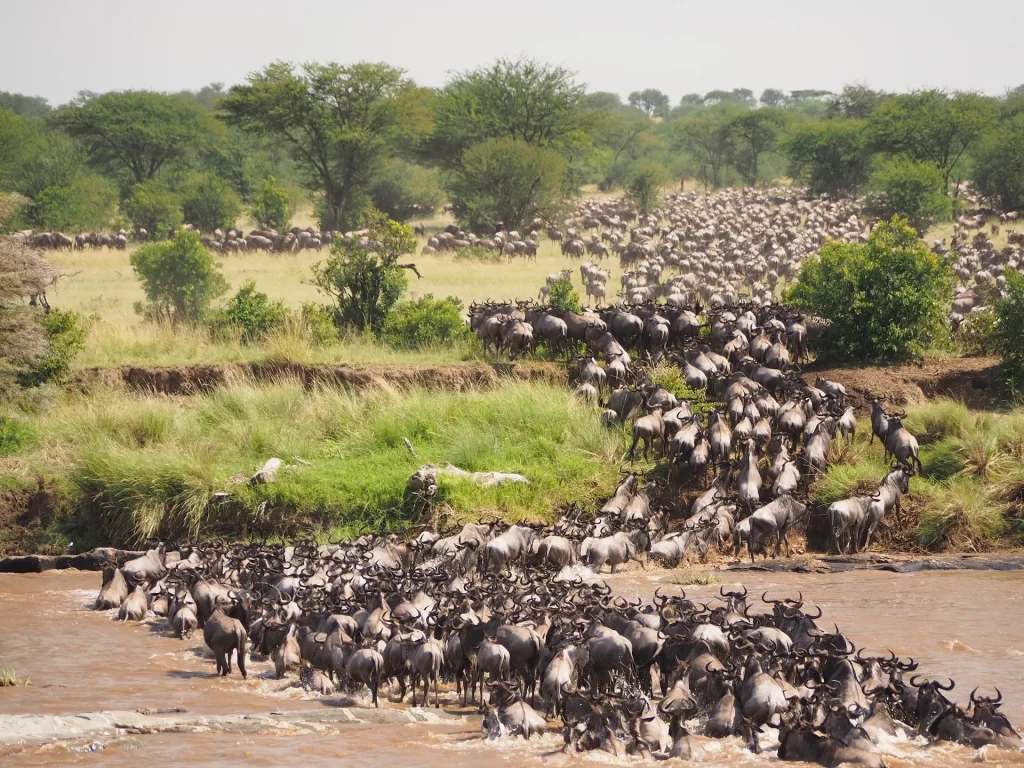
When travelers hear about Kenya’s wildebeest migration, most think of the Maasai Mara and its famous river crossings. Those scenes are spectacular, but they show only one part of the wider Mara ecosystem.
Another seasonal wildlife movement receives far less attention. Known as the Loita Migration, it involves wildebeest and other grazing animals moving between the Loita Plains and the Maasai Mara region.
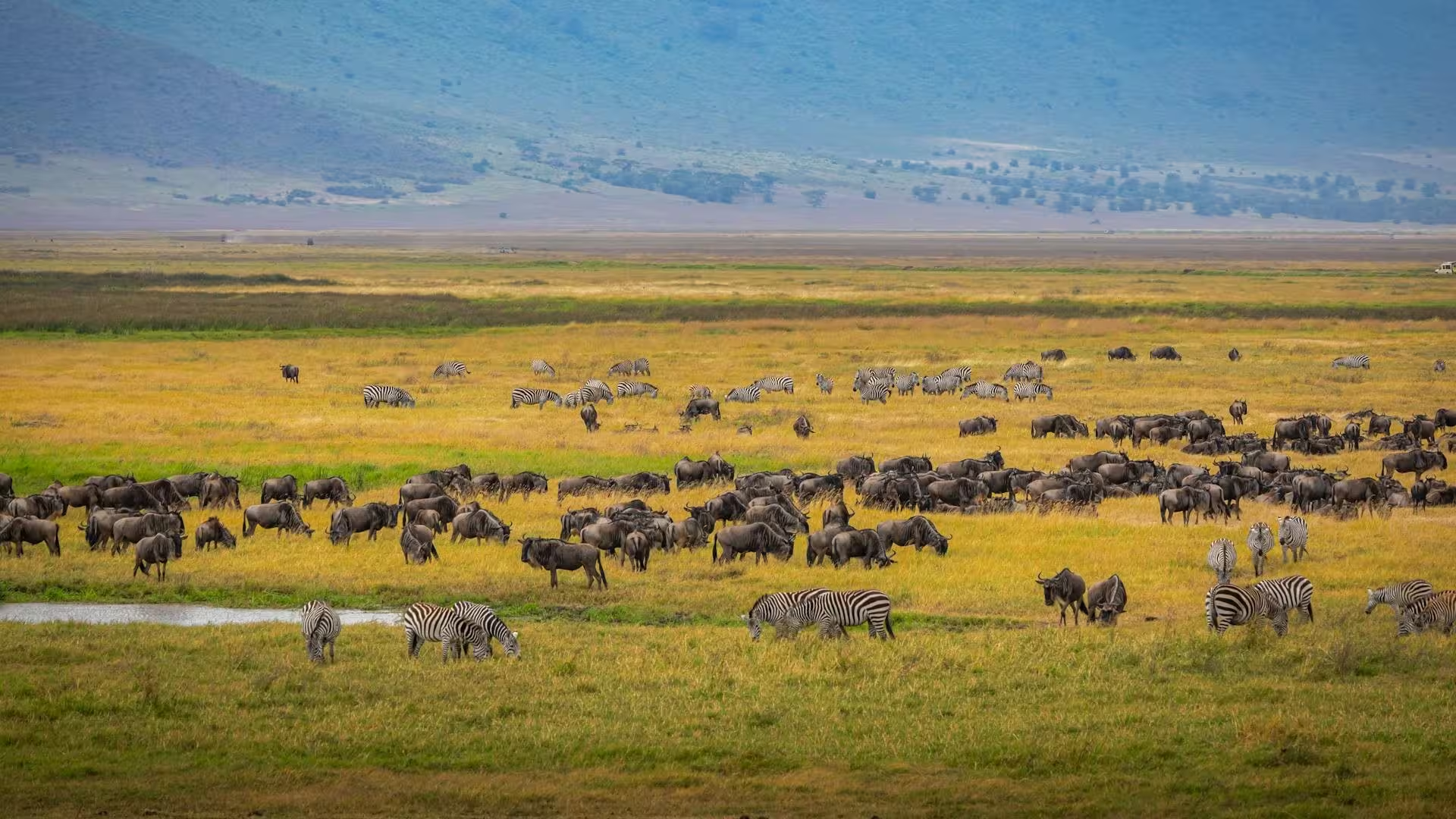
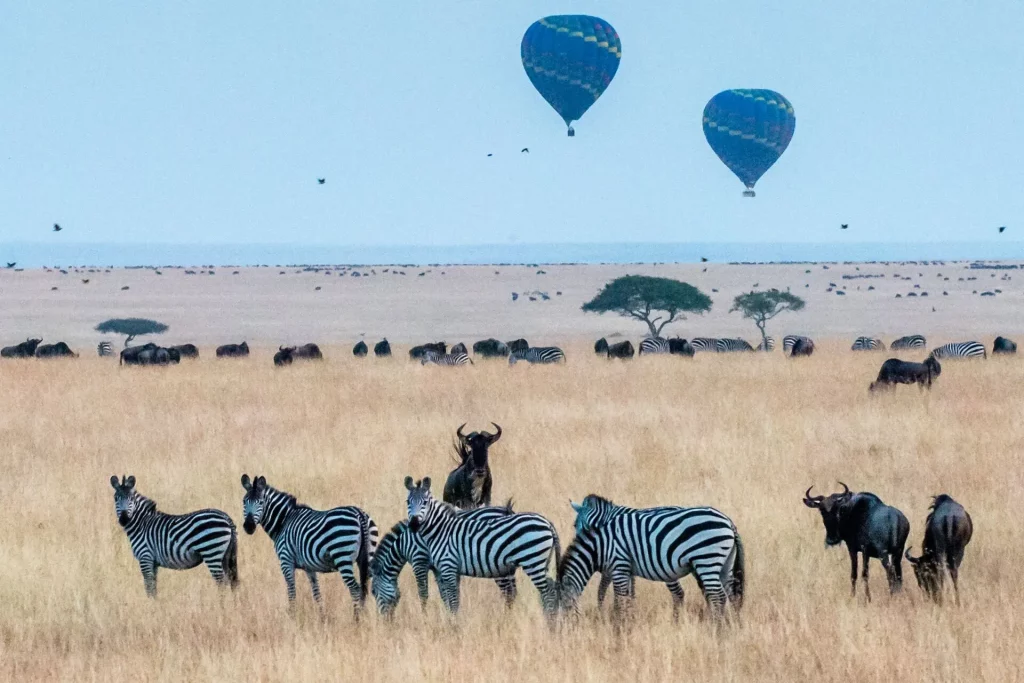
The movement is smaller than the famous Serengeti-Mara migration. That smaller scale gives visitors a quieter safari experience. You can see large herds, predators and open grasslands with fewer safari vehicles around.
The Loita Migration follows rainfall, fresh grass and available water. Its future faces growing pressure from fences, farming and settlement. These changes have reduced several traditional wildlife movement routes.
For travelers seeking a quieter Kenya safari, the Loita Migration offers a rewarding experience beyond the usual safari calendar.
What Is the Loita Migration?
The Loita Migration is a seasonal movement of wildebeest between the Loita Plains, Loita Hills and the greater Maasai Mara ecosystem.
It is separate from the Great Migration across the Serengeti and Maasai Mara. The Great Migration involves huge numbers of wildebeest, zebra and gazelle moving across Tanzania and Kenya.
The Loita herds form a separate local population with their own seasonal movements.
The animals traditionally moved toward the fertile Loita Plains during the wetter months. The plains provided nutritious short grass, which supported females during the calving and lactation period. The herds moved toward the Mara region during drier periods, where food and water remained available.
The Loita Migration has a strong link with seasonal rainfall. The amount and timing of rain affect grass growth across the region. The herds then respond to these changes by moving between their seasonal grazing areas.
Safari operators often report the movement toward the Mara from January to March. The exact dates change each year with local rainfall and grazing conditions.
This seasonal movement gives the Maasai Mara wildlife activity outside its famous peak migration period.
Where Is the Loita Migration?
The Loita Plains lie northeast of the Maasai Mara in southern Kenya. The region forms part of the wider Great Rift Valley area and includes the Loita Hills.
The area has long supported Maasai pastoral communities. Open grasslands provide grazing areas for livestock and wild herbivores.
The herds move between seasonal ranges across this wider region. Their routes can pass through areas around several private conservancies connected with the Mara ecosystem.
These include:
- Ol Kinyei Conservancy
- Naboisho Conservancy
- Olare Motorogi Conservancy
- Areas around the Maasai Mara National Reserve
The exact route changes with rainfall, grass growth and available water.
Wild animals do not follow reserve boundaries. Wildebeest move wherever they find suitable grazing areas. Open routes between different habitats are therefore important for the survival of the migration.
When Does the Loita Migration Take Place?
The Loita Migration does not follow a fixed annual calendar.
Rainfall controls much of the movement. Safari reports commonly associate the herds' movement toward the Mara with January to March. Seasonal rain can produce fresh grazing during this period.
The herds later move back toward the Loita Plains as conditions change. Historical records describe the Loita population using the plains during wetter periods and the Mara region during drier months.
The timing can change from one year to another. A dry season can arrive early or late. Rain can fall in different areas at different times.
You should not treat the Loita Migration like a scheduled wildlife event.
Rain determines grass growth. Grass affects herbivore movements. Large herbivore herds then attract predators.
These natural changes shape what you see during a safari.
How Is It Different From the Great Migration?
The biggest difference is scale.
The Great Migration covers a huge area across the Serengeti-Mara ecosystem. It involves around 1.3 million wildebeest, along with large numbers of zebra and gazelle. The Mara River crossings form one of its best-known spectacles.
The Loita Migration is smaller and more localized.
| Loita Migration | Great Migration |
| Local movement within the Mara-Loita ecosystem | Large-scale movement across the Serengeti-Mara ecosystem |
| Mainly involves the local Loita wildebeest population | Involves huge herds from the wider Serengeti ecosystem |
| Closely linked to local rainfall and grazing | Follows a broader annual rainfall and grazing cycle |
| Often associated with January to March movement toward the Mara | Mara River crossings usually occur later in the year |
| Smaller and generally quieter | Much larger and more heavily visited |
| No famous mass river crossing | Famous for Mara River crossings |
The two migrations should not be treated as the same event.
The Loita Migration is not simply a smaller version of the Great Migration. It is a separate seasonal movement with its own route, timing and ecological history.
What Wildlife Can You See?
Wildebeest are the main animals linked with this seasonal movement. They are not the only wildlife you can see across the region.
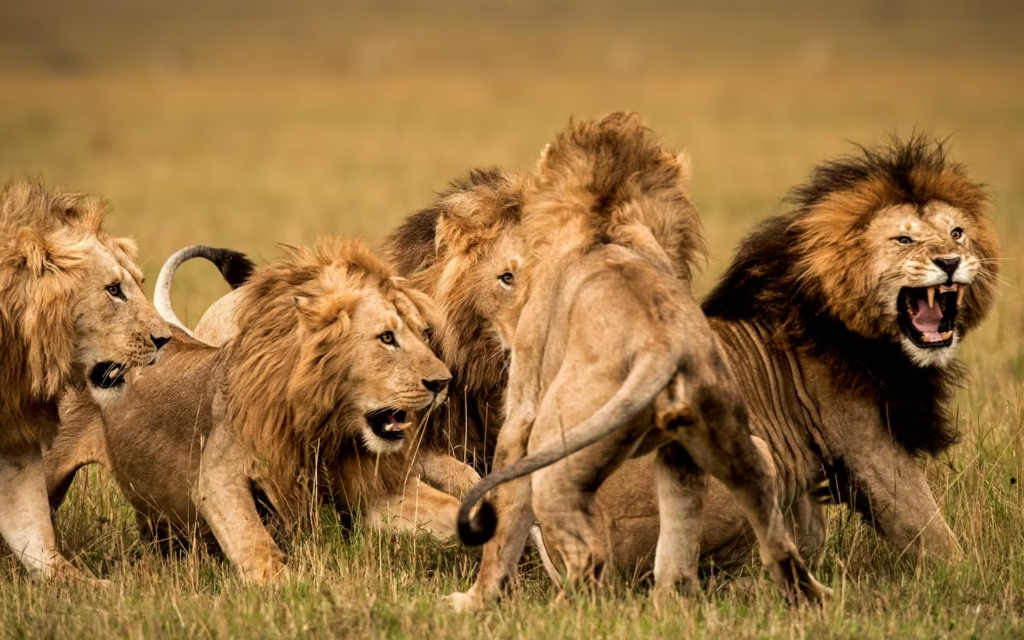
Large groups of grazing animals attract predators. This creates good opportunities for watching natural predator and prey behaviour.
During a Loita safari, you may encounter:
- Wildebeest
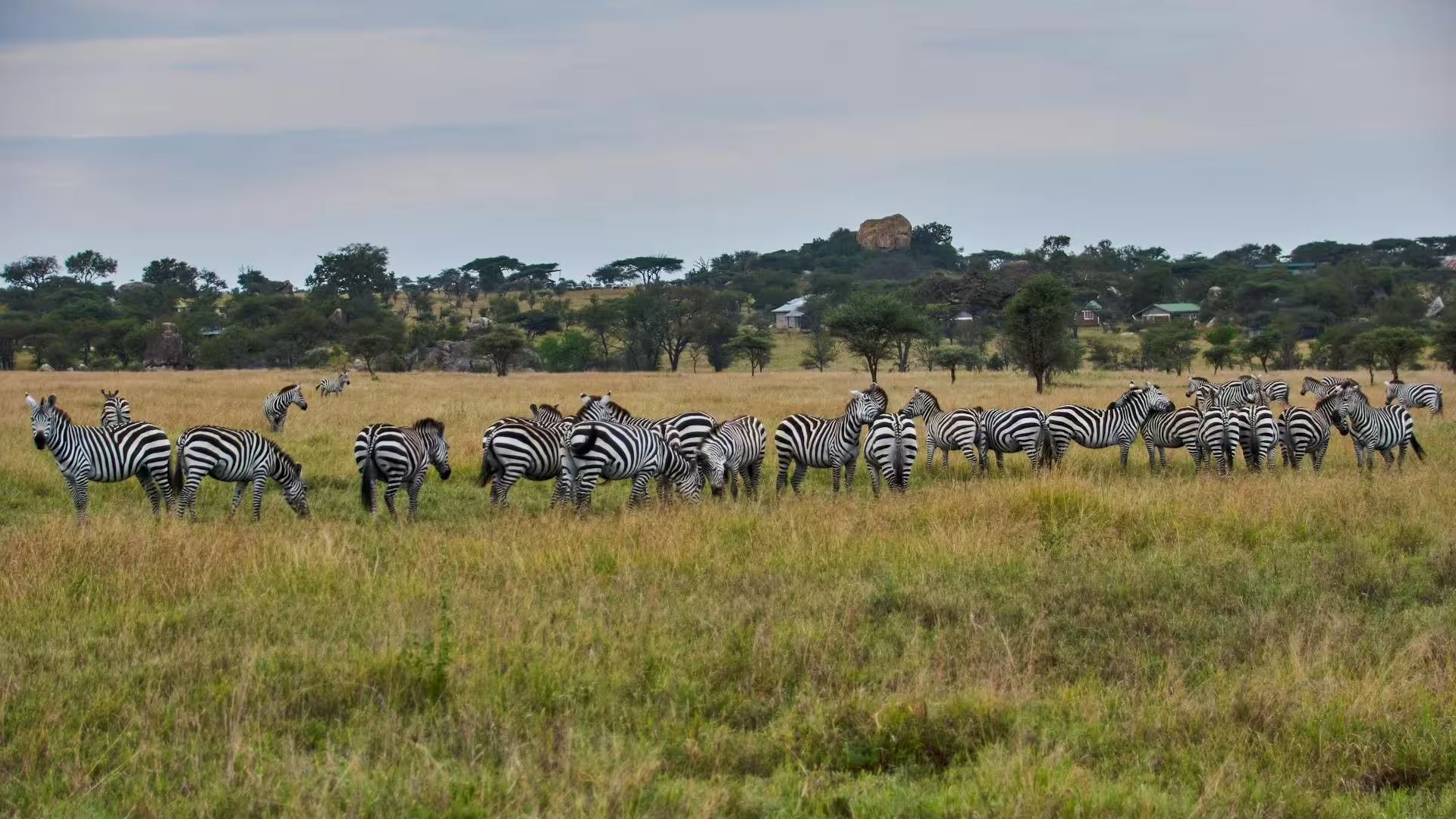
- Zebra
- Thomson's gazelle
- Grant's gazelle
- Giraffe
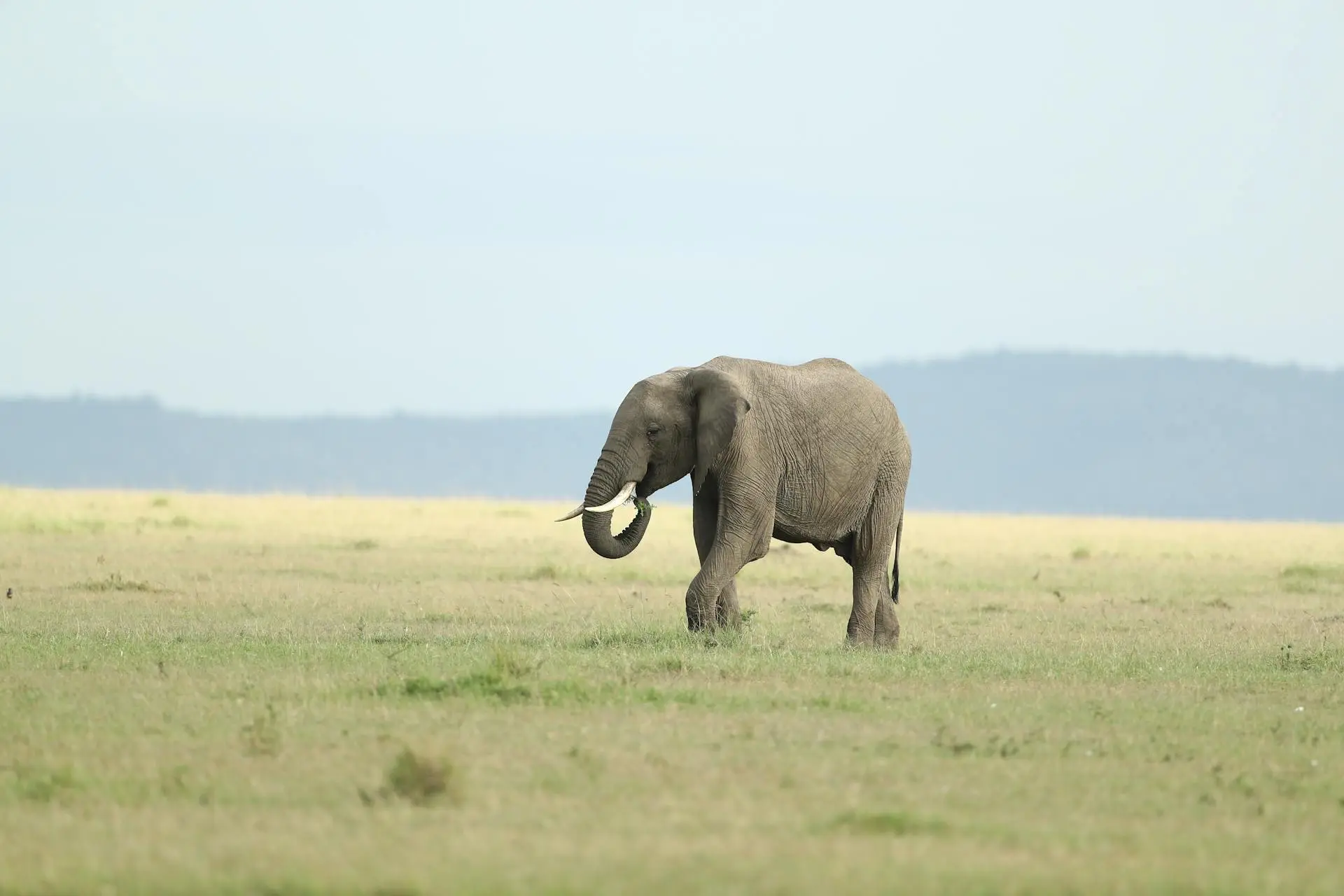
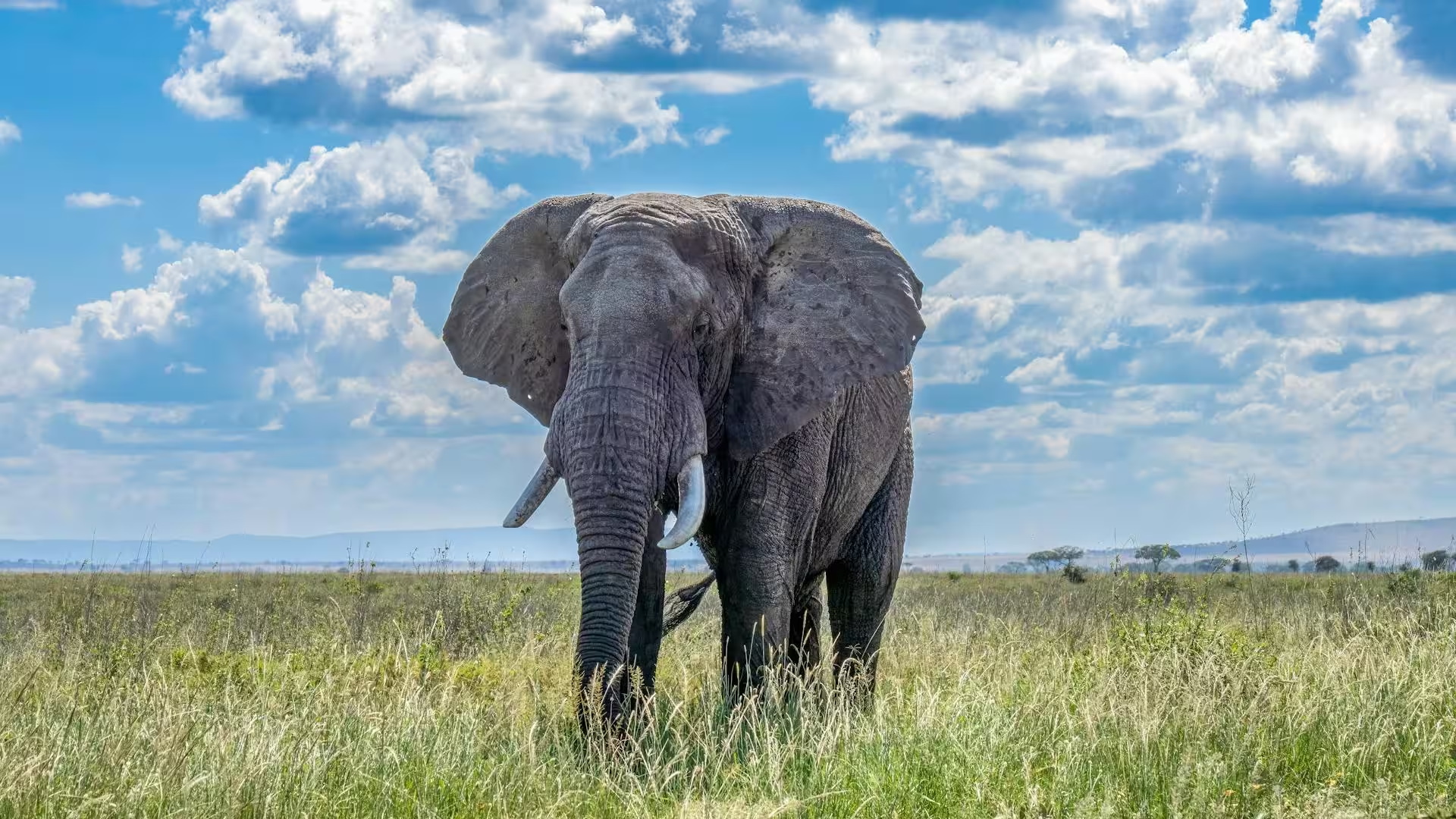
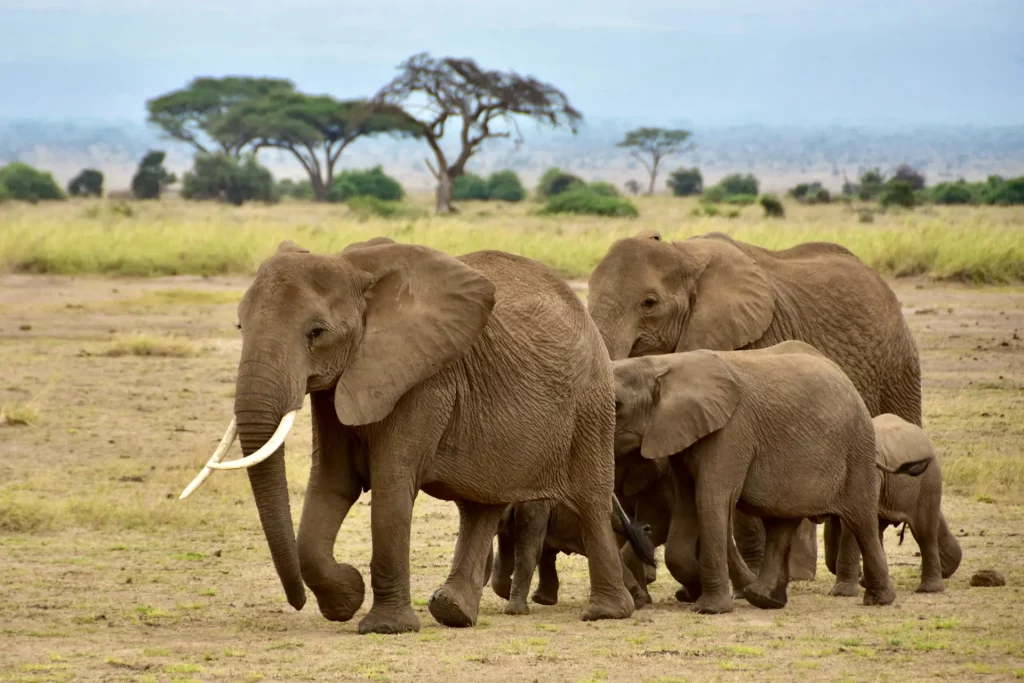
- Elephant
- Buffalo
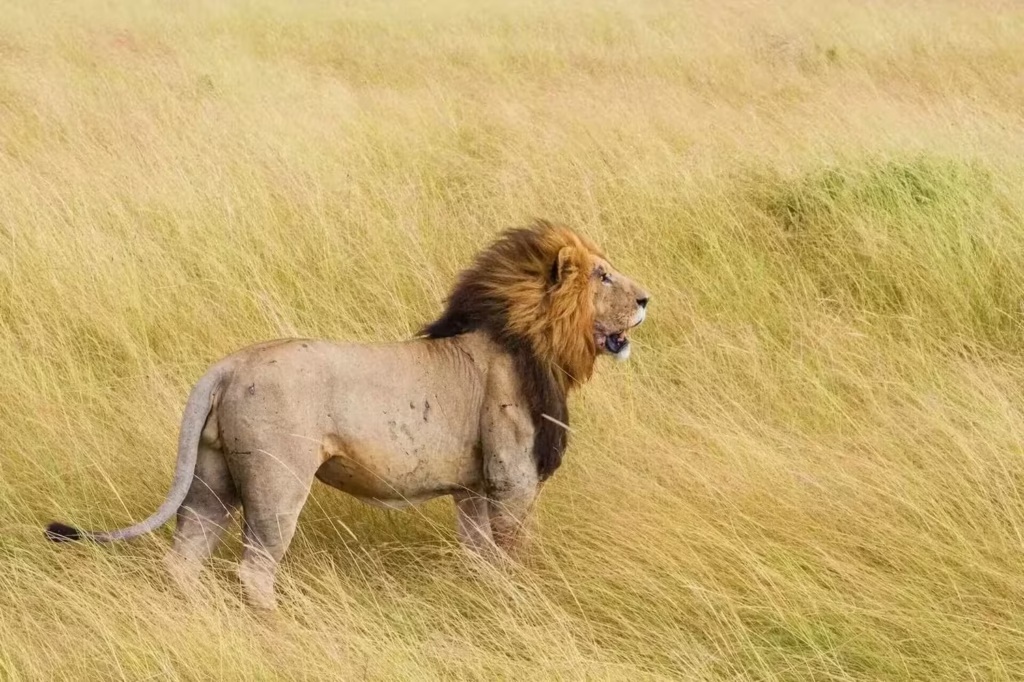
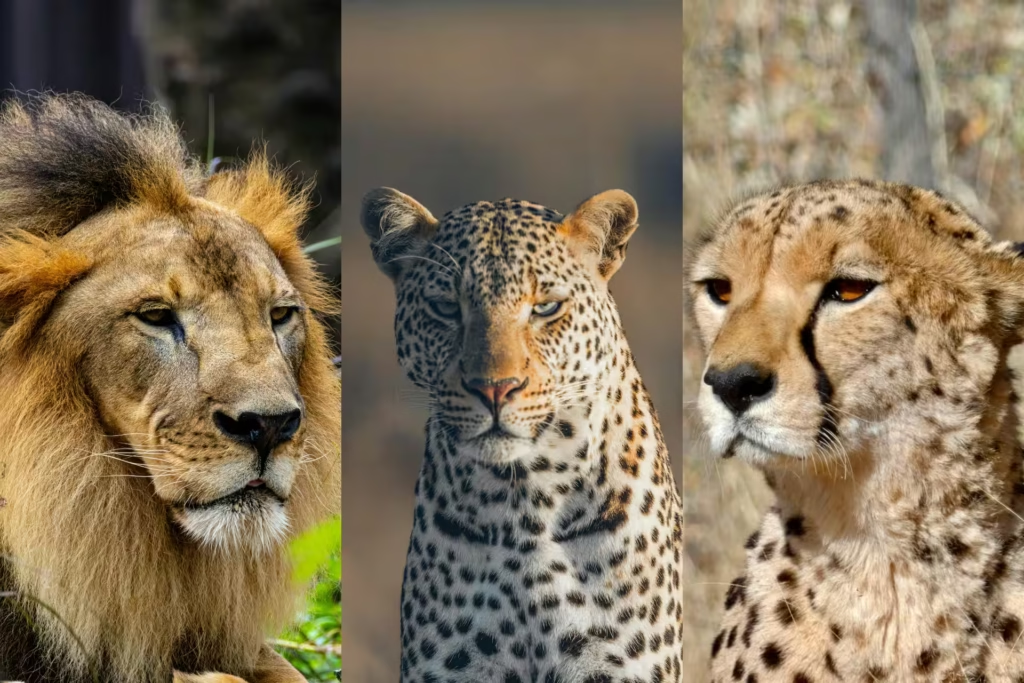
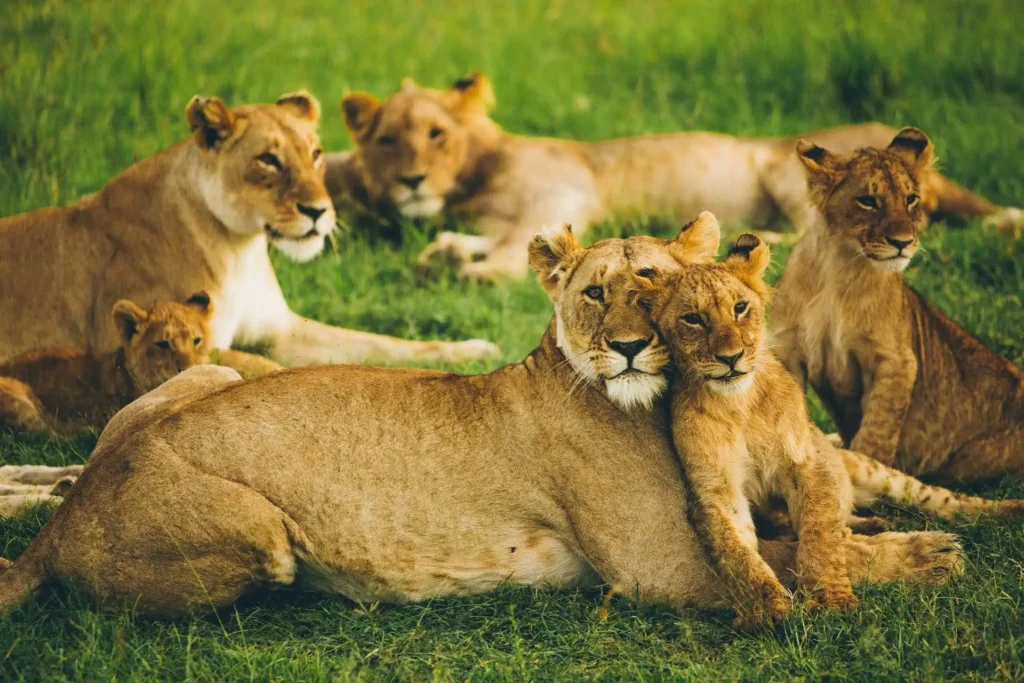
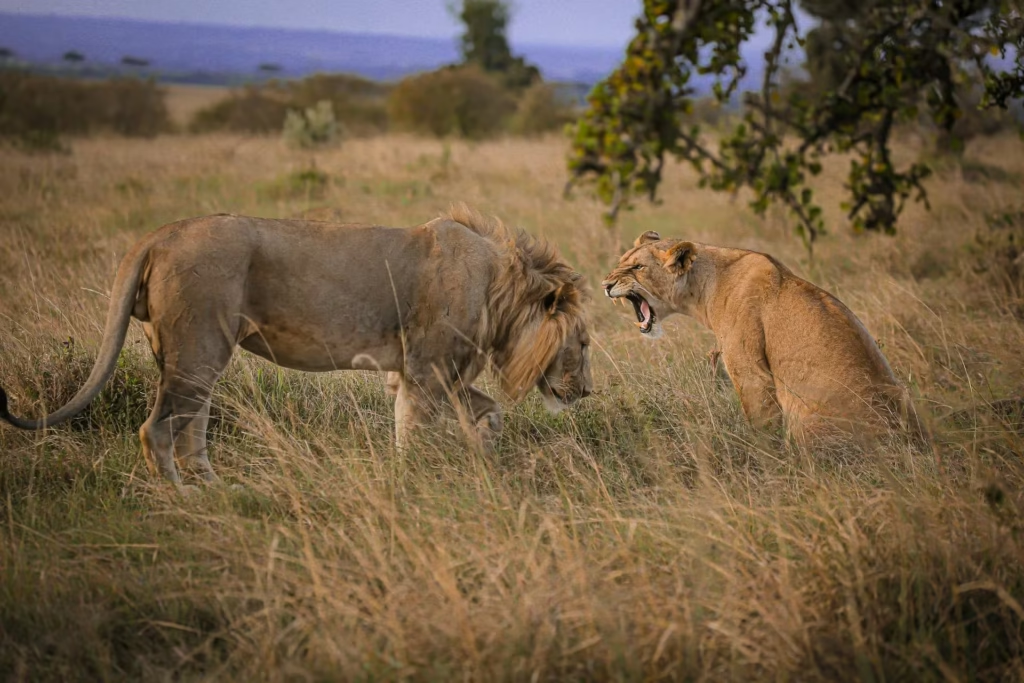
- Lion
- Leopard
- Cheetah
- Spotted hyena
- Jackal
Lions and hyenas often search areas where large herbivore groups gather. Cheetahs use open grassland to hunt smaller and medium-sized prey.
Leopards are harder to find, but the Mara region supports a healthy population. Giraffes, elephants and buffalo can appear across different habitats during game drives.
Birdwatching adds another part to the experience.
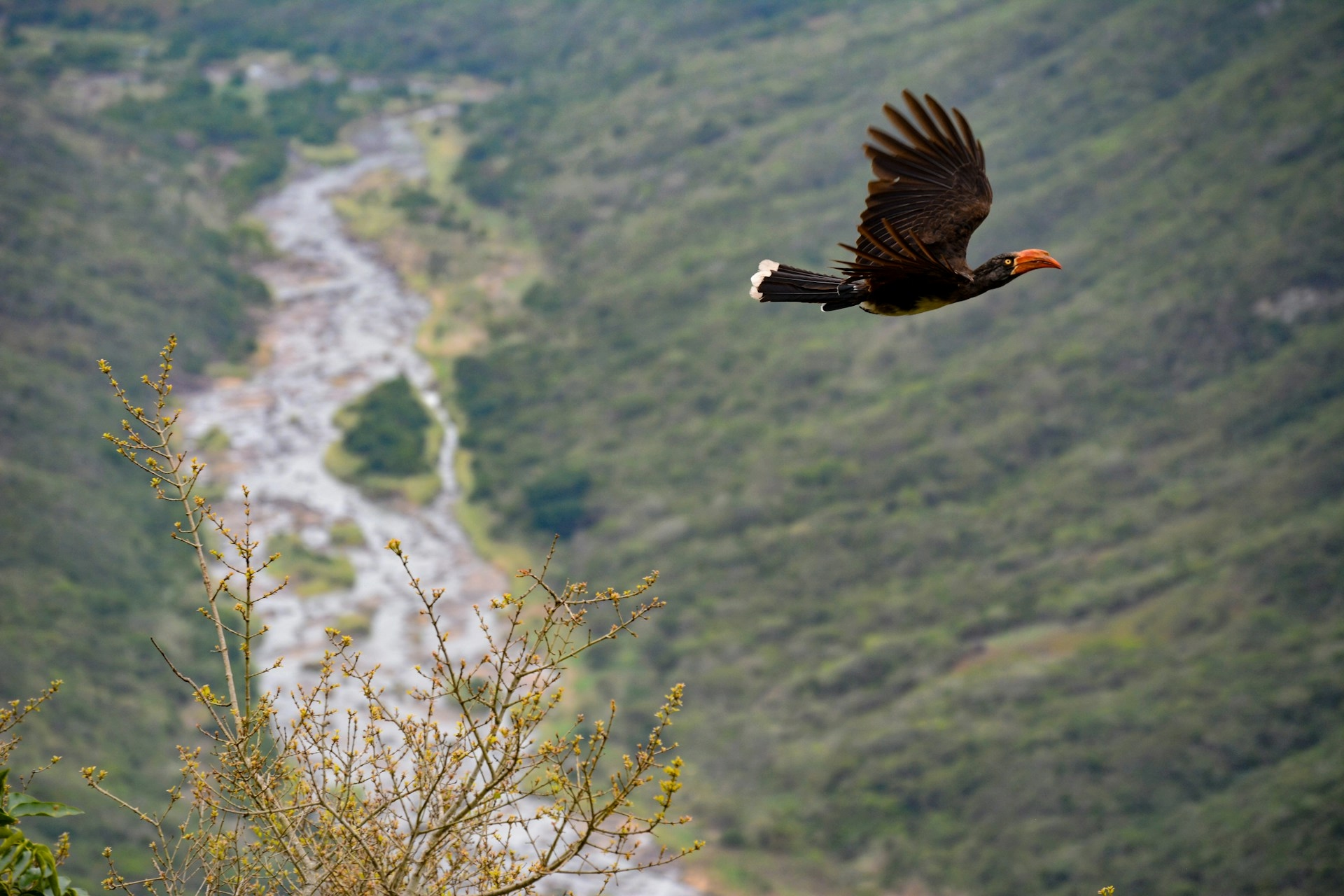
The grasslands support raptors, ground birds and colorful species such as the lilac-breasted roller. You can spend time watching birds between wildlife sightings during a game drive.
A Loita safari therefore offers more than a search for migrating wildebeest.
Why Is the Loita Migration Special?
The first attraction is the open setting and lower visitor numbers.
The Maasai Mara can become busy during the main Great Migration season. Popular wildlife areas can attract many safari vehicles during the busiest months.
The Loita Migration receives far less international attention.
That can change the feel of a game drive.
You may watch a herd spread across open grassland rather than seeing hundreds of vehicles gathered around one river crossing.
You can spend more time watching the animals' natural behaviour. A herd may move slowly across the plains, stop to feed and continue toward another grazing area.
The setting can be particularly rewarding for photographers.
Open grassland provides opportunities for wide wildlife photographs. Early morning and late afternoon offer softer light and long shadows. These conditions work well for both landscape and wildlife photography.
The migration also shows that wildlife movement across the Mara region extends beyond the famous Great Migration.
A Migration Under Pressure
The Loita Migration is more than a safari attraction. It is part of an important conservation story.
The Loita wildebeest population has fallen sharply over several decades. The Convention on Migratory Species reported an estimated population of 120,000 to 150,000 animals in the 1970s. Around 26,700 animals remained in 2024.
Settlement, agriculture and fencing have reduced access to traditional movement routes.
Fences create serious problems for migrating animals.
Wildebeest need access to different grazing areas during different seasons. A fence can block a traditional route between feeding grounds and dry-season areas.
Agricultural development has affected parts of the Loita Plains too. The conversion of some areas to wheat farming reduced the amount of open land available to wildlife.
Some animals still follow seasonal routes. Others have become more resident in areas where movement has become difficult.
The future of the Loita Migration depends partly on keeping important wildlife corridors open.
This requires cooperation between conservation groups, local communities, landowners and tourism operators.
The Maasai communities also have an important connection with the region. Livestock grazing and wildlife use the same broad areas, so land management affects both people and animals.
Best Time to Experience the Loita Migration
Travelers interested in the Loita Migration should look closely at January to March.
This period is commonly linked with the movement toward the Mara region. Seasonal rain can produce fresh grass across the plains.
The exact timing changes each year.
Rainfall does not follow a fixed schedule. A late rainy season can delay movement. Different rainfall patterns can send herds toward different grazing areas.
Your safari dates should therefore remain flexible.
Talk with a local safari operator before booking your trip. Ask about recent rainfall, current grazing conditions and the latest herd locations.
Local information can give you a much better idea of what to expect.
Why Choose the Loita Migration?
The Loita Migration offers a quieter wildlife experience than the busiest periods of the Great Migration.
You still have opportunities to see large herds, predators and classic East African wildlife. The difference lies in the size and character of the movement.
The experience also gives you a chance to see the Maasai Mara during a less publicized period of its wildlife calendar.
Travelers who have already seen the Mara River crossings can use the Loita Migration to experience another side of Kenya's wildlife.
First-time visitors can add it to a wider Mara safari and gain a better understanding of seasonal wildlife movements.
The migration also carries a conservation message.
Its declining wildebeest population shows what happens when traditional movement routes become restricted. Fences, farming and settlement can divide habitats that animals have used for generations.
Supporting responsible tourism in the region can help maintain interest in protecting these areas.
Planning Your Loita Migration Safari
A Loita Migration safari works best with several days set aside for wildlife viewing.
The herds can change location quickly. Spending more time in the area gives your guide more opportunities to locate them.
Consider combining the Loita experience with the Maasai Mara National Reserve and nearby conservancies.
This gives you access to different habitats and a wider range of wildlife. You can spend part of your trip following seasonal herds and the rest searching for resident wildlife.
A stay in a private conservancy can provide a quieter safari setting. Some conservancies cover areas connected with traditional wildlife movement routes.
Choose an operator with strong local knowledge. Guides who follow seasonal movements can provide better information about current herd locations.
Most importantly, treat the Loita Migration as a natural wildlife movement.
The animals do not follow a fixed timetable. Rainfall and grazing conditions decide where they go.
Kenya's Quiet Migration Worth Knowing
The Great Migration receives most of the attention, but Kenya has other wildlife movements worth seeing.
The Loita Migration is smaller, quieter and less familiar to many international safari travelers. It offers a different view of seasonal wildlife movement around the Maasai Mara.
It is a migration with a fragile future.
The sharp decline in the Loita wildebeest population shows how land-use changes can affect wildlife. Fences, farming and settlement have reduced access to traditional routes.
Keeping these routes open will be important for the future of the Loita herds.
For travelers, the migration offers a chance to experience a less crowded side of Kenya's wildlife.
You can watch wildebeest moving across open grassland, see predators following the herds and learn about the communities that share this region with wildlife.
The Loita Migration may not have the fame of the Mara River crossings.
That is part of what makes it special.
It offers a quieter wildlife experience and a chance to see one of Kenya's lesser-known seasonal migrations while these traditional movements continue.